What is 2026 World Cup Kicks Off: Mexico vs. South Africa at the Azteca, and Everything to Know About the Biggest World Cup Ever?
It has been called the biggest sporting event in the history of the planet, and on Thursday, June 11, 2026, it finally kicks off. The 2026 FIFA World Cup opens not with a ribbon-cutting but with a game — Mexico against South Africa — inside a stadium that has seen more World Cup history than any other building on Earth. When the ball rolls at Mexico City's Estadio Azteca, it sets in motion a 39-day, 104-match tournament spread across three countries and sixteen cities, the largest World Cup ever staged and the first to be co-hosted by three nations.
For a month, soccer becomes the only story that matters across North America, and the timing could not be more loaded. The opener lands in the middle of a packed sports and culture calendar, and search interest for everything from group standings to ticket resale prices has gone vertical. Here is the verified rundown of what is happening, why it is suddenly everywhere, and what to actually watch as the tournament begins.
Why the 2026 World Cup is trending right now
This is not a "coming soon" teaser. The tournament is live as of June 11, 2026, and three forces are stacking into one enormous news cycle.
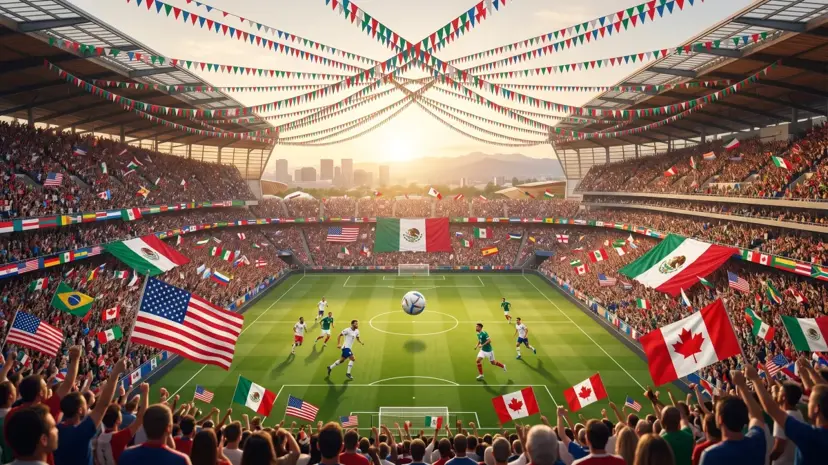
First, the sheer scale is unprecedented. The 2026 World Cup is the first to feature 48 teams, up from 32, and the first ever co-hosted by three countries — the United States, Mexico, and Canada. It runs from June 11 to July 19, 2026, across 16 host cities and stadiums: eleven in the U.S., three in Mexico, and two in Canada. The expanded field means 104 matches, nearly two-thirds more than the 64 played in Qatar 2022, so there is simply more World Cup to follow than in any edition before it.
Second, the opener carries a once-in-a-lifetime piece of history. Estadio Azteca — officially renamed Estadio Ciudad de México for the tournament — becomes the first stadium ever to host three World Cup opening matches, having staged the firsts in 1970 and 1986. No other venue has hosted even two. Mexico, in turn, becomes the first nation to host or co-host a men's World Cup three times. That layering of records onto a single kickoff is catnip for both fans and headline writers.
Third, the cultural surface area is gigantic. A 48-team field means 16 more national teams, their diasporas, and their fan bases are all plugged into the same event at once — and the host cities span four time zones and two languages. The result is the kind of broad, simultaneous attention spike normally reserved for a Super Bowl, except sustained for more than five weeks. Interest is colliding with the same crowded June calendar that produced the Knicks–Spurs NBA Finals a record-setting May at the Indy 500, and the upsets that lit up the French Open, and the World Cup is now swallowing the rest of the sports conversation whole.
The opening match: Mexico vs. South Africa at the Azteca
The host nation opens the tournament, as tradition dictates, and Mexico drew South Africa for the curtain-raiser at the Azteca. The stadium, which opened in 1966, reopened in early 2026 after a renovation reported at roughly 3.6 billion pesos (about €160 million), and now seats approximately 87,500 — making it the largest stadium in Latin America and one of the most storied in the sport.
The symbolism is hard to overstate. In 1970, the Azteca hosted Brazil's 4–1 win over Italy in that tournament's opener and later the final that crowned Pelé's legendary side. In 1986, it staged Argentina's run to the title — and Diego Maradona's "Hand of God" and "Goal of the Century" against England. Mexican fans have leaned into the homecoming framing, with one supporter quoted by Euronews ahead of the opener saying that "the ball comes back home" and predicting a "great, happy celebration." The Azteca will host five matches in total during the tournament.
On the field, Mexico enters as a comfortable favorite to advance. El Tri sit around No. 15 in the FIFA world rankings, and no other side in Group A is ranked better than the mid-20s. Mexico have reached the Round of 16 in seven of their last eight World Cup appearances, so the pressure at home is less about survival and more about finally breaking the so-called "quinto partido" curse — the long, painful habit of bowing out in the round of 16 — and reaching a quarterfinal on home soil for the first time since 1986. South Africa, back at a World Cup for the first time since they hosted in 2010, arrive as heavy underdogs but with nothing to lose, the kind of opponent that can make a nervy host nation's opening night uncomfortable. A fast Mexican start would settle 87,500 nerves; an early South African goal would turn the loudest stadium in Latin America into a cauldron of doubt within minutes.
How the new 48-team format works
The expanded format is the single biggest structural change in World Cup history, and it is worth understanding before the group games begin. The 48 teams are split into twelve groups of four. The top two finishers in each group advance automatically, and they are joined by the eight best third-placed teams — producing a new Round of 32 that did not exist in previous editions. From there the bracket runs as a familiar straight knockout: Round of 16, quarterfinals, semifinals, and the final.
Group A, anchored by host Mexico, includes South Africa, South Korea, and Czechia. The format's critics argue that adding more groups dilutes the early-round drama, since a third-place finish can now be enough to survive, which in theory lets a strong side coast through its group without ever needing a win in three matches. Defenders counter that the wider field gives more nations — and more fans worldwide — a genuine stake in the tournament, which is precisely why the global attention this June is so broad. Either way, the math is new: 104 matches means a game almost every few hours for the first two weeks, and a far longer road to the trophy than the 32-team era ever required. A team that goes all the way will now play eight matches instead of seven, a meaningful extra load in a tournament already criticized for fixture congestion.
Who are the favorites?
The betting markets have a clear, if narrow, hierarchy at kickoff. Spain open as slight favorites at around +450, with France close behind near +500 and England next at roughly +650. Brazil (around +850) are the strongest pick from outside Europe, and reigning champion Argentina, still led by Lionel Messi in what is almost certainly his final World Cup, sit near +1000 as they try to defend the title they won in Qatar.
To reach the final, Spain (about +240) and France (about +280) are the two clearest paths according to the books. None of that guarantees anything across a 104-match marathon — upsets are the entire point of a World Cup, and the expanded field arguably creates more room for a Cinderella run than ever before. But the framing is a European-led field with Brazil and Argentina as the headline challengers from the Americas, and the United States and Mexico hoping home advantage can lift them past their ceiling. If you are tracking how the odds move as results come in, the swings tend to be sharpest after the group stage, when the bracket finally locks; the same volatility shows up across betting and prediction markets the way it does in broader financial markets during a major event.
The opening ceremony and the host-city spectacle
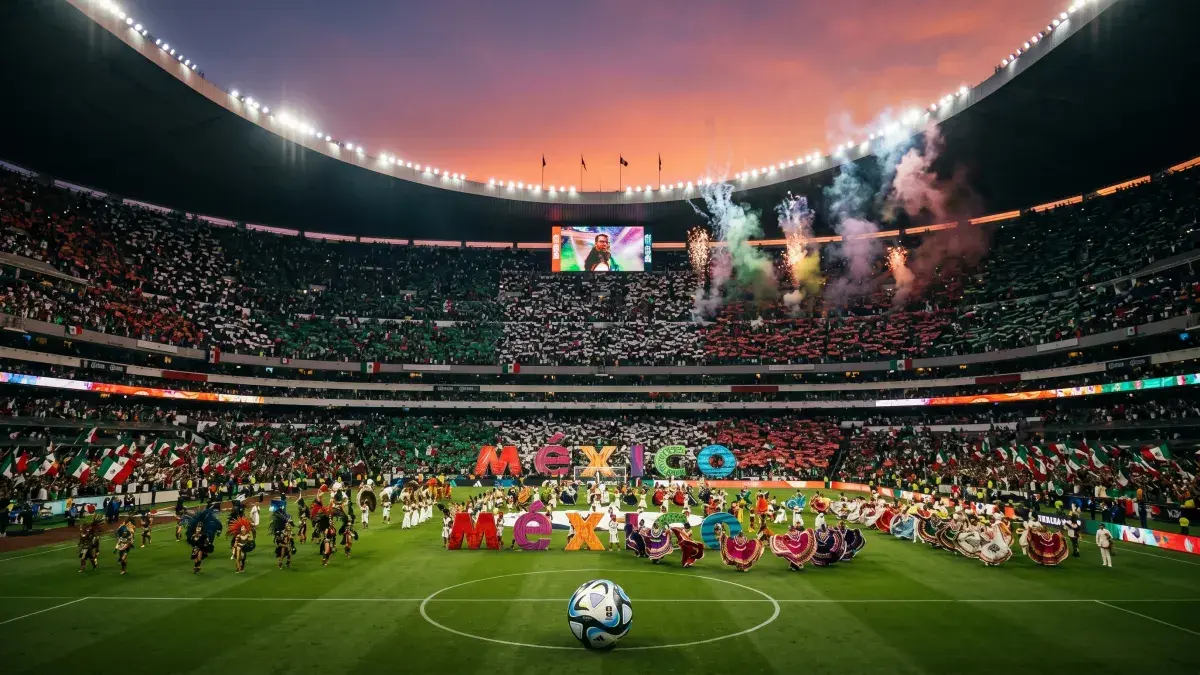
Mexico is opening the tournament with a celebration to match the stadium's history. The opening ceremony on June 11 is built around a stacked roster of Latin and global music acts, with reported performances from Mexican stars including Belinda, Lila Downs, and Los Ángeles Azules alongside international names such as J Balvin, Shakira, Burna Boy, Danny Ocean, and tenor Andrea Bocelli, plus an appearance by actress Salma Hayek. It is a deliberate statement of cultural arrival, staged in the city that has hosted more World Cup openers than any other, and it competes for attention with a stacked summer entertainment slate that already includes tentpole releases like Masters of the Universe.
The spectacle is also a logistical machine. Spreading 104 matches across three countries and 16 cities means an enormous travel-and-hospitality operation, and the demand has reshaped everything from flight prices to hotel rates across host markets. The pressure has been most visible in the resale market, where the cost of getting into marquee games became its own storyline well before kickoff — the subject we covered in depth in our look at the 2026 World Cup ticket-pricing controversy. With dynamic pricing and surging secondary-market fees, plenty of fans are now budgeting the trip as carefully as they would any major purchase, and weighing the various payment and installment options that vendors are pushing during the tournament. For many North American supporters, this is the first time a World Cup has been close enough to attend in person — and the price of saying yes has become a real conversation.
What to watch as the group stage unfolds
Beyond the trophy race, a few threads are worth following over the next month. The first is whether the host nations can ride home advantage: Mexico opens at the Azteca, while the United States and Canada will each chase a deep run in front of partisan crowds across their respective cities, with the U.S. in particular under pressure to justify a generation of investment in the domestic game. The second is the fate of the expanded field's newcomers — with 16 extra slots, several nations are appearing at a World Cup for the first time, and a single group-stage result can become the defining moment of their footballing history.
The third is the format stress test itself. The eight best third-placed teams and the new Round of 32 are untested at this scale, and the first edition will be the real-world experiment that decides whether 48 teams was an inspired expansion or an overstuffed one. Heat is another live concern: several U.S. and Mexican host cities sit in the middle of summer, and how FIFA manages kickoff times and player welfare across afternoon matches will shape both the spectacle and the results. With the United States hosting eleven of the sixteen venues and the final set for MetLife Stadium in East Rutherford, New Jersey, on July 19, the back half of the tournament shifts firmly to the U.S. — but it all begins on June 11, in Mexico City, where the ball has, once again, come home.
For more on the trends and events shaping this summer's culture and sports calendar, follow our continuing coverage at trends.thicket.sh.
Origin
The 2026 FIFA World Cup, co-hosted by the United States, Mexico, and Canada, kicks off June 11, 2026 with the opening match between host Mexico and South Africa at Estadio Azteca (renamed Estadio Ciudad de México for the tournament) in Mexico City. It is the first World Cup with 48 teams and the first hosted by three nations, featuring 104 matches across 16 cities through the July 19 final at MetLife Stadium in New Jersey. The Azteca becomes the first stadium to host three World Cup openers (after 1970 and 1986). Verified via Wikipedia, FIFA, Euronews, FOX Sports, and ESPN.
Timeline
Why Is This Trending Now?
The tournament goes live on June 11, 2026, and three forces are stacking into one news cycle. (1) Unprecedented scale: the first 48-team World Cup and the first co-hosted by three nations (USA, Mexico, Canada), with 104 matches across 16 cities over 39 days. (2) A history-making opener: Estadio Azteca becomes the first stadium ever to host three World Cup opening matches (1970, 1986, 2026), and Mexico becomes the first nation to host or co-host three times. (3) A massive, simultaneous cultural spike — 48 teams plus a star-studded opening ceremony (Shakira, J Balvin, Bocelli, Salma Hayek) and surging interest in standings, odds, and ticket resale prices across three countries.
Frequently Asked Questions
Sources
- Wikipedia – 2026 FIFA World Cup
- FIFA – Estadio Azteca to host World Cup 2026 opening match
- Euronews – Mexico City counts down to 2026 World Cup opener at historic Azteca Stadium
- FOX Sports – 2026 World Cup Odds: Spain, France Lead Race to Reach Final
- ESPN – Every team's odds to win the World Cup
- Sports Illustrated – 2026 World Cup Winner: Odds, Predictions
- HITC – Estadio Azteca set for another World Cup milestone
- Khel Now – Estadio Azteca: All you need to know about the venue of the FIFA World Cup 2026 opening match
- StadiumDB – World Cup 2026: Mexico City Stadium