What is Closest Indy 500 in History: How Felix Rosenqvist's 0.0233-Second Pass Defined Memorial Day Weekend 2026?
The 110th Indianapolis 500 came down to roughly 0.0233 seconds — half a car length of carbon fiber and air — across the Yard of Bricks on the Sunday of Memorial Day weekend 2026. Felix Rosenqvist, driving the No. 60 Honda for Meyer Shank Racing, slung his car to the outside of David Malukas through Turn 4 of the final lap and crossed the line ahead by the narrowest margin in the 110-year history of the race. The previous closest finish was Sam Hornish Jr. over Marco Andretti in 2006 at 0.0635 seconds. Rosenqvist beat that by nearly three-tenths of the gap.
It was a result that nobody in the Penske garage saw coming and one that, twelve hours later, the rest of the country was still talking about. Memorial Day Monday opened with the race trending across every major US social platform, ESPN's race recap topping its sports homepage, and Honda Racing's corporate account posting an unusually emotional thread about its seventeenth Indy 500 win. This is what actually happened, why this finish is bigger than another Indy 500 win, and what it means for the rest of the IndyCar season heading into Detroit and beyond.
What happened on the final lap
The race had been chaotic from green flag to checker. The 110th running set an all-time Indianapolis 500 record with 70 lead changes — surpassing the previous record of 68 — and that statistic alone tells you most of what you need to know about how the day went. The aero package, the strategy variance between Honda and Chevrolet teams, and a rain interruption that compressed the late-race fuel windows all combined to keep the front of the field shuffling on nearly every restart.
With seven laps remaining, the race was effectively a sprint. Pato O'Ward had led through the prior restart sequence. Malukas, driving the No. 4 for Team Penske, came through with a clean inside move on Lap 196 and grabbed the lead. Rosenqvist was running second, with O'Ward fading slightly on tire wear, and Scott McLaughlin holding fourth with one fewer lap of fuel to manage. The Malukas pass looked, at the time, like the winning move.
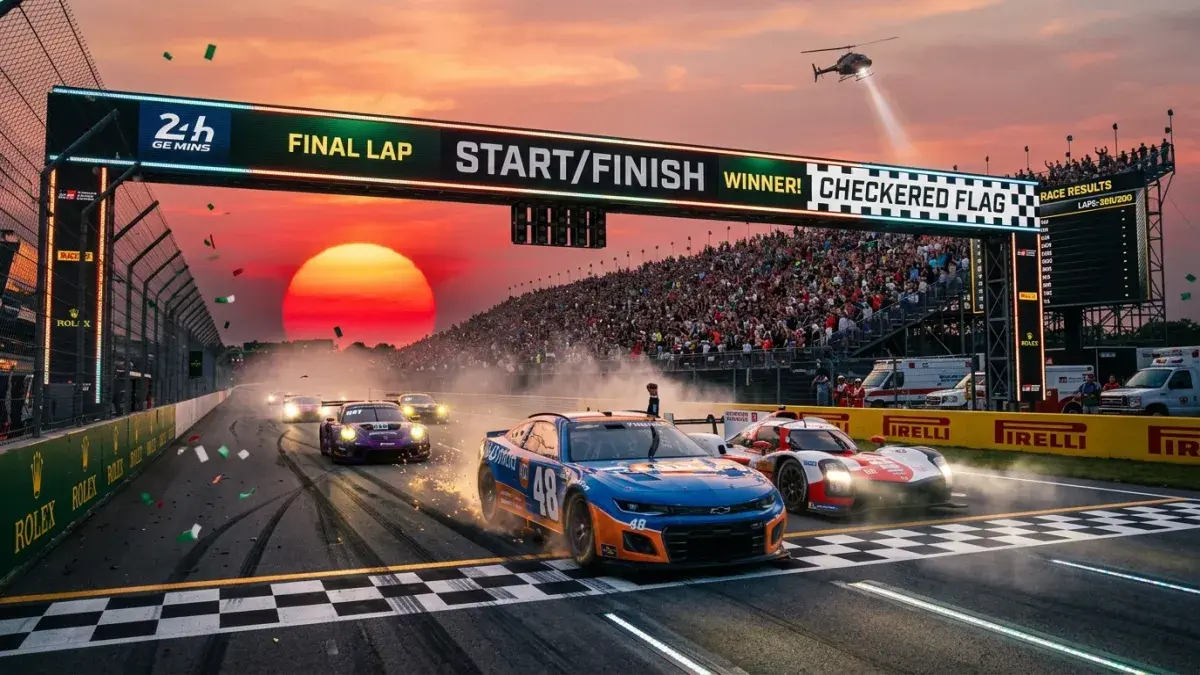
It almost was. Malukas controlled the line through the final two laps and led Rosenqvist into Turn 3 of the last lap by what looked like enough of a gap to defend. But Rosenqvist had been studying the air for ten laps. Through Turn 4 he committed to the outside line — the lane almost nobody picks on the last lap of the Indianapolis 500 because of the longer arc and the risk of losing grip up against the wall — and used the draft off Malukas's gearbox to slingshot down the front straight. The two cars crossed the bricks side by side. The transponder reading was 0.0233 seconds. The official margin of victory was the closest in the race's 110 runnings.
"I don't know what else we could have done," Malukas told NBC's pit reporter after climbing out of the car. "We were the fastest car that whole race. I gave it 150 percent. I almost crashed this damn car every lap, and we still ended up with a P2." His father and Marco Andretti — himself the runner-up in the previous closest finish — were the first two people to reach him on pit lane.
Why this win is bigger than a result
The 0.0233-second margin is the headline number, but three other facts about the finish are what made it dominate the Memorial Day weekend cultural moment rather than just the sports cycle.
One: it was Rosenqvist's first oval win. The Swede had one prior IndyCar victory in 120 career starts, all of it on road and street courses. Winning the Indianapolis 500 as your first oval win is the kind of statistical anomaly that rewrites a career. ESPN's post-race lead called it the moment that "rewrites his IndyCar legacy" and Honda's own release noted the same. Rosenqvist had spent multiple seasons being talked about as a talented driver who never quite found a permanent home in the series. This is now permanent.
Two: it was Helio Castroneves's first 500 win as a team owner. Castroneves, one of only four drivers in history with four Indianapolis 500 wins, had moved into ownership at Meyer Shank Racing earlier in the year. The 2026 race was the first time he had won the 500 from the pit box rather than the cockpit. Footage of Castroneves and the team celebrating in Victory Lane went viral on Sunday night. Watch the closing seconds of Honda Racing's pit-feed replay and you can see Castroneves's reaction shift from "we might win this" to "we just won this" inside the same half-second the cars cross the bricks.
Three: Rosenqvist's daughter Stella is twenty days old. He welcomed his first child on May 4, 2026, the same week the official Indy 500 promotional cycle kicked off. The personal storyline — first oval win, twenty days after first child, on Memorial Day weekend, by the closest margin in 110 years, with Helio Castroneves on the pit box for his first win as an owner — is the kind of compounding narrative that wire services and morning shows will keep running with through the rest of the week.
The 70 lead changes
The other statistic that will keep getting cited in the coming days is the lead change count. Seventy is the new record and it surpasses 68, which had stood since 2013. That kind of number is, on its own, a function of the rules package and the field strength — when the aero allows a trailing car to follow closely and the field is deep, leads turn over quickly. But the practical effect of 70 lead changes is that the race never had a settled stretch. The lead would be held by one driver for two or three laps, surrendered on a restart, regained on a strategy fuel cycle, lost again on a yellow. It is the kind of broadcast that holds casual viewers because there is never a 15-minute window where nothing is happening.
Live US viewership numbers for the broadcast are not yet finalized as of Memorial Day morning, but FOX's preliminary report cited a sharp uptick in second-half audience retention versus the 2025 race, which had been the previous year's gold standard. The closest finish in history landing on Memorial Day Sunday is the kind of result that will materially move year-over-year IndyCar viewership.
How it fits the broader Memorial Day weekend cultural moment
The Indy 500 has always anchored Memorial Day weekend in US sports. What is different about the 2026 finish is how cleanly it fits the rest of the cultural calendar. The long weekend has been carrying parallel viral moments across other platforms — TikTok is in the middle of three simultaneous dominant formats peaking through Monday, including the 'And Emily… that's all' contrast format from Devil Wears Prada 2, the 'I Am Home' walking-in format set to Beat It, and the 'I Have Therapy' POV format on Reels. The Indy 500 finish slots into that cultural moment as the sports-side counterpart: a four-day window where the dominant cross-platform content is high-information, share-friendly, and built around clean narrative beats.
The cross-format ride share is already visible. Within ninety minutes of the checker, TikTok was running edits of the final lap set to motorsport-adjacent audios, brand accounts had posted finish-line celebrations, and several creators had remixed the 'And Emily… that's all' format with the punchline being "and Malukas, that's all" — the contrast-dismissal format absorbing the day's biggest sports moment within hours. This is what platform saturation looks like in 2026: the dominant format eats the dominant news event of the weekend by Sunday night.
What the result means for the IndyCar season
The championship picture coming out of Indianapolis matters more than usual this year because of the points weighting on the 500. Rosenqvist's win vaults Meyer Shank Racing into title contention for the second half of the season — the team had not been forecast as a championship-level operation for 2026 by any of the major preseason previews, and the Indy result is enough of a points haul to reshape the back-half calendar. Honda picks up its seventeenth 500 win and continues a long-running pattern of dominating the race in years when the engine regulations favor the package they have brought.
For Team Penske, the runner-up finish is a strategically valuable result that is going to sting for a long time. Malukas was driving the fastest car on the property for most of the day, and finishing second by 0.0233 seconds is the kind of result that defines a career year for a young driver — both as the moment that confirms he belongs at the top of the series and as the moment he will be asked about every week for the next year. The Penske operation has reset the title chase on the back of consistent road-course performance, but losing the 500 by inches will lock the team into a one-tenth-difference framing for the rest of the season.
The next race is Detroit on the first weekend of June. The two follow-up storylines worth tracking are whether Rosenqvist carries the momentum into a string of consistent points finishes on the road courses where he has historically performed well, and whether Malukas converts second at Indianapolis into his first oval win at a smaller track. Both are realistic. Both are the kind of follow-through that turns a one-race headline into a season-long arc.
The throughline
The Indianapolis 500 ran for 109 editions before producing a finish this close. That is most of the story. The race is set up — through the rules, the field depth, the strategy variance, the weather windows — to deliver dramatic finishes, but 0.0233 seconds is a margin that requires every variable in the race to align. Rosenqvist had to read the air correctly on the final lap. Malukas had to defend the inside line because that is the percentage move ninety-nine times out of a hundred. The draft physics had to favor the trailing car for exactly the right duration. The transponder had to capture the margin to four decimal places. The crowd, the broadcast, the team radios, and the cultural moment all had to be ready to absorb it.
That is what Memorial Day weekend 2026 produced in front of 300,000 fans at Indianapolis Motor Speedway and a national television audience. The closest Indy 500 finish in the race's 110-year history, on the holiday weekend that opens the US summer, won by a driver twenty days after the birth of his first child, with a four-time 500 winner on the pit box celebrating his first victory as an owner. Days like Sunday do not happen often. When they do, they tend to set the cultural tone for the rest of the week. For broader context on how the 2026 sports calendar is shaping up across other May moments, our analysis of the parallel May 2026 cultural calendar around the Eras Tour finale covers the music-side counterpart, and our breakdown of the decade-long TikTok soundtrack pattern traces how moments like this one get absorbed into format culture within hours.
For the long-weekend financial framing — Memorial Day grilling, travel, and BBQ spend versus the squeeze on typical US household budgets — our paycheck calculators show the math on what an average summer-kickoff weekend actually costs households in 2026.
Origin
Felix Rosenqvist won the 110th Indianapolis 500 on Sunday May 24, 2026, beating David Malukas across the Yard of Bricks by 0.0233 seconds — the closest margin of victory in the race's 110-year history. The previous closest finish had been Sam Hornish Jr. over Marco Andretti in 2006 at 0.0635 seconds. Rosenqvist, driving the No. 60 Honda for Meyer Shank Racing, made a final-lap outside pass through Turn 4 and used the draft to slingshot past Malukas down the front straight. The win was Rosenqvist's first on an oval in 120 career IndyCar starts, came twenty days after the birth of his first child (daughter Stella, born May 4, 2026), and marked Helio Castroneves's first Indianapolis 500 win as a team owner after winning the race four times as a driver. The race set an all-time Indianapolis 500 record with 70 lead changes, surpassing the previous record of 68 set in 2013. It was Honda's seventeenth Indy 500 win and Meyer Shank Racing's second 500 victory following Castroneves's 2021 win for the same team. Scott McLaughlin finished third, Pato O'Ward fourth, Marcus Armstrong fifth. The result reshapes the IndyCar championship picture heading into the Detroit Grand Prix in early June and lands as the dominant US sports-cultural moment of Memorial Day weekend 2026.
Timeline
Why Is This Trending Now?
The 110th Indianapolis 500 ran on Sunday May 24, 2026 and produced the closest finish in the race's 110-year history — Felix Rosenqvist beat David Malukas by 0.0233 seconds at the Yard of Bricks, surpassing the prior 0.0635-second record set by Hornish over Andretti in 2006. The race also set an all-time Indy 500 lead-change record with 70 lead changes (previous record 68). The result trended across every major US sports outlet by Sunday night, anchored ESPN, CNN, NBC Sports, and Yahoo Sports homepages through Memorial Day Monday, and drove a sharp YoY broadcast retention bump for FOX's coverage. Three personal storylines amplified the finish into a general-audience cultural moment: it was Rosenqvist's first oval win in 120 IndyCar starts, it came twenty days after the birth of his first child Stella on May 4, 2026, and it was Helio Castroneves's first 500 win as a team owner after winning the race four times as a driver. Honda picked up its seventeenth Indy 500 win and Meyer Shank Racing its second. The cross-platform absorption was unusually fast — TikTok edits of the final lap appeared within ninety minutes of the checker, and the 'And Emily… that's all' contrast format was being remixed with 'and Malukas, that's all' punchlines by Sunday evening. Search interest for 'Felix Rosenqvist Indy 500,' 'closest Indy 500 finish ever,' 'David Malukas runner up,' 'Indy 500 70 lead changes,' and 'Meyer Shank Racing 2026' spiked sharply through Sunday night and continues to climb into Memorial Day Monday.
Frequently Asked Questions
Sources
- ESPN — Rosenqvist wins closest Indy 500 ever by 0.02 seconds
- ESPN — In the blink of an eye: Rosenqvist's closest-ever Indy 500 win rewrites his legacy
- CNN — Late pass sends Felix Rosenqvist past David Malukas for the closest Indianapolis 500 win in history
- Honda News — Honda, Felix Rosenqvist win closest Indy 500 finish in history
- Motorsport.com — Felix Rosenqvist wins 2026 Indy 500 in closest-ever finish
- Indianapolis Motor Speedway — Felix Rosenqvist Earns Epic Victory in Closest-Ever Indianapolis 500 Finish
- NBC Sports — 2026 Indy 500 live updates: Felix Rosenqvist outduels David Malukas