What is World Cup 2026 Starts in 8 Days — and the Ticket Prices Are the Real Story?
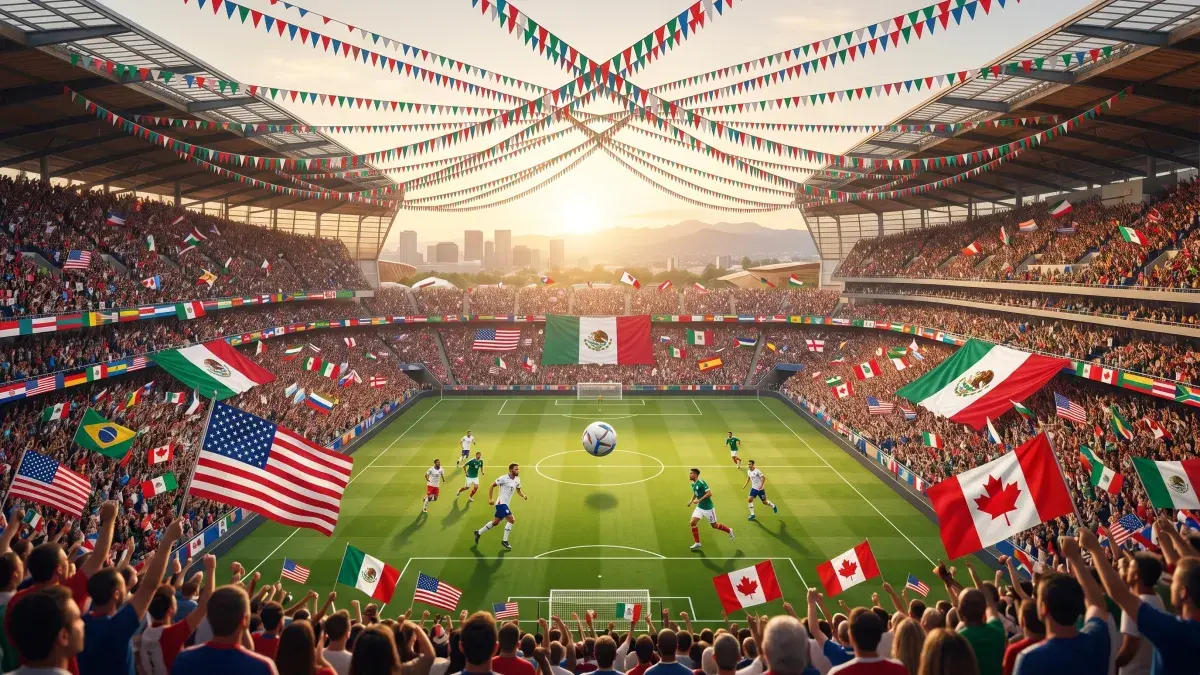
In eight days, on Thursday, June 11, 2026, the FIFA World Cup kicks off at Estadio Azteca in Mexico City with the host nation facing South Africa. It is the largest tournament in the sport's history — the first with 48 teams, the first hosted by three countries at once, and the first to stretch to 104 matches across 39 days and 16 cities in the United States, Canada, and Mexico. The final lands at MetLife Stadium in New Jersey on July 19. By any normal measure, the soccer should be the story.
It is not. A week out from kickoff, the dominant World Cup search story is the price of a ticket. FIFA introduced dynamic pricing for the first time, the same surge-pricing model used by airlines and concert sellers, and the result has been a wave of outrage that pulled in U.S. lawmakers, two state attorneys general, and FIFA president Gianni Infantino himself. If you have searched "World Cup 2026 tickets," "how to watch World Cup 2026," or "World Cup 2026 schedule" in the past few days, you are part of a search surge that is, unusually, as much about money as it is about football.
The tournament: bigger than any before it
The headline numbers are staggering on their own. The 2026 World Cup expands from 32 teams to 48, the biggest format change since the field grew to 32 in 1998. Those 48 teams are split into twelve groups of four, with the top two from each group plus the eight best third-placed teams advancing to a new Round of 32 — an extra knockout round that did not exist before. That pushes the match count from 64 in Qatar 2022 to 104, and stretches the tournament to nearly six weeks.
It is also the first World Cup co-hosted by three nations. Sixteen cities share the load: eleven in the United States (Atlanta, Boston, Dallas, Houston, Kansas City, Los Angeles, Miami, New Jersey, Philadelphia, San Francisco, and Seattle), two in Canada (Toronto and Vancouver), and three in Mexico (Guadalajara, Mexico City, and Monterrey). The opening days spread the spotlight deliberately: Mexico vs. South Africa opens the tournament June 11 at the Estadio Azteca, Canada plays Bosnia and Herzegovina on June 12 in Toronto, and the United States opens the same evening against Paraguay at SoFi Stadium in Los Angeles.
For American audiences in particular, this is the closest a home World Cup has come since 1994, and the scale of it — three group-stage matches for the U.S. men's team in Group D against Paraguay, Australia, and Türkiye, all on home soil — has driven a level of mainstream attention soccer rarely commands stateside. It is the kind of shared, real-time cultural event that, like the Knicks-Spurs NBA Finals running the same week, briefly overrides the country's broader retreat into smaller, more private entertainment.
How to watch every match in the United States
This is the second-biggest search cluster after pricing, and the answer is relatively simple. In the United States, all 104 matches air in English across FOX and FS1 — roughly 70 on the main FOX network and 34 on FS1 — with every match also streaming live on the FOX Sports app and FOX's direct-to-consumer service. The opening match, Mexico vs. South Africa, airs on FOX at 3 p.m. ET on June 11.
Spanish-language coverage runs in parallel: Telemundo and Universo carry the games on television, with all 104 matches streaming on Peacock. Cord-cutters have several paths to the same channels — Fubo carries FOX, FS1, Telemundo, and Universo together, and FOX's free ad-supported service Tubi is streaming a slate of matches at no cost. The practical upshot is that, unlike a pay-per-view event, you do not need an expensive subscription to watch the World Cup; you need access to FOX, which most cable and live-TV streaming bundles already include.
That "how do I watch this without paying for another subscription" instinct is the same one driving the broader cultural mood around spending right now. The rise of loud budgeting and underconsumption-core has made people far more deliberate about what they sign up for, and a six-week tournament is exactly the kind of event where a one-month streaming trial beats an annual plan you will forget to cancel in August. The same subscription-audit math we cover in the household budgeting tools at pay.thicket.sh applies cleanly here: figure out which single service gets you FOX and Telemundo, sign up for one month, and set a calendar reminder to cancel after the final.
Why the ticket pricing became the story
Here is the part that turned a sports schedule into a political and consumer-rights story. For the first time at a World Cup, FIFA adopted dynamic pricing — prices that move up and down with demand rather than being set in fixed tiers months in advance. The model is familiar from airline seats and concert tickets, but it had never been used at the scale of a World Cup, and applying it to a once-in-a-generation event produced numbers that stunned fans.
What made it land so badly was the combination of dynamic pricing with FIFA's decision to release tickets in staggered phases rather than all at once. Each phase opened a limited tranche of seats, sold out quickly, and was followed by another phase at a higher price point — a structure critics argue created an artificial sense of scarcity that the surge-pricing algorithm then converted into ever-steeper prices. For a fan trying to plan a single trip months in advance, the practical effect was a moving target: the price you saw one week was rarely the price available the next, and there was no published ceiling to anchor expectations against.
The figures are blunt. FIFA initially listed the most expensive final tickets at $6,730; by later sales windows, the same category had climbed to nearly $11,000. Compared with the average price across the five tournaments from 2006 to 2022, analysts found that the cheapest seats for 2026 had risen by roughly six times. There are still some genuinely cheap entry points — group-stage seats have been listed from $60 — but those low-priced allocations are small, sell out fast, and are scattered unevenly across the schedule.
By June 2, with kickoff a week and a half away, the backlash had hardened into formal scrutiny. The attorneys general of New York and New Jersey subpoenaed FIFA, opening a joint investigation into a ticketing process they described as opaque and potentially misleading — citing complaints about exorbitant costs, fans being unclear about where their seats actually were, and a staggered, multi-phase sales structure that critics argue manufactured a sense of scarcity to justify higher prices. Separately, U.S. lawmakers have pressed FIFA for transparency on how the pricing works. Infantino, for his part, has largely brushed off the criticism, framing dynamic pricing as FIFA simply adapting to the North American market and at one point pivoting to a promise about affordable stadium concessions rather than addressing the ticket prices themselves.
The unintended consequence: empty seats
The most revealing twist is that the aggressive pricing may be backfiring. Reporting in early June found that thousands of tickets remained unsold across several U.S. host cities even as the tournament approached — Atlanta, Philadelphia, Los Angeles, and San Francisco each still had thousands of seats available for group-stage matches. Some host-city hotels, which had set rates expecting a crush of demand, were reportedly struggling to fill rooms. Demand in Mexico has held strong across nearly every fixture, but the U.S. and Canadian markets have shown a much patchier picture: marquee matches and knockout games featuring global powers are holding their sky-high prices, while ordinary group-stage games have seen prices fall as FIFA tries to move inventory.
That split — premium events holding firm while everyday tickets soften — is a textbook sign of a market that overshot. It is also a familiar pattern to anyone who has watched the recent strain in consumer spending, from the buy-now-pay-later doom loop to the general belt-tightening that has defined the year. When prices climb faster than what people are actually willing to pay, the result is not record revenue; it is unsold inventory and a scramble to discount. For fans, the silver lining is concrete: if you are flexible about which match you attend, the panic-selling on group-stage games means there are real bargains to be found in the final days before kickoff.
How to actually get into a game without overpaying
If you want to attend in person, the strategy a week out is different from what it was six months ago. FIFA is selling remaining inventory through a Last-Minute Sales Phase on its official site, with tickets released on a first-come, first-served basis right through the tournament. Because demand is so uneven, the smart move is to ignore the marquee matches — the U.S. games, the eventual knockout rounds, anything involving a global giant — and target group-stage fixtures between smaller nations in the host cities with the most unsold inventory. Those are where the $60-to-low-hundreds seats actually exist, and where prices have been falling rather than rising.
The other piece of advice is to factor in everything beyond the ticket. A World Cup trip is a travel-and-lodging decision as much as a ticket decision, and the host cities with cheap remaining seats are not always the cheapest to visit. Anyone planning around the tournament — including the growing population of remote workers and digital nomads who can relocate to a host city for a few weeks — should price the whole trip, not just the seat. And the social calculus matters too: with so much of the tournament free to watch on FOX and Tubi, the cheapest "ticket" for most people is a watch party, which fits neatly with the year's broader swing toward in-person community gatherings over solitary screen time.
The bottom line
The 2026 World Cup is going to be enormous — the biggest in the sport's history, played in front of home crowds across an entire continent, with the U.S. men's team opening on its own soil for the first time in a generation. But the story the week before kickoff is a cautionary one about how a global institution prices access to a public event. FIFA bet that dynamic pricing would maximize revenue from a captive, once-in-a-lifetime audience. Instead it produced lawsuits, a state investigation, a political backlash, and — in several host cities — empty seats it is now quietly discounting.
For the millions who will watch from home, none of that matters: every match is on FOX, half of them are streamable for free, and the soccer will be spectacular regardless of who paid what to be in the building. For the smaller number trying to attend, the lesson of early June is that the leverage has quietly shifted. In a tournament where the seller overplayed its hand, the patient, flexible, budget-conscious fan is the one who comes out ahead. Kickoff is June 11. The first goal will be worth far more than the markup.
Origin
The 2026 FIFA World Cup runs from June 11 to July 19, 2026, across the United States, Canada, and Mexico, opening with Mexico vs. South Africa at Estadio Azteca and concluding at MetLife Stadium in New Jersey. The tournament details — 48 teams, 104 matches, 16 host cities, the expanded Round of 32 format, and the FOX/FS1/Telemundo/Peacock broadcast arrangement — were confirmed by FIFA and reported across NBC Sports, FOX Sports, ESPN, Yahoo Sports, Sky Sports, and Wikipedia.
The angle that pushed the story past soccer fans was FIFA's first-ever use of dynamic ticket pricing. After prices for the cheapest seats rose roughly sixfold versus past tournaments and final-match tickets approached $11,000, the New York and New Jersey attorneys general subpoenaed FIFA on May 28, 2026, and U.S. lawmakers demanded transparency. A June 2, 2026 Fortune report found the pricing was backfiring, with thousands of seats unsold across U.S. host cities — turning a sports schedule into a live consumer-rights and political story in the days before kickoff.
Timeline
Why Is This Trending Now?
The 2026 World Cup opens June 11 — eight days from June 3 — which compresses an enormous amount of search interest into a single week: schedule, how-to-watch, host cities, groups, tickets, and price queries all spiking at once. The dynamic-pricing controversy is the fresh, recent hook driving the story past the usual soccer audience: the NY/NJ attorneys-general subpoena landed May 28, and a Fortune report on June 2 found the pricing backfiring with thousands of unsold seats. That puts the story at the intersection of three high-volume clusters — a once-in-a-generation home tournament, a 'how do I watch this' streaming surge, and a cost-of-living/consumer-outrage angle that ties directly into the year's budgeting and underconsumption trends. Queries surging together include 'World Cup 2026 schedule,' 'how to watch World Cup 2026,' 'World Cup 2026 tickets,' 'why are World Cup tickets so expensive,' 'World Cup 2026 host cities,' 'World Cup 2026 opening match,' and 'FIFA dynamic pricing.'
Recency window: ticket-controversy reporting dated June 2, 2026, and a subpoena from May 28 — 1 to 6 days from the hook, with the tournament itself 8 days out.
Frequently Asked Questions
Sources
- 2026 FIFA World Cup - Wikipedia
- NBC Sports - 2026 World Cup Schedule: Bracket, matchups, dates, locations, groups, how to watch
- FOX Sports - 2026 World Cup Schedule: All Games, Dates, Matchups and How To Watch
- NPR - FIFA's World Cup ticket sales outraged fans. Now they are under investigation
- Fortune - FIFA's dynamic pricing risks keeping actual fans from the World Cup and may be backfiring
- ESPN - New York, New Jersey subpoena FIFA in World Cup ticket probe
- Sports Illustrated - FIFA President Ridicules 2026 World Cup Ticket Price Backlash With Hot Dog Promise
- Newsweek - World Cup Host Cities Face Flop as Hotels Struggling, Tickets Unsold
- Goal.com - Are 2026 World Cup tickets getting cheaper? Latest tournament price trends
- Al Jazeera - What's the full match schedule, groups and format for World Cup 2026?
- Time - What You Need to Know About FIFA's Three World Cup Opening Ceremonies