What is Knicks vs. Spurs: How a 27-Year Drought and Victor Wembanyama Set Up the Most-Hyped NBA Finals in Years?
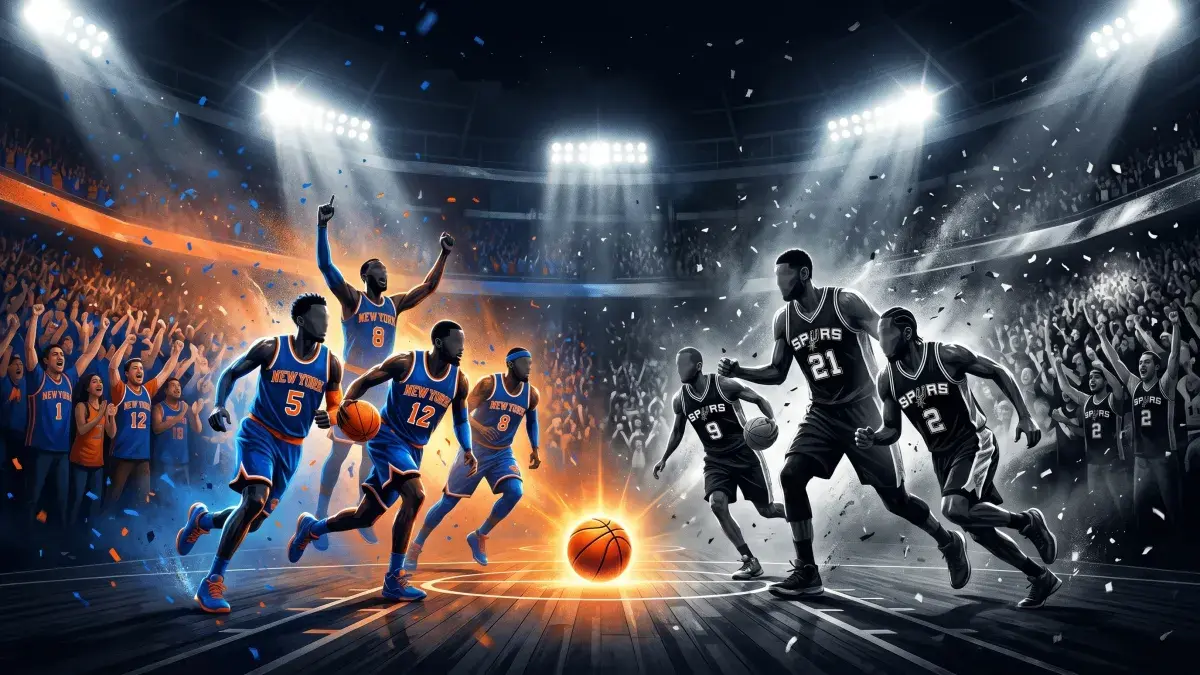
For the first time in 27 years, the New York Knicks are back in the NBA Finals — and the team standing between them and a title is the San Antonio Spurs, led by 22-year-old Victor Wembanyama. Game 1 tips off Wednesday, June 3, at 8:30 p.m. ET on ABC, in San Antonio. It is the rematch almost nobody outside the two cities saw coming when the playoffs began, and it has become the most-searched basketball matchup of the year.
The headline is irresistible on its own: the No. 2-seeded Spurs host the No. 3-seeded Knicks in a Finals that pits Wembanyama, the most hyped big man of his generation, against Jalen Brunson, the undersized guard who dragged a perpetually-disappointing franchise out of a quarter-century of near-misses. But the reason this series is everywhere — in ChatGPT queries, on Google, across every sports desk in the country — is that it sits on top of three stories at once: a generational rookie-era talent reaching the sport's biggest stage early, a heritage franchise finally breaking its drought, and a direct callback to the 1999 Finals these same two teams played the last time the Knicks got this far.
How we got here: two paths nobody predicted
Start with San Antonio. Wembanyama arrived as the No. 1 overall pick in 2023 carrying expectations no prospect had faced since LeBron James, and for two seasons the Spurs were a team-in-progress — exciting, young, and a year or two away on every analyst's timeline. They were not supposed to be here yet. Then they knocked off the West's top seed on their way through the bracket, and the "a year away" framing collapsed. A 7-foot-4 player who can protect the rim, switch onto guards, and stretch the floor turns out to compress timelines in a way the projections did not account for.
What makes San Antonio's rise feel sustainable rather than fluky is that it was built the old-fashioned way — through the draft, through patience, and through a culture the franchise has leaned on for decades. The Spurs did not trade their future for a win-now veteran or chase a marquee free agent. They drafted a generational talent, surrounded him with shooting and defenders, and let the timeline come to them. That is why even neutral observers treat this Spurs team as a threat for years to come, not a one-off: a 22-year-old centerpiece reaching the Finals is the kind of head start that reshapes a decade of the Western Conference.
The Knicks story is the opposite kind of surprise: not a team arriving early, but a franchise arriving at last. New York had not reached the Finals since 1999. An entire generation of fans grew up knowing the team only as a punchline — the dysfunction, the coaching carousel, the free agents who chose elsewhere. Brunson, signed in 2022 and doubted at every step as too small and too modestly-credentialed to be a lead guard, became the engine that changed the story. His playoff scoring, his late-game control, and a roster finally built around two-way wings instead of mismatched stars is what carried New York back to the top of the East.
The contrast with past Knicks teams is the whole point. For years New York chased stardom through splashy signings and headline trades that never cohered into a contender. This roster won by doing the unglamorous things — defending, rebounding, sharing the ball, and trusting a guard the rest of the league had written off as a complementary piece. For a fanbase conditioned to expect heartbreak, watching a methodically-built team simply outwork its way to the Finals has been its own kind of catharsis, and it is a large part of why the city's interest in this run has spilled so far beyond the usual basketball audience.
That both teams got here through grind rather than super-team shortcuts is part of why the matchup resonates. It is the rare Finals where both sides feel earned, and the recency of it — the bracket only resolved days ago — is exactly what is driving the search surge right now.
The 1999 echo that makes this bigger
The detail powering most of the "why does this matter" coverage is the history. The last time the Knicks reached the Finals, in 1999, their opponent was the San Antonio Spurs — and San Antonio won that series, the first championship of the David Robinson and Tim Duncan era. Now, 27 years later, the same two franchises meet again with the roles partly reversed: San Antonio is once again the team with the franchise big man, but this time the Knicks arrive as the older, hungrier organization chasing a title that has eluded them since the Patrick Ewing era.
Sports stories that fold a clean historical callback into a present-day drama travel far beyond the core fanbase, because they give casual viewers a reason to care. The 1999-to-2026 arc is the kind of narrative hook that turns a basketball series into a cultural event — the same dynamic we saw drive interest in other heritage-versus-newcomer moments this spring, from the closest Indy 500 finish in years to the wave of French Open upsets headlined by Coco Gauff's escape against Potapova. Drama plus history is the formula, and Knicks-Spurs has both in unusual abundance.
Wembanyama vs. Brunson: the stylistic clash
On the court, the series is a study in opposites. Wembanyama is the tallest impact player the league has seen, a rim-protecting, shot-blocking, three-point-shooting unicorn whose presence reshapes everything around him defensively. Brunson is generously listed at 6-foot-2 and plays a craft-heavy, footwork-driven game built on getting to his spots in the mid-range — exactly the area Wembanyama is built to erase.
That is the chess match the series will turn on: can Brunson and the Knicks' guards find clean looks with a 7-foot-4 eraser waiting at the rim, and can New York's physical, veteran wings make Wembanyama work hard enough on offense to wear down a younger team over a seven-game grind? San Antonio's edge is talent and ceiling; New York's edge is experience and physicality. Neither is obviously decisive, which is why the betting markets have treated this as one of the more genuinely uncertain Finals in recent memory rather than a coronation for either side.
The schedule and how to watch
The series runs on the standard 2-2-1-1-1 format, with San Antonio holding home-court advantage as the higher seed. Game 1 is Wednesday, June 3, at 8:30 p.m. ET in San Antonio, with Game 2 on Friday, June 5, before the series shifts to New York. Every game airs on ABC in the United States. If you have cut the cord, the games stream through the ESPN app, fuboTV, and other live-TV services that carry ABC — which is part of why "how to watch Knicks vs. Spurs" has been one of the fastest-rising search queries attached to the series.
The streaming question is its own small story. A growing share of fans no longer have traditional cable, so a marquee event like the Finals sends a predictable spike of people hunting for the cheapest legal way to watch a handful of games without committing to a year-long contract. If you are weighing a short-term streaming subscription just for the Finals, it is worth running the same quick cost check you would for any add-on — the kind of subscription-audit math we cover in the household budgeting tools at pay.thicket.sh — because a one-month sign-up beats an annual plan you will forget to cancel in July.
Why this series is trending everywhere right now
The timing is the whole story. The matchup was only locked in days before Game 1, which compresses an enormous amount of search and social interest into a single week — previews, predictions, schedules, ticket prices, and player explainers all spiking at once. "Knicks vs. Spurs," "Wembanyama Finals," "Knicks last Finals," and "NBA Finals 2026 schedule" have all surged together, the classic signature of a live event entering its peak-attention window.
There is also a cultural layer beyond the basketball. The Knicks are a New York team with a media gravity few franchises can match, and a 27-year drought ending in Madison Square Garden's orbit is the kind of redemption arc that pulls in viewers who do not normally watch the NBA. On the other side, Wembanyama is one of the most discussed athletes in any sport, a player whose every game generates highlight clips that travel far past basketball circles. Put a New York redemption story against a generational phenom and you have a series engineered for mass attention — the same appetite for shared, real-time cultural moments that has fueled the broader trend toward in-person community experiences and away from purely online life that we have tracked all year.
It also lands at a moment when fans are unusually conscious of what they spend their entertainment dollars on. The same belt-tightening mood behind trends like loud budgeting and underconsumption-core shapes how people approach a Finals run: more streaming a few games at a friend's place, fewer $400 nosebleed tickets. The NBA Finals remains one of the few live events large enough to override that caution for millions of viewers, which is exactly what makes the ratings and search data around it worth watching.
What to actually watch for in the series
Three things will decide it. First, foul trouble and minutes for Wembanyama — San Antonio's whole defensive identity runs through him, and if the Knicks can get him into early foul trouble or simply tire him out, the Spurs' ceiling drops fast. Second, whether New York's role-playing wings can hit enough outside shots to punish San Antonio for loading up on Brunson. And third, composure: the Spurs are the younger team in their first Finals, and Finals basketball has a long history of humbling talented teams that have not been there before.
For the Knicks, the pressure runs the other way — 27 years of franchise frustration and a fanbase that has waited a generation is its own kind of weight. Experience cuts both ways: it can steady a veteran team, or it can tighten a roster that knows exactly how rare the opportunity is.
Coaching and adjustments will matter more than usual, too. A seven-game series is a chess match that resets every 48 minutes, and the team that adapts fastest between games — tweaking matchups, changing where it attacks, finding new ways to free up its best scorer — usually wins the ones that go long. San Antonio will look for ways to keep Wembanyama on the floor and out of foul trouble; New York will hunt for any lineup that drags him away from the rim. The first two games in San Antonio will tell us a great deal about which staff has the better counterpunch.
How both teams handle that psychological load, as much as any matchup on paper, is what neutral fans will be tuning in to see.
The bottom line
The 2026 NBA Finals is the rare series that delivers on every layer at once: a generational young star in Victor Wembanyama, a long-suffering heritage franchise in the New York Knicks finally back on the biggest stage, and a direct historical rhyme with the 1999 Finals these same teams played. That combination — fresh stakes wrapped around an old story — is why it has become the dominant sports search story of early June, and why even people who do not follow basketball closely know the matchup by name. Game 1 is June 3 on ABC. Whatever happens, the league got the storyline it could not have scripted any better.
Origin
The 2026 NBA Finals matchup between the New York Knicks and San Antonio Spurs was set in the days before Game 1, when both conference finals resolved and the bracket locked in the No. 2 seed Spurs hosting the No. 3 seed Knicks. The series and its June 3 start date were confirmed by the NBA and ABC and reported across every major sports outlet, including NBA.com, ESPN, CBS Sports, Yahoo Sports, The New York Times' The Athletic, The Ringer, and SB Nation.
The angle that pushed the story past hardcore NBA audiences was the combination of narratives: the Knicks reaching the Finals for the first time since 1999, the same year these two franchises last met in the Finals; Victor Wembanyama reaching the championship round at 22 after the Spurs eliminated the West's top seed; and the streaming-era 'how to watch' surge that accompanies any marquee live event. That mix of heritage, a generational star, and a clean historical callback turned a basketball series into a broad cultural moment, driving search interest across schedule, prediction, and player-explainer queries simultaneously.
Timeline
Why Is This Trending Now?
The Knicks-Spurs NBA Finals is the single biggest sports story of early June 2026, and it is generating ChatGPT-surface and Google queries from many angles at once: 'when is Knicks vs Spurs Game 1,' 'NBA Finals 2026 schedule,' 'how to watch the NBA Finals,' 'Knicks last Finals appearance,' 'Wembanyama Finals,' 'Knicks vs Spurs 1999,' and 'who will win NBA Finals 2026.' The story sits at the intersection of three high-volume clusters — a generational young star in Victor Wembanyama, a 27-year drought ending for one of the league's biggest-market franchises, and a direct rematch of the 1999 Finals — which is why nearly every major sports outlet is framing it as a must-watch event rather than a routine series.
Recency window: the matchup was only locked in days before Game 1, which compresses preview, schedule, prediction, ticket, and how-to-watch searches into a single peak-attention week. Game 1 tips off Wednesday, June 3, on ABC, keeping the story at maximum search volume through the first weekend of June.
Frequently Asked Questions
Sources
- NBA.com - 2026 NBA Finals coverage: Knicks vs. Spurs
- ESPN - 2026 NBA Finals: Storylines, matchups that will define Knicks-Spurs
- CBS Sports - 2026 NBA Finals preview: New York Knicks vs. San Antonio Spurs
- Yahoo Sports - NBA Finals 2026: Knicks-Spurs schedule, where to watch, playoff bracket
- The Athletic (The New York Times) - Knicks-Spurs NBA Finals mega-preview
- The Ringer - Wemby vs. the Knicks: Four Questions That Will Decide the NBA Finals
- ABC - How, When & Where to Watch the 2026 NBA Finals: Knicks vs. Spurs
- SB Nation - Knicks vs. Spurs instant prediction for 2026 NBA Finals
- PCMag - Knicks vs. Spurs Game 1 Livestream: How to Watch the NBA Finals
- ESPN - ABC's exclusive coverage of the 2026 NBA Finals begins June 3