What is Coco Gauff Just Lost Her French Open Title Defense in the Third Round. Both Defending Champions Are Out for the First Time Since 2004.?
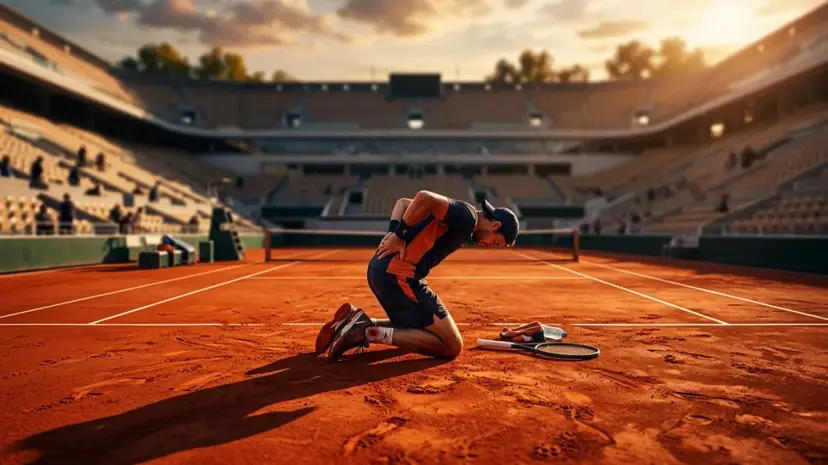
By Saturday evening in Paris, the 2026 French Open had a problem no one expected three days ago: it was almost out of defending champions. The defending men's champion, Carlos Alcaraz, had withdrawn before the tournament with a wrist injury. The defending women's champion, Coco Gauff, lost in the third round on Saturday, May 30, 2026, to a Russian-born Austrian named Anastasia Potapova who had never reached the second week of a major before 2024. The score was 4-6, 7-6 (7-1), 6-4 across two hours and thirty-seven minutes on Court Philippe-Chatrier, and it ended Gauff's title defense at the same stage of the draw where the men's defending champion's title defense had ended two months earlier in a doctor's office.
The result, on its own, would have been a story. Combined with the rest of the week — Jannik Sinner out, Novak Djokovic out, Alcaraz never on the entry list — it became something larger. The 2026 French Open is now the first Roland Garros since 2004 where neither the defending men's nor the defending women's champion will play in the round of 16. The men's draw is guaranteed to produce a first-time Grand Slam champion. The women's draw, after Gauff's loss, has lost the title-holder before the second weekend for the first time in four years. If you walked into Roland Garros on Sunday morning expecting the tournament you saw a year ago, you were watching a different tournament by Saturday night.
The match: a defending champion who could not finish points
Gauff came into the third round having dropped a set in each of her first two matches but having looked, by her own assessment after the second round, like a player still finding her clay-court rhythm. She drew Potapova, the 28th seed, on Court Philippe-Chatrier in the second match of the day. The crowd showed up expecting routine. They got the opposite.
The first set went to plan for the favorite. Gauff broke Potapova in the third game, was broken back, then broke again to take the set 6-4. Through the opening 39 minutes, Gauff's forehand was producing the heavy topspin that has been her clay weapon since juniors, and Potapova's first serve was sitting around 50 percent.
The second set was when the match changed. Potapova built a 5-2 lead by punishing Gauff's second serve and stepping inside the baseline on every short ball — the exact pattern that had cost Gauff her Rome quarter-final earlier in the month. Gauff then did what she has done dozens of times in her career: she rallied. She broke back, held, broke again, held again, and pulled even at 5-5. She held for 6-5. She forced a tiebreak. And then, in the tiebreak, Potapova went to a different gear and won it 7-1. Gauff lost the breaker on a forehand error she would replay in the press conference afterward: "She was able to finish the points and I wasn't. Just not capitalizing on certain shots."
The third set followed a pattern that has become familiar in Gauff's losses on clay this spring. She broke first, led 3-1, and could not consolidate. Potapova broke back at 3-2, held for 3-3, and from there played the cleaner tennis the rest of the way. The decisive break came at 4-5: a Gauff double fault on 30-40 ended the match. The American walked off court with 46 unforced errors, three double faults, and the same flat affect she had carried in her loss to Jasmine Paolini in Rome two weeks earlier. "I lost the same way in Rome as I did here," she said. "You never want to lose the same way back-to-back times."
Who is Anastasia Potapova, and why is she suddenly Austrian
Potapova is 24, ranked No. 30 in the world, and as of December 2025 plays under the Austrian flag rather than the Russian one she carried for the first seven years of her professional career. She was born in Saratov, Russia, in 2001. She won the Wimbledon girls' singles title in 2016 at the age of 15. She turned professional that year. She played for Russia in the Billie Jean King Cup in 2018 and 2019.
Russia has been banned from team competition in tennis since the 2022 invasion of Ukraine. Potapova announced her nationality switch to Austria on December 4, 2025, writing on social media that "Austria is a place I love, is incredibly welcoming and a place where I feel totally at home." With the switch, she became Austria's highest-ranked women's tennis player by a margin of more than 60 ranking spots. Her ex-husband, Russian hockey player Alexander Shipachev, had made a similar move two years earlier.
On the court, the switch coincided with a career-best stretch. Potapova reached the Linz final in February 2026 and the Madrid Open semi-final in April as a qualifier — her best result at a WTA 1000 event. Her record against Gauff before Saturday was 2-2; she is now 3-2. The win on Saturday equaled her career-best Grand Slam result; she had previously reached the Roland Garros fourth round once before, in 2024.
The historical anchor: 2004
This is the part of the story that pushed it from "another upset" to "everyone is writing about this tournament." Both defending champions have now exited Roland Garros before the round of 16. The last time that happened was 2004, when Juan Carlos Ferrero (defending the 2003 men's title) and Justine Henin-Hardenne (defending the 2003 women's title) both lost early. Ferrero was beaten in the first round by Igor Andreev. Henin-Hardenne withdrew during the second round to a cytomegalovirus infection. The 2004 tournament was eventually won by Gaston Gaudio on the men's side and Anastasia Myskina on the women's — both first-time and only-time Grand Slam champions.
The pattern of both defending champions exiting before the second week has now happened twice in Roland Garros's Open Era. Sunday's round-of-16 schedule will be the first since 2004 in which neither champion takes the court. The men's draw will guarantee a first-time Grand Slam winner, since Djokovic and Sinner are out and Alcaraz never entered. The women's draw still has three former champions alive — Iga Swiatek (four titles), Aryna Sabalenka (defending finalist), and Elena Rybakina (2025 Roland Garros finalist) — but none of them held the trophy from a year ago.
What is left of the women's draw
The 2026 women's draw arrived in Paris as the deepest in years. The top four — world No. 1 Aryna Sabalenka, defending champion Gauff, four-time Roland Garros winner Iga Swiatek, and No. 2 seed Elena Rybakina — were spread across the four quarters in a way that produced projected semi-finals of Sabalenka-Gauff and Swiatek-Rybakina. The remaining contenders included Rome champion Elina Svitolina, French Open 2017 champion Jelena Ostapenko, and 2019 semifinalist Amanda Anisimova.
Three days later, the picture has tightened sharply. Gauff is out. Madison Keys is the only remaining American woman in the draw. Potapova advances to a fourth-round match against the winner of Mirra Andreeva and Olga Danilovic. The bottom half of the draw, with Swiatek, Rybakina, Ostapenko, and Svitolina, now looks like the title-contender half, since the top of the bracket has been cleared of its highest seed.
The single biggest beneficiary, on paper, is Sabalenka. She has been the world No. 1 for the better part of two years and has been waiting for her first major on a surface that is not hard court. The Belarusian arrived in Paris off a quarter-final loss in Madrid and a third-round loss in Rome, with lingering back and hip issues she flagged at the end of the Italian Open. With Gauff out of her half of the draw, her route to the final has gotten meaningfully easier.
What is left of the men's draw
The men's side, even before Saturday's women's result, was the most wide-open Grand Slam in over a decade. Jannik Sinner went out in the second round to Juan Manuel Cerundolo on Thursday after a controversial cramping timeout. Joao Fonseca took out Novak Djokovic in five sets on Friday in the longest match of Djokovic's Roland Garros career — four hours and forty-nine minutes. Carlos Alcaraz, the two-time defending champion, withdrew before the tournament started with a wrist injury that his team has called "weeks, not days." The result is the same kind of compressed-week sports story that played out on the Memorial Day weekend racing schedule — only days after Felix Rosenqvist won the closest Indy 500 finish in race history, tennis produced its own multi-event narrative of stars losing in sequence.
That leaves a fourth-round field heavy on first-time deep runs: Fonseca, Cerundolo, Lorenzo Musetti, Casper Ruud, Alexander Zverev, Andrey Rublev, Tommy Paul, and France's own Moise Kouame, whose five-hour third-round win over Karen Khachanov on Friday night put him into the second week of a major for the first time. None of those eight players has won a Grand Slam. The tournament will produce a first-time men's major champion for the first time at Roland Garros since Gaston Gaudio did it in 2004.
Why the story is bigger than one match
Tennis upsets happen at every major. Gauff lost in the second round at the Australian Open three years ago. Djokovic has lost early at Wimbledon. What makes this Roland Garros different is that the upsets are not isolated. They are stacked. Within seven days, the tournament has lost the world No. 1 (Sinner), the most decorated active player (Djokovic), the two-time defending men's champion (Alcaraz), and the defending women's champion (Gauff). All four were among the favorites entering the tournament. None of them will be on court for the round of 16.
The compounding effect is what is driving the story across non-tennis audiences. Search interest in Roland Garros has spiked across the week, but the queries are no longer about specific matches — they are about the structure of the tournament itself: who is left, why is the draw open, who will win. The same pattern played out at the 2017 US Open, when the men's draw lost Andy Murray, Stan Wawrinka, Novak Djokovic, and Roger Federer in the same week and Rafael Nadal eventually won the title with Kevin Anderson, a player who had never been past a major quarter-final, in the final. The 2026 French Open is now on track to produce a similar moment of generational handover, on both sides of the draw simultaneously.
What that means for the next week of tennis is a tournament that, for the first time in over twenty years, no one can confidently predict. The draw is open on both sides. The defending champions are home. The next major champion, on the men's side at least, has not been crowned at a Grand Slam before. Sunday begins the round of 16, the day on which the two players who held the 2025 trophies are not playing tennis. The 2026 French Open is no longer the tournament anyone arrived to watch. It is the one they got instead.
Origin
The Gauff-Potapova match took place at Court Philippe-Chatrier on Saturday May 30, 2026, in the third round of the 2026 French Open. The story was first carried by tournament feeds and the official Roland Garros site, and amplified within hours by ESPN, CBS Sports, Eurosport, Olympics.com, Tennis Majors, France Info, and the WTA. The angle that pulled the story past tennis-only audiences was the historical anchor: combined with Carlos Alcaraz's pre-tournament withdrawal, both defending champions are now out before the round of 16 — the first time at Roland Garros since the 2004 tournament, when Juan Carlos Ferrero lost in the first round and Justine Henin-Hardenne withdrew with cytomegalovirus.
Timeline
Why Is This Trending Now?
The Gauff loss on May 30, 2026 is the second pillar of the 'wide-open Roland Garros' narrative, sitting alongside the Sinner-Cerundolo and Fonseca-Djokovic upsets from earlier in the week. ChatGPT-surface queries are routing through it from multiple angles at once: 'Coco Gauff French Open loss,' 'who beat Coco Gauff,' 'who is Anastasia Potapova,' 'why is Potapova Austrian,' 'defending champions Roland Garros 2026,' 'French Open women's draw 2026,' and 'last time both defending champions lost Roland Garros.' The story compounds the men's-side upsets into a single 'both defending champions out before round of 16' headline that is generating cross-platform discussion well outside tennis — most major sports outlets led their Saturday evening coverage with the 'first time since 2004' framing. Recency window: 1 day from publication.
Frequently Asked Questions
Sources
- CBS Sports - French Open 2026 results: Defending champion Coco Gauff stunned in third round defeat to Anastasia Potapova
- ESPN - Defending champion Gauff falls to Potapova at French Open
- Olympics.com - French Open 2026: Coco Gauff's title defence curtailed in third round at the hands of Anastasia Potapova
- Tennis Temple - Roland-Garros 2026: Both Defending Champions Eliminated Before Second Week – First Time Since 2004
- Roland-Garros Official - Potapova fait tomber la championne Gauff
- WTA - Gauff vs. Potapova Round of 32 Roland Garros 2026 official scores
- Eurosport - Roland-Garros - Tenante du titre, Coco Gauff eliminee par Anastasia Potapova au troisieme tour (4-6, 7-6, 6-4)
- ESPN - Russian-born Anastasia Potapova switches nationality to Austrian
- Yahoo Sports - Russian-born tennis player Anastasia Potapova switches nationality to Austrian