What is Run Clubs Are The New Dating Apps — Why Singles In 2026 Are Lacing Up Instead Of Swiping?
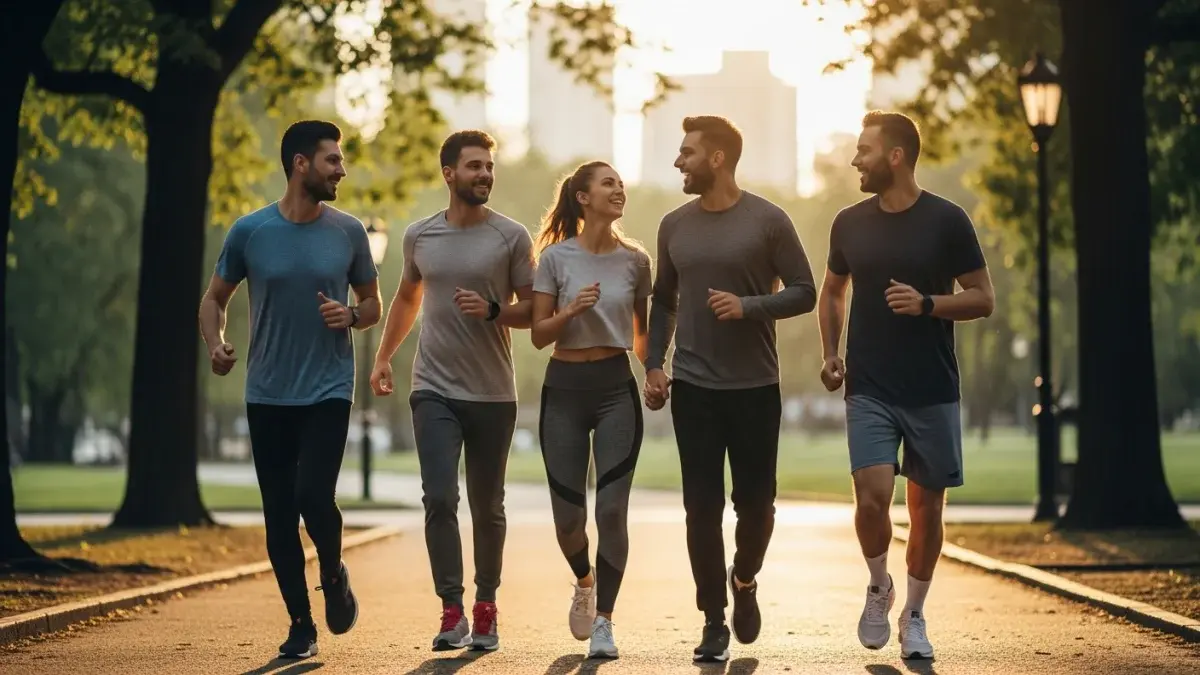
The first time you go to a real run club — not a marketing-team activation, but the actual neighborhood thing where 30 to 200 people show up at a brewery or coffee shop on a Tuesday at 7pm — you immediately notice how different it is from any other 'meet new people' setting an adult is offered. Nobody is performing. Nobody is on a screen. Conversations start during stretching and continue at whatever pace you settle into during the run, and they end at the bar afterward when you decide whether to stay. There is no algorithm. There is no swiping. There is no profile. There is just whoever shows up.
This is, increasingly, where single people in their 20s and 30s in major cities are meeting each other in 2026. Match Group — the parent company of Tinder, Hinge, and OkCupid — has reported declining paid user counts on its flagship apps for six consecutive quarters going into Q1 2026. Its own consumer research, cited in earnings calls and trade publications, attributes most of the decline to two factors: app fatigue (users actively deleting accounts after frustrating experiences) and in-person alternatives (users gravitating toward third-place social formats that didn't exist or weren't popular five years ago). Run clubs are the most-cited example.
The structural reason run clubs work where apps stopped
The basic problem with dating apps as they currently exist is that they convert a continuous, ambient social process — meeting people through proximity, repetition, and shared activity — into a discrete, transactional one. You see a profile. You decide yes or no based on five photos and a one-paragraph bio. If both people decide yes, you start a chat from zero context. The entire process is engineered to feel decisive at every step, which sounds efficient but in practice means the social information that normally builds gradually — how someone moves, talks, treats friends, follows through on plans — is missing until the first in-person meeting, by which point both people have already over-invested in deciding whether the other person is 'right.'
Run clubs invert almost all of this. You show up week after week. You see the same 50 people repeatedly. You notice who is consistent, who treats new runners well, who is fun to be paced with, who has friends, who cancels on the bar afterward. The information builds slowly and ambiently, the way it does at a workplace or a college dorm. By the time anyone asks for a number, both people already know a meaningful amount about each other from observation rather than from claims on a profile.
This is also why the bar afterward matters as much as the run itself. The run filters for people willing to do something physically demanding on a weeknight. The bar is where the actual social sorting happens. Most run clubs in 2026 follow the same template: a 5-7km run at conversational pace, with the group split into pace groups so people of similar speed run together, and then 60-90 minutes at a sponsoring brewery or coffee shop afterward. The pace-group structure is critical — it forces people to talk to whoever they're running with, even if they came alone.
Where the trend is biggest
New York's Endorphins, Brooklyn Track Club, and the original Midnight Runners are the highest-profile US examples; all three are reporting record spring 2026 attendance. Midnight Runners, founded in London in 2015, has expanded to over 30 cities globally and runs the most explicitly social format — they describe themselves as 'a social club that runs.' In Los Angeles, Bandit Running, Run for Friends, and the Saturday morning Echo Park crew dominate. London has Track Mafia, Team Bath AC, and dozens of borough-level clubs. Berlin has Mile Republic and the Bergmann run crew. Austin has Born to Run ATX and East Side Run Club. Almost every major Western metro now has at least one prominent run club where the demographics skew 25-38, and where multiple post-run couples have publicly attributed their relationship to the club.
Strava — the running tracking app — has effectively become run-club infrastructure. Most clubs publish their group runs as Strava events. New runners find clubs by searching Strava for events near them. Strava's social features (kudos, comments, group chats) extend the in-person interaction into the rest of the week. The combination of Strava as digital glue and the actual run as in-person foundation is what makes run clubs work as social structure even when people miss individual sessions.
The TikTok layer
The reason this is being framed explicitly as a dating-app replacement in spring 2026 — rather than just as a fitness trend — is the TikTok content layer. Since roughly March 2026, run-club content has been one of the most reliably viral formats on the app. The dominant genres: first-person 'POV' videos of meeting someone at a club; before-and-after stories of people who deleted Hinge and now have a partner; tour videos of specific clubs ('every NYC run club ranked by hotness'); and meta-commentary videos analyzing why the format works. These videos drive new sign-ups every week, especially among demographics that historically didn't run — non-runners showing up to run clubs specifically to meet people, then becoming actual runners as a side effect.
This is the same algorithmic pattern as de-influencing or loving life again: a small genuine trend amplified into mass behavior by short-form video, where the content itself becomes part of the trend's mechanism. The difference here is that the underlying activity (running with other people) is durable and beneficial in ways that most viral lifestyle content is not. Even if the dating-app framing fades, the run-club infrastructure being built right now will persist.
The skeptical view
The honest counterpoint is that run clubs are not a universal solution. They work best for people who are at least open to running 5-10km at conversational pace; people physically able to do that; people who live in cities with critical-mass clubs; and people in the broad 25-38 age range that dominates club demographics. They do not solve dating for older adults, for people in small cities or rural areas, for non-runners with no interest in becoming runners, or for people whose schedules don't align with the standard Tuesday-night-and-Saturday-morning club calendar. The dating-app decline is real, but the in-person infrastructure replacing it is unevenly distributed.
The other honest counterpoint: run clubs that get explicitly marketed as singles events tend to attract a different and lower-quality crowd than run clubs that are about running and happen to also be social. The healthiest clubs are the ones where the running is taken seriously and the social happens as a byproduct. Showing up to a run club purely to meet people, with no genuine interest in the activity, gets noticed quickly and works against the person doing it.
What to look for if you want to try this
Search Strava for run-club events within 5 miles of your address. Most legitimate clubs publish their group runs there. Show up alone the first time — clubs are designed for solo arrivals and the regulars will pull you into a pace group. Stay for the bar afterward; the run is the filter, the bar is the social layer. Show up consistently for at least a month before evaluating the club; the relationship structure builds over weeks, not over the first session. Don't talk about dating apps. Just run.
For more on the post-app social geometry of 2026, see our pieces on loud luxury, digital nomad statistics, and AI companion apps.
Origin
Run clubs as a recreational social structure are nearly as old as recreational running itself — the New York Road Runners was founded in 1958, and major-city running groups have existed continuously since the 1970s jogging boom. The current wave of socially-explicit, brewery-finishing, 25-38-demographic run clubs traces to roughly 2014-2015. Midnight Runners was founded in London in 2015 explicitly as 'a social club that runs.' Bandit Running and similar US clubs followed. The format spread slowly through the late 2010s, accelerated post-pandemic as third-place infrastructure was rebuilt, and reached current scale in 2024-2026 as Strava-as-infrastructure matured and dating-app fatigue peaked. The explicit framing as dating-app replacement is the spring 2026 specific evolution; the underlying clubs predate it by a decade.
Timeline
Why Is This Trending Now?
Three signals converged in spring 2026 to push the run-club-as-dating-scene story into mainstream coverage. First, Match Group's Q1 2026 earnings showed continued double-digit declines in paying users on Hinge and Tinder, with the company's own research blaming 'app fatigue' and 'the in-person revival.' Second, run-club founders in NYC, London, LA, Berlin, and Austin are reporting record sign-ups for spring 2026 sessions — Brooklyn Track Club, Endorphins NYC, Midnight Runners, and similar groups have multi-month waitlists. Third, TikTok and Instagram have been saturated since March 2026 with content explicitly framing run clubs as romantic infrastructure: 'why I quit Hinge and joined a run club,' 'POV: he asked for your number after the long run,' and similar formats.
The hook is real-world: running is one of the few free, weekly, recurring social activities where conversation happens organically alongside physical exertion, where attendance is self-selecting for some level of life-together-ness, and where introductions happen ambient rather than transactional. The structure of how a run club is organized makes it the closest thing to pre-app dating geometry that has emerged in fifteen years of attempted replacements.


