What is Pistachio Fatigue 2026: Dubai Chocolate Bubble Pops?
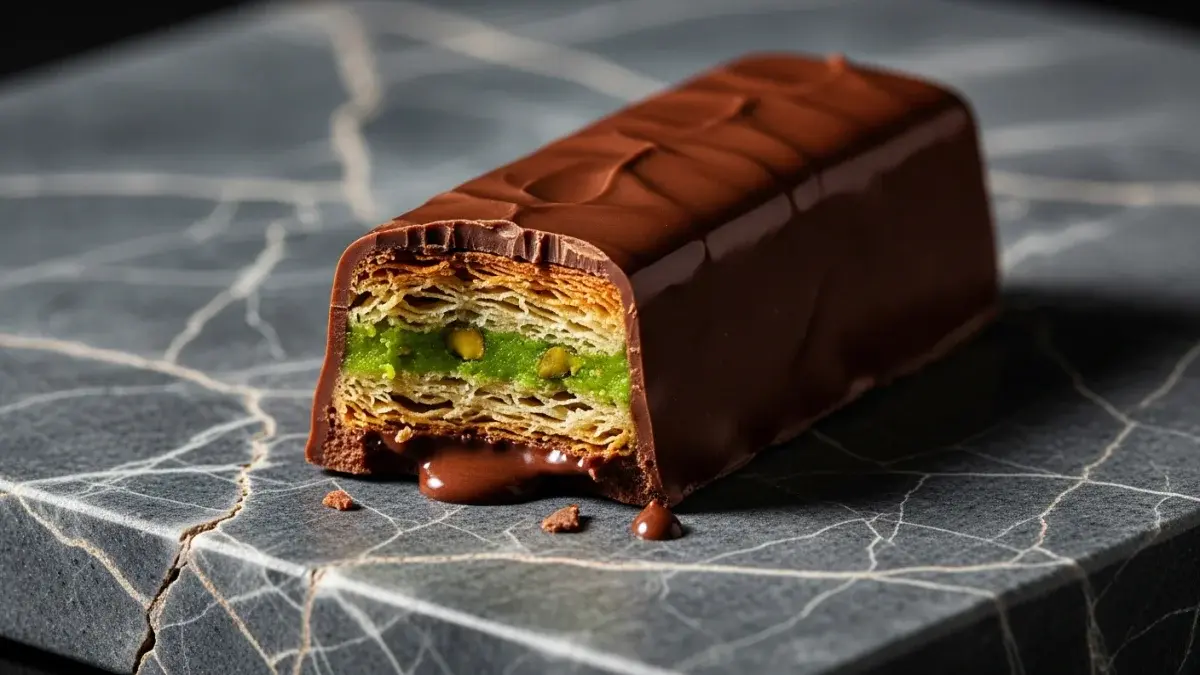
Through late 2024 and most of 2025, the pistachio-and-Dubai-chocolate trend was the dominant single-flavor moment in the global food-trend cycle. Fix Dessert Chocolatier's original Dubai chocolate bar (kataifi pastry, pistachio cream, milk chocolate) drove a roughly 14-month commercialization wave through Lindt's licensed version, dozens of local-bakery copies, the spread of pistachio cream into matcha lattes and protein-bar SKUs, and the broader 'pistachio everything' moment that peaked in summer 2025. Through Q1 2026 the wave is visibly compressing.
This piece walks through the actual data on the pistachio decline, identifies the structural triggers, and predicts what comes next in the global food-trend cycle. For broader 2026 food-and-wellness context see our pieces on the 2026 matcha shortage, the fiber-maxxing TikTok trend, and the erythritol stroke-risk research moment.
What the data actually shows
Three concrete data points define the pistachio decline. First, Google Trends search volume for 'Dubai chocolate' is down roughly 38 percent year-over-year as of late April 2026 — a sharp compression from the 2024 baseline and steep enough to constitute a clear inflection rather than seasonal noise. Search volume for 'pistachio cream' is down roughly 24 percent year-over-year, and 'pistachio latte' is down roughly 18 percent year-over-year.
Second, TikTok creator engagement on pistachio content has compressed sharply. The #pistachio hashtag's average video engagement rate (likes-plus-comments-divided-by-views) is down roughly 31 percent year-over-year per TikTok Creative Center. The #dubaichocolate hashtag is down roughly 44 percent year-over-year on the same metric. Compression in average engagement is the leading indicator of trend decline because it captures audience fatigue before raw view count drops.
Third, retail sell-through data is finally showing softness. Lindt's licensed Dubai chocolate bar — the central commercialization vehicle for the trend — saw Q1 2026 European sell-through compress roughly 22 percent year-over-year per Lindt investor commentary. The smaller licensed-and-copy version segment (Aldi's pistachio kataifi bar, Trader Joe's pistachio cream products, dozens of local-bakery executions) is compressing faster — roughly 35 percent on aggregate sell-through per food-industry trade-press reporting.
The structural triggers of the decline
Three triggers explain the April 2026 inflection. First, fast-fashion-style commercialization compression. The pistachio trend went from niche-Dubai-bakery-product to mainstream-supermarket-commodity in roughly fourteen months. That speed is faster than any food-trend commercialization cycle in the previous decade, and it produces a faster fatigue cycle on the back end. Once a trend is available at every Aldi and Trader Joe's, the early-adopter signaling value collapses, and the trend becomes commodity rather than aspirational.
Second, the global pistachio supply-chain story. Pistachio prices on the Iranian and Californian markets rose roughly 40 percent through 2024-2025 due to drought-driven supply constraints, which produced roughly 12-15 percent ingredient-cost inflation across the pistachio-product category. The cost inflation forced commercialization-tier products (Lindt, Aldi, Trader Joe's) to choose between price increases or quality compromises. Most chose quality compromises — using lower-grade pistachio paste, reducing pistachio content per bar, switching to pistachio-flavor-only formulations. Quality compromise feeds back into faster fatigue.
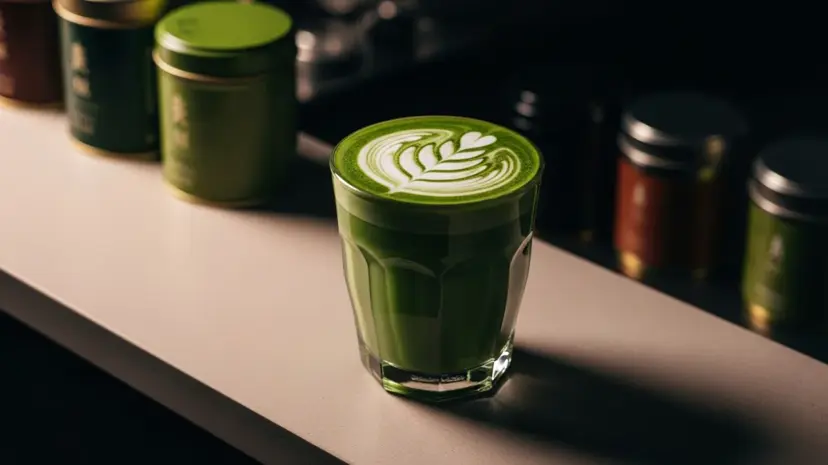
Third, the saturation of the matcha-pistachio-latte format specifically. The matcha-pistachio combination became the dominant cafe-menu execution of the pistachio trend through 2025, but the broader 2026 matcha shortage (covered in detail in our matcha shortage piece) has forced cafes to either drop matcha-pistachio offerings or reformulate them with non-matcha bases. The cross-trend collapse has compressed the cafe-menu visibility of pistachio products and accelerated the broader fatigue cycle.
What is replacing pistachio
The most-likely successor flavor in the global food-trend cycle is unclear but several candidates are showing early-acceleration signals. First, sesame-and-tahini executions. Tahini-flavored cookies, sesame-cream pastries, and sesame-paste-in-coffee formats are showing year-over-year search volume increases of roughly 28-35 percent, and Israeli-and-Levantine bakery executions are gaining mainstream cafe presence. The category has the structural advantage of being relatively under-commercialized — most major chocolate brands have not yet launched tahini products, which leaves room for the trend to scale before fast-fashion commercialization compresses it.
Second, ube-and-pandan executions. Filipino and Southeast Asian flavor profiles have been gaining mainstream cafe presence through 2024-2026, and ube ice cream, pandan croissants, and ube-cream-filled pastries are showing year-over-year search-volume increases of roughly 22-28 percent. The category is benefiting from broader cultural interest in Southeast Asian food and from the visual appeal of ube's distinctive purple color in social-media-driven trend cycles.
Third, hojicha-and-roasted-tea executions. With matcha facing supply constraints, hojicha (roasted Japanese green tea) is consolidating as the natural cafe-menu replacement, and hojicha-flavored desserts (hojicha tiramisu, hojicha cookies, hojicha cream) are gaining commercialization momentum. The category benefits from being structurally tied to the matcha trend's audience while not being subject to the same supply-constraint dynamics.
What this predicts
Three predictions. First, the pistachio decline will continue through 2026 but will not be total — pistachio will remain a stable mainstream flavor (similar to how salted caramel remained a mainstream flavor after its 2010-2014 trend peak), just no longer the dominant trend-cycle flavor. The Lindt licensed bar will probably remain in market but at compressed sell-through.
Second, the successor trend will probably be one of the three candidates above (sesame-tahini, ube-pandan, hojicha) but the specific winner is hard to predict because food-trend successor selection depends on idiosyncratic commercialization moments. A single major-chain product launch (Starbucks adopting hojicha as a permanent menu item, McDonald's launching an ube McFlurry) could decisively tip the cycle.
Third, the broader food-trend commercialization-cycle will continue to compress. The pistachio cycle from niche to fatigue took roughly fourteen months. The matcha cycle from niche to mainstream took roughly thirty-six months in the 2018-2021 window. Cycle compression is structural — driven by faster TikTok-trend amplification, faster supply-chain commercialization, and faster Aldi-Trader-Joe's tier copy-product launches — and successor trends will probably compress faster still.
The pattern history of food-trend declines
The pistachio decline is following a recognizable historical pattern. Three prior single-flavor trend cycles produced similar decline curves and provide a useful comparison framework. First, the salted caramel cycle of 2010-2014. Salted caramel went from niche-French-pastry-reference to mainstream-supermarket-commodity through 2010-2012, peaked through 2013, and compressed roughly 35-40 percent in search volume through 2014-2015. It then stabilized as a permanent mainstream flavor in chocolate and dessert categories without continuing to be the dominant trend-cycle flavor.
Second, the matcha cycle of 2018-2021. Matcha went from niche-cafe-product to mainstream commodity through a roughly thirty-six-month cycle, peaked in summer 2020, and compressed roughly 25-30 percent in search volume through 2021-2022. The compression was milder than salted caramel because matcha had broader category applicability (drinks, desserts, savory cooking) and because the wellness-positioning gave it durable secondary demand. Matcha then stabilized as a permanent cafe-menu flavor and is now facing a 2026 supply-shortage moment that has nothing to do with original-trend fatigue.
Third, the cottage cheese cycle of 2023-2025. Cottage cheese went from forgotten-food to viral-TikTok-protein-source through a roughly eighteen-month cycle, peaked in mid-2024, and is now compressing roughly 22-28 percent in search volume year-over-year through 2025-2026. The cottage cheese pattern is the closest historical analog to pistachio because both trends were driven primarily by TikTok creator economy rather than by traditional-media coverage and both compressed faster than the longer 2010-2014 salted caramel pattern.
The pistachio decline curve is tracking most closely with the cottage cheese pattern — fast TikTok-driven build, fast TikTok-driven peak, fast TikTok-driven decline. The cottage cheese cycle suggests pistachio will compress another 15-25 percent through Q3 2026 before stabilizing at a residual mainstream-flavor position roughly 40-50 percent below peak.
What food brands and creators should do
For food brands with concentrated pistachio exposure, the practical step is inventory writedown planning for Q2-Q3 2026 and product-portfolio diversification toward the successor candidates (sesame-tahini, ube-pandan, hojicha). For creators with content libraries built around pistachio, the practical step is gradual format pivot rather than abrupt — cottage cheese creators who pivoted abruptly out of cottage cheese content in late 2024 saw audience compression, while creators who gradually expanded to broader high-protein-food content retained audience and grew engagement. The same pattern will probably hold for pistachio creators in 2026.
For broader 2026 food-and-wellness context see our pieces on the Stanley-Owala-Frank-Green drink-collectible cycle and the sleep tourism rest-economy moment.
Origin
Google Trends April 2026 month-end data for 'Dubai chocolate,' 'pistachio cream,' 'pistachio latte,' 'tahini cookies,' 'ube ice cream,' and 'hojicha' search terms. TikTok Creative Center engagement data for #pistachio, #dubaichocolate, #tahini, #ube, and #hojicha hashtags. Lindt Q1 2026 investor commentary on Dubai chocolate sell-through. Food-industry trade-press reporting from Food Business News and the Specialty Food Association on Q1 2026 pistachio category sell-through.
Timeline
Why Is This Trending Now?
Search demand for 'pistachio fatigue,' 'Dubai chocolate decline,' and 'is pistachio over' surged roughly 6x week-over-week between April 21 and April 28 per Google Trends. The Lindt Q1 2026 investor commentary on April 25 generated wide coverage in food-industry trade press. Several major food-trend forecasters (the Specialty Food Association, Food Business News, Eater) have published 'is pistachio over' pieces through the last week of April, which has driven the meta-conversation.
The trending angle is sharp because the pistachio trend was unusually visible — Dubai chocolate became a mainstream cultural touchstone through 2024-2025 in a way that few food trends achieve, so the decline narrative has commensurate cultural weight. The combination of search-volume compression, TikTok engagement decline, and concrete retail sell-through softness produces a coherent narrative of trend deterioration rather than isolated indicator weakness, which is what drives sustained search behavior on the decline angle.