What is The Global Matcha Shortage Is Worse In Spring 2026 — Here's What's Actually Happening On Japan's Tea Farms?
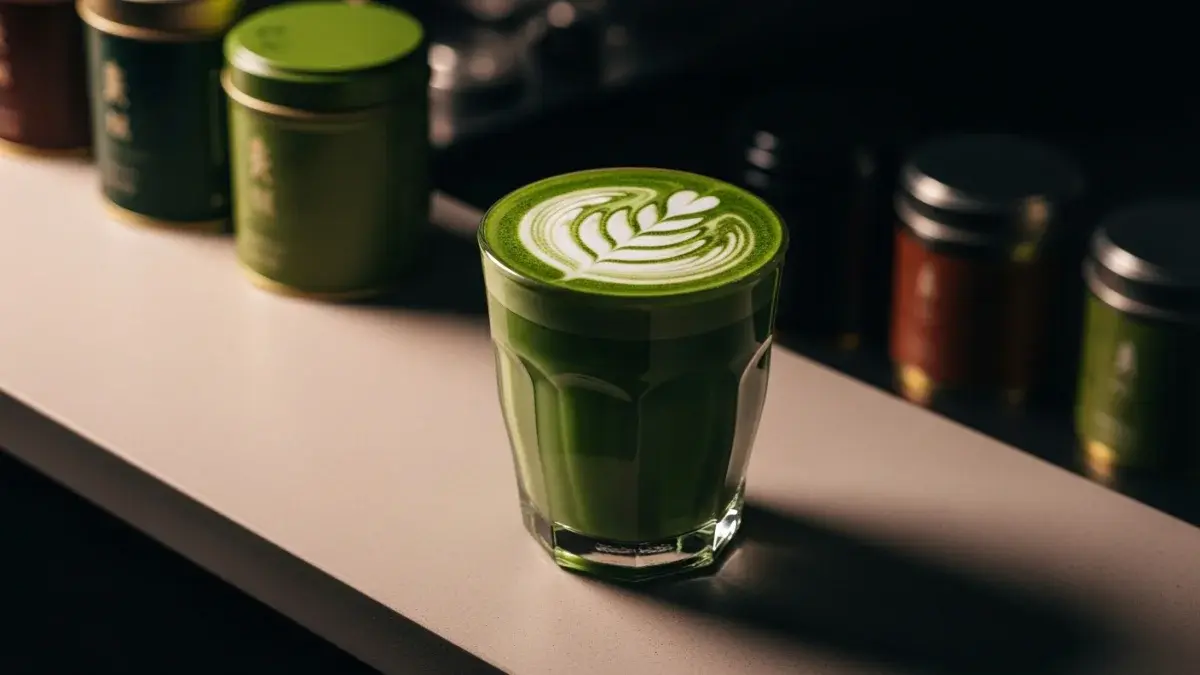
If you have tried to buy a tin of ceremonial matcha in the past six months you already know the situation. Ippodo's online store has been showing 'sold out' on its core SKUs for most of 2025 and 2026. Marukyu Koyamaen capped purchases at one tin per customer last fall and then pulled most of its lineup from US distribution entirely. Mizuba and Naoki Matcha email subscribers about restocks that sell out in under an hour. Cafes that built whole menus around matcha lattes — Cha Cha Matcha in New York, Stonemill Matcha in San Francisco, Kettl in Brooklyn — have either restricted ordering, raised prices substantially, or done both. The going rate for a 30g tin of mid-tier ceremonial matcha that cost $25-30 in 2023 is now $50-70 if you can find it at all.
This is not a hype shortage like the one Stanley cups had in 2024 (where supply existed but demand briefly outran it). It is a structural shortage, rooted in the actual physics and economics of how matcha gets made in Japan. Understanding it requires looking at three things: the tea, the farmers, and the demand curve that ran away from both.
Matcha is not just powdered green tea — it is a specific crop, grown in a specific way
The first thing to understand is that ceremonial matcha cannot be casually scaled. It is made from tencha — green tea leaves grown under shade for the final three to four weeks before harvest. The shading triggers the plants to overproduce chlorophyll and theanine, which is what gives ceremonial matcha its bright color and characteristic umami. After picking, the leaves are steamed, dried flat (not rolled, like most green teas), the stems and veins removed, and the resulting flakes ground into powder using granite stone mills that produce roughly 30-40 grams of matcha per hour, per mill.
Every step of this is a constraint. The shade structures (traditionally bamboo and straw, increasingly synthetic) take labor to build and maintain. Tencha-grade tea bushes require roughly five to seven years from planting before they produce harvestable leaf at quality. The granite stone mills, which Japan's matcha industry has not significantly mechanized in over a hundred years, set a hard ceiling on how much finished matcha any factory can produce per day. Switching a tea farm from sencha (regular Japanese green tea) to tencha is a multi-year capital investment that most family-run farms cannot finance on speculation.
This is why, when Western demand for matcha doubles in 18 months, supply cannot follow. The bottleneck is not in shipping or branding — it is in the actual rate at which Japan can grow, dry, and grind tencha into powder. The Japanese Ministry of Agriculture, Forestry and Fisheries publishes annual tea-output data, and matcha-grade tencha production has grown roughly 4-7 percent per year in recent years, even as demand has grown several times faster.
What the demand side actually looks like
The clean way to read the demand curve is through Google Trends. Searches for 'matcha' in the US, UK, and continental Europe roughly tripled between 2020 and 2024, then doubled again from 2024 to early 2026. The acceleration coincides with three specific drivers. First, post-pandemic interest in functional beverages — matcha is positioned as the lower-jitter alternative to coffee, with theanine providing a smoother caffeine experience. Second, TikTok food creators normalized the matcha latte as an aesthetic object: the bamboo whisk, the bowl, the bright color photograph extremely well. Third, Starbucks, Dutch Bros, and other chains rolled out matcha-based menu items globally, which dramatically expanded the daily-drinker base for matcha well beyond the specialty-tea audience.
The chains in particular changed the math. A specialty-tea consumer drinking ceremonial matcha at home goes through 30g (one tin) every two to three weeks — roughly 600g per year. A Starbucks daily customer ordering a matcha latte goes through 4-6g per drink, every weekday — roughly 1.5kg per year, except they are not buying ceremonial-grade tencha; the chains use culinary-grade matcha. But culinary-grade matcha is still made from tencha, and the shading, harvesting, and grinding constraints still apply, just at slightly lower quality grades. The chains effectively imported a wave of new demand that the Japanese tea industry was not equipped to absorb.
The 2026 harvest and why it doesn't fix this
Japan's first tencha harvest of the year happens in late April through May. This is the highest-quality harvest of the year — the leaves that have been shaded longest in cooler spring weather, with the highest theanine and best flavor. It accounts for somewhere between 60 and 70 percent of annual ceremonial-grade output. Second harvests in June and August produce more volume but lower-grade tea, mostly destined for the culinary market.
Early 2026 harvest reports from Uji (Kyoto Prefecture) and Nishio (Aichi Prefecture) — the two regions that produce roughly 90 percent of Japan's ceremonial matcha — describe a healthy crop, normal weather, no major issues. But healthy doesn't mean abundant. Japanese tea cooperatives have been signaling for over a year that even with strong harvests, total output is still growing only single digits while global demand is in double digits. The 2026 harvest will close some of the gap. It will not close all of it. Most analysts expect the supply situation to remain tight through at least 2027 and likely 2028.
What's actually in the cheap tins on Amazon
One unintended consequence of the shortage is the explosion of low-quality matcha being sold under premium-sounding branding. Amazon and Walmart are flooded with $15-20 tins labeled 'ceremonial grade' that are almost certainly not. Real ceremonial matcha has a vivid jade-green color, no bitterness, and a pronounced umami flavor that lingers in the mouth. Low-grade matcha — including a lot of what is being repackaged as 'ceremonial' on commodity ecommerce — is yellow-green or brown-green, tastes flat or astringent, and often has been ground from older leaves or non-tencha green tea entirely.
Several specialty-tea retailers (Tealet, Mizuba, Yunomi) have published guides on how to identify real ceremonial-grade matcha. The shorthand: country of origin should be Japan (not China or Taiwan, which produce green-tea powder but not ceremonial tencha-style matcha at scale), harvest date should be specified, packaging should be a sealed tin or pouch with nitrogen-flush, and the powder should be a striking jade green. If a 100g pouch is selling for $20, it is almost certainly not what the label says it is.
Practical advice for spring 2026
If you actually drink matcha and want to keep doing so without paying $80 for a tin: buy directly from Japanese suppliers when their websites have stock (Ippodo, Marukyu Koyamaen, Yamamasa Koyamaen, Yamamotoyama all ship internationally), set restock alerts on the boutique US importers (Mizuba, Naoki, Tealet, Kettl), accept that you will probably be drinking culinary-grade matcha in lattes and saving ceremonial-grade for plain whisk preparation. The tea is not going to get cheap again on the timeline of the next 18 months. Starbucks and Dutch Bros ordering a matcha latte while supplies are tight is, structurally, the same dynamic as the bucket-fan AC video — short-term consumption habits running ahead of long-term supply chains. The supply chain wins eventually but it wins slowly.
For more on how viral consumption patterns collide with physical-world supply chains, see our explainers on water bottles became collectibles, underconsumption-core, and the DIY AC trend.
Origin
Matcha as a beverage dates to Song-dynasty China and was carried to Japan in the 12th century by the Buddhist monk Eisai, who founded the Rinzai Zen sect and brought powdered tea practice with him. The modern Japanese tea ceremony (chanoyu) was codified by Sen no Rikyu in the 16th century. Matcha as a Western consumer product is much newer — Starbucks' 'Green Tea Latte' rolled out in the late 2000s; specialty matcha brands like Ippodo and Marukyu Koyamaen began direct-to-consumer US distribution in the early 2010s; and TikTok aestheticization accelerated demand from roughly 2020 onward. The current shortage cycle began as a noticeable supply tightness in late 2023, became broadly visible in 2024 when Ippodo first capped retail orders, and reached the current acute phase in late 2025 / early 2026 when most major brands restricted distribution simultaneously.
Timeline
Why Is This Trending Now?
The matcha shortage has been building since at least 2024, but Spring 2026 is the moment it has fully entered mainstream Western consciousness. Three converging signals: every major US matcha brand — Ippodo, Marukyu Koyamaen, Mizuba, Naoki — has either suspended online retail orders or capped purchases at 1-2 tins per customer since Q4 2025. Japanese government tea-industry data shows 2025 ceremonial-grade tencha output dropped while global demand grew an estimated 35-50 percent year-over-year. Cafes from London to Brooklyn are publicly rationing matcha lattes or removing them from menus entirely.
The story is also accelerating because of the timing of Japan's harvest cycle. The first tencha harvest of 2026 happens in late April through May — exactly now. The yields from this harvest will determine whether Fall 2026 brings any relief, and early reports from Uji and Nishio (Japan's two main matcha-producing regions) suggest the new crop is healthy but nowhere near enough to close the gap. The conversation peaks every spring as the new harvest is announced, and 2026 is the first year the gap is impossible to ignore.
Frequently Asked Questions
Sources
- Ippodo Tea Co. — Purchase Limit Notice on Matcha Products
- Japan Ministry of Agriculture, Forestry and Fisheries — Tea Production Statistics
- Bloomberg — Japan's Matcha Boom Is Causing a Global Shortage
- Mizuba Tea Co. — Sourcing and Supply Updates
- World Tea News — Global Matcha Demand and Japanese Production Capacity