What is 'Fiber-Maxxing' on TikTok: Why Gen Z Is Obsessed With Eating 50g of Fiber a Day in 2026?
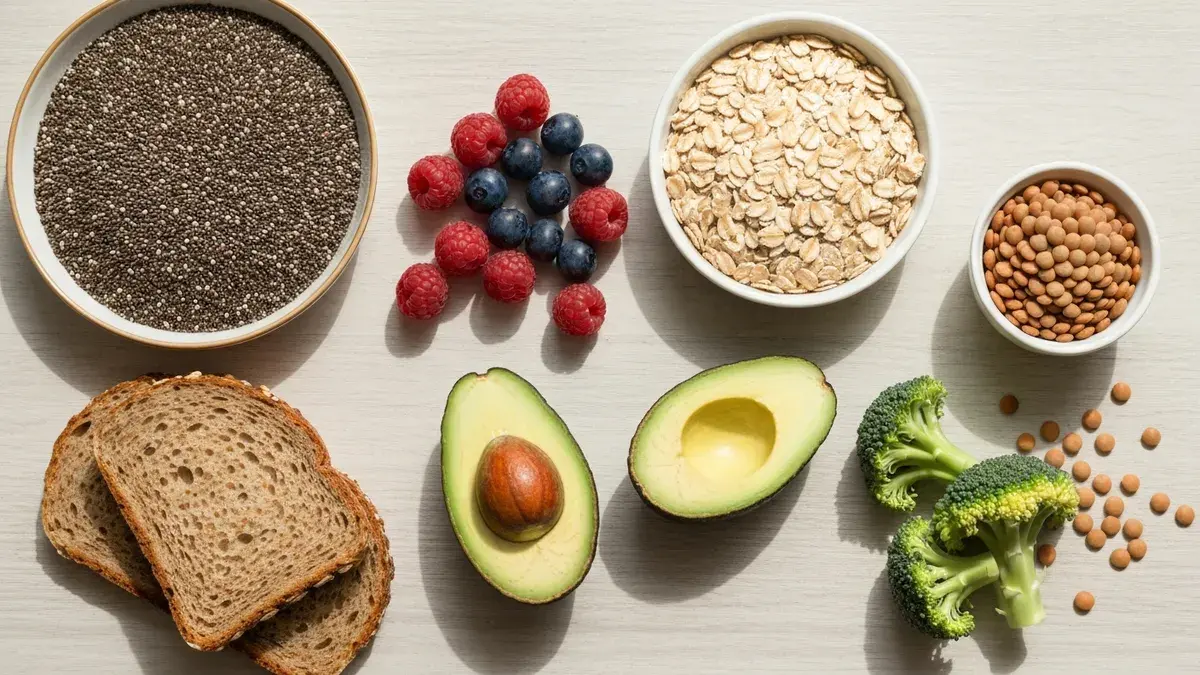
Fiber-maxxing is the 2026 TikTok wellness trend where creators aggressively pursue high dietary fiber intake — typically 40 to 50 grams per day, with some extreme cases pushing 60 or more. The trend draws on emerging research linking fiber intake to gut microbiome diversity, reduced chronic disease risk, and all-cause mortality reduction. It has become one of the most-talked-about wellness trends of Q1 2026, with hashtag #fibermaxxing accumulating over 2 billion views on TikTok. The baseline context: the standard American diet provides about 15 grams of fiber per day on average. The USDA's dietary guidelines recommend 25 grams for women and 38 grams for men. Fiber-maxxing pushes beyond those recommendations, citing research — notably a 2019 Lancet meta-analysis by Reynolds et al. — that found continued benefits for fiber intake up to at least 30 grams per day, with some sub-analyses suggesting further reductions in colorectal cancer and type 2 diabetes risk at higher intakes. A typical fiber-maxxing day looks like: oatmeal with chia seeds and berries for breakfast (12–15g), a large salad with legumes and avocado for lunch (15g), a snack of apple with nut butter (5g), and a dinner of whole grains with roasted vegetables (15g). Total: roughly 50g, with no single food doing all the work. The dietary shift is significant — it requires genuine planning in a typical Western food environment that is oriented around refined grains and animal proteins. The trend's appeal goes beyond the science. Fiber-maxxing fits several converging wellness narratives: longevity optimization (fiber is linked to reduced all-cause mortality in large cohort studies), gut microbiome discourse (which has been culturally dominant since Michael Pollan's early-2010s writing), anti-ultraprocessed food sentiment, and the broader 2020s shift toward plant-forward eating. It bundles all of these into a single, measurable daily metric, which makes it ideal for TikTok's audience-that-loves-trackable-habits culture. There are downsides. Rapid fiber intake increases can cause bloating, gas, and gastrointestinal distress — the gut microbiome needs weeks to adapt to major fiber increases. Some fiber-maxxing content underplays this transition period and sets creators up to abandon the practice after a few uncomfortable days. More seriously, a small subset of users with underlying conditions (IBS, IBD, SIBO) can be actively harmed by high-fiber diets, and TikTok advice does not distinguish. A 2026 University of Michigan gastroenterology paper cited fiber-maxxing as a source of increased clinic visits from otherwise healthy young adults presenting with functional GI symptoms.
Origin
The fiber-maxxing trend grew out of the broader 2023–2024 'food-as-medicine' content wave on TikTok, which was driven by creators like Dr. Mark Hyman, Dr. Will Bulsiewicz, and various registered dietitians building large followings on gut-health-specific content. Bulsiewicz in particular — whose 2020 book 'Fiber Fueled' anticipated the trend — became a primary reference point.
The specific 'maxxing' framing came from the broader TikTok maxxing ecosystem: looksmaxxing, gymmaxxing, sleepmaxxing. Applying the same aggressive optimization framework to fiber intake was a natural extension. The first verifiable 'fiber-maxxing' videos appeared in mid-2024; the trend reached critical mass in late 2025 and hit peak engagement in Q1 2026.
Timeline
Why Is This Trending Now?
Three compounding reasons. First, the underlying science is genuinely strong — unlike many wellness trends that overstate thin evidence, fiber intake is well-supported by decades of nutritional epidemiology. Second, fiber-maxxing is measurable, which makes it TikTok-friendly: creators can post daily fiber totals, recipes that hit specific gram targets, and before-after content in a way that purely qualitative wellness trends cannot replicate.
Third, the trend pairs naturally with the broader longevity content economy. Biological age testing, zone 2 cardio, and various other longevity-adjacent trends have created a large audience hungry for interventions that claim to extend healthspan. Fiber fits perfectly into that narrative because the Reynolds et al. meta-analysis and related research provide a defensible quantitative hook — 'each 8g of fiber per day reduces all-cause mortality by ~7%' — that can be cited authoritatively in content.


