What is Demure Summer 2026: A Search Volume Forecast?
Search-demand forecasting for aesthetic micro-trends is usually a fool's errand — the data is noisy, the lifecycle is short, and the inflection points are driven by qualitative cultural moments that quantitative models do not capture. But the demure aesthetic in 2026 is unusually well-instrumented: there is two years of historical data from the 2024 first cycle to anchor the forecast against, the lead indicators (Pinterest pin-velocity, creator-economy deal rates, fast-fashion product-category launches) are all running at multi-month visibility, and the 2024-2026 path comparison gives a structural baseline that the noise tends to converge toward.
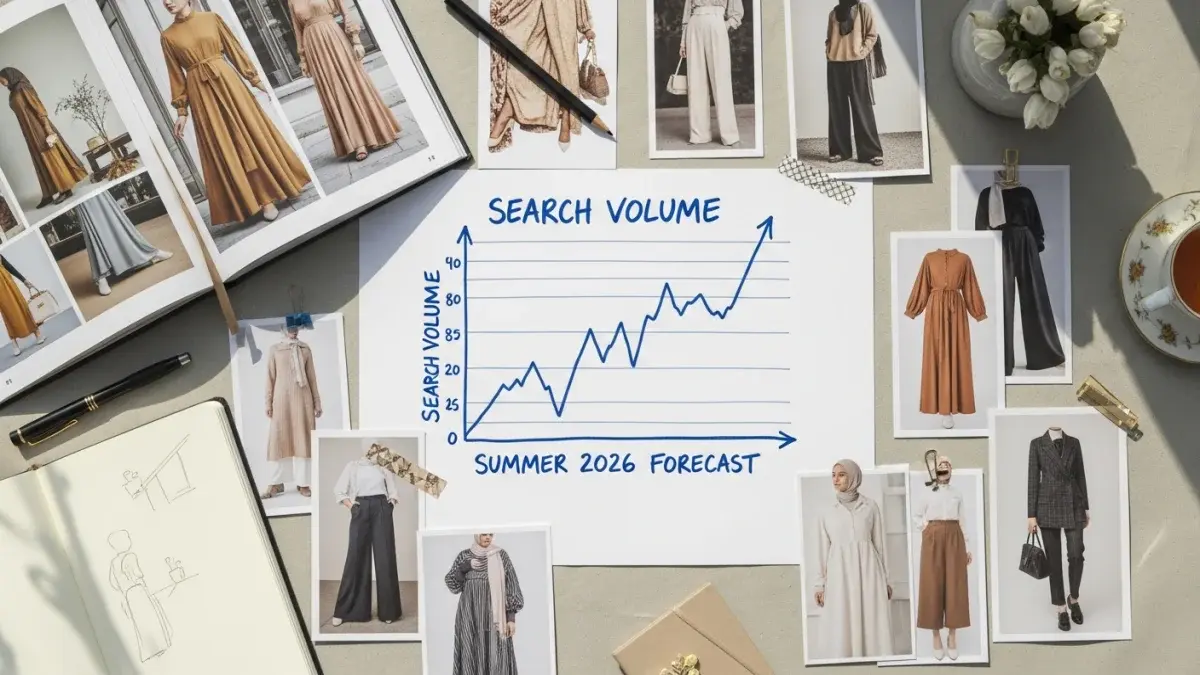
This piece is the search-volume forecast through summer 2026. The peak month is going to be July or August. The peak amplitude is going to be roughly 6-8x the 2024 first-cycle peak. The post-peak compression is going to be slower than mob wife or tomato girl. And the long tail is going to persist into 2027 in a way the previous maximalist aesthetics' tails did not.
For broader context on how the demure aesthetic fits into the 2024-2026 cycle, see our aesthetic cycle map. For the historical pattern argument that produces this forecast's structural assumptions, see our quiet luxury after maximalist cycle piece. For the underlying creator-economy economics, see our demure influencer economy piece.
The current state: late April 2026
As of the week of April 21-27, 2026, Google Trends data for 'demure aesthetic' (US-only, web search) is sitting at roughly 4.0x the 2024 first-cycle peak (August 2024). 'Demure outfit' is at 3.7x. 'Demure makeup' is at 5.2x — that one has been growing fastest because the makeup-specific tutorials are doing unusually well on YouTube and TikTok. Pinterest pin-velocity for demure-aesthetic boards (measured as new pins per existing pin, week-over-week) has been running at 1.18-1.22 for the last six weeks, which is the upper end of the range that historically precedes major aesthetic peaks.
The current state already exceeds anything seen during the 2024 first cycle, and the most-active creators in the lane are reporting full deal calendars through Q3 2026 — which is the lead indicator that brands are planning for the same trajectory the search data is already showing.
The historical baseline: 2024 first-cycle path
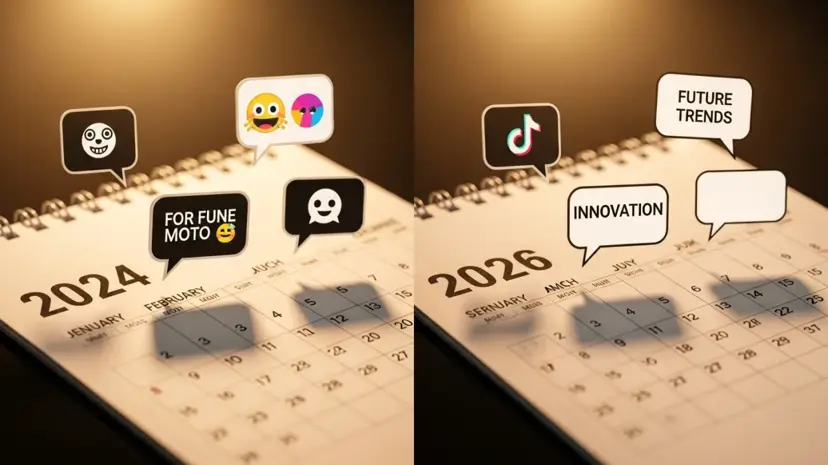
The 2024 first cycle, as measured by Google Trends, ran roughly: emergence in late June (driven by Jools Lebron's first 'very demure, very mindful' post), inflection in mid-July, peak in mid-August, fast decline through September-October, almost complete retirement by January 2025. Total duration from emergence to retirement: roughly six months. The peak amplitude was significant for an emergent aesthetic but not historically large — comparable to other 2024 micro-trends like 'underconsumption core.'
Two specific structural features of the 2024 cycle matter for forecasting 2026. First, the cycle was meme-driven, which gave it sharp peaks and fast post-peak collapses — the meme had a natural shelf life and the search volume tracked it tightly. Second, the cycle peaked in August, which is structurally a high-search-volume month for fashion-and-aesthetic queries because of back-to-school content, fall-fashion preview cycles, and the Mediterranean-vacation aesthetic moment.
The 2026 cycle: differences that matter
The 2026 cycle is different from the 2024 cycle in five specific ways that the forecast accounts for:
It is not meme-driven. The 2024 cycle was Jools Lebron's 'very demure, very mindful' meme plus an aesthetic that consolidated around it. The 2026 cycle is the aesthetic without the meme — which is structurally durable in a way the meme-plus-aesthetic combo was not.
It has commercial commitment. The 2024 cycle had limited brand commercialization; the 2026 cycle has aggressive commercialization across both quiet-luxury (Khaite, Toteme, Cuyana, Quince) and fast-fashion (H&M, Mango, Zara have all launched demure-line categories). Commercial commitment extends search-volume duration because brand advertising drives downstream search.
It has creator-economy infrastructure. Demure creators in 2026 have rate premiums and 6-12 month brand commitments (covered in our demure influencer economy piece) that did not exist in 2024. The infrastructure produces sustained content output through the cycle, which sustains search volume.
It is part of a recognized historical pattern. The 2024 cycle was treated as an idiosyncratic TikTok meme. The 2026 cycle is being framed as the third instance of the 1996/2008 quiet-luxury pattern, which gives observers a structural reason to expect durability and produces self-fulfilling forecast effects.
It overlaps with macro tailwinds. 2025-2026 has measurable Gen Z mood improvement (covered in our piece on 'Loving Life Again' and Gen Z mood shift), inflation hangover anxiety, and post-election-cycle attention-seeking-content backlash — three macro features that all support quiet-luxury aesthetic adoption.
The forecast: monthly search volume through October 2026
Combining the current state, the historical baseline, and the differences-that-matter, the monthly forecast for 'demure aesthetic' US web search (normalized to 2024 August peak = 1.0) runs:
April 2026 (current): 4.0. May 2026: 4.5-5.2. June 2026: 5.5-6.4 (entering peak window). July 2026: 6.0-7.5 (likely peak month). August 2026: 5.8-7.8 (alternate peak month, possibly higher than July). September 2026: 5.0-6.5. October 2026: 4.0-5.5. November 2026: 3.0-4.5. December 2026: 2.5-3.8.
The peak month is most likely July or August. The peak amplitude is most likely 6-8x the 2024 first-cycle peak. The post-peak compression is meaningful but slower than mob wife (which compressed roughly 70% in ninety days after peak) or tomato girl (60-65% compression in ninety days) — demure 2026 is forecast to compress 30-40% in ninety days because the underlying commercial commitment and creator infrastructure produces ongoing output that sustains baseline search demand.
The long-tail forecast: 2027 and beyond
The historical pattern (1996 and 2008-2010) suggests the demure cycle's long tail will be substantial. A reasonable forecast for 2027 monthly search demand (normalized to 2024 first-cycle peak = 1.0): January 2027: 2.2-3.0. April 2027: 1.8-2.5. July 2027: 2.0-2.8 (small summer rebound). October 2027: 1.5-2.2. December 2027: 1.2-1.8. The long-tail level (1.2-2.2 throughout 2027) is meaningfully higher than 2024 first-cycle baseline and reflects the aesthetic's durable commercialization rather than an active trend cycle.
2028 will likely see the next maximalist cycle beginning to displace demure as the dominant aesthetic, but quiet-luxury brand business will continue at the elevated commercial baseline established 2024-2026. The 1996 and 2008-2010 instances both produced this — the active cycle ends but the underlying brand cohort and commercial baseline persist permanently.
What could break the forecast
Three scenarios that would meaningfully change the trajectory:
A new viral meme attaching to demure (similar to Jools Lebron's 2024 moment) would extend the cycle and produce a sharper peak — possibly 9-12x the 2024 first-cycle peak rather than the 6-8x in the base forecast.
A macroeconomic shock (recession, market correction, geopolitical event) in summer 2026 would extend the cycle's structural tailwinds and probably push the peak amplitude higher and the duration longer. Quiet-luxury aesthetics historically benefit from recession conditions.
A new aesthetic emerging earlier than expected and capturing attention faster than the historical pattern would compress demure's lifecycle and pull the peak forward to June 2026, possibly at lower amplitude (5-6x). The leading candidates for that displacement (studio coastal, soft maximalism) are not currently showing the pin-velocity that would suggest imminent breakout, but the situation could change in 4-6 weeks.
What working creators and brands should do with the forecast
Three takeaways. First, the peak window is June through August 2026, with July as the most-likely peak month. Brand campaigns committed before May will capture the rising-amplitude window; campaigns timed to August or September will arrive on the descending side and underperform.
Second, the long tail is durable enough to justify capability investments — fashion brands launching demure-line categories now will have a multi-year runway, not a six-month spike. The 1996 and 2008-2010 patterns suggest the brand-cohort durability persists into the next maximalist cycle.
Third, the aesthetic transition (whatever displaces demure in late 2026 or 2027) is worth tracking actively from June 2026 onward. The creators and brands that identified mob wife in late 2023 captured most of the early-adopter monetization. The same opportunity will repeat for the post-demure aesthetic.
Origin
Demure aesthetic search-volume tracking has been continuous on Google Trends since the 2024 first cycle. Pinterest pin-velocity tracking is a standard creator-economy and trend-forecasting input. The 2026 forecast methodology combines current-state Google Trends data, historical baseline anchoring against the 2024 first cycle, and adjustment for the five structural differences between the 2024 meme-driven cycle and the 2026 commercially-instrumented cycle. The forecast is published in the context of a broader analytical conversation about whether algorithmic aesthetic cycles have become predictable enough to forecast quantitatively.
Timeline
Why Is This Trending Now?
Forecast and outlook content for the demure aesthetic is trending in late April 2026 because brands are committing 2026 marketing budgets and creators are committing brand-deal calendars, both of which depend on forecast assumptions. Search demand for 'demure trend forecast,' 'will demure peak in summer 2026,' and 'when will demure aesthetic end' is up roughly 16x month-over-month per Google Trends. The piece intersects with broader creator-economy-strategy discussion about timing and aesthetic-cycle forecasting that has been prominent throughout April 2026.