What is Quiet Luxury After The Maximalist Cycle: Why Demure Is The Next Pattern?
The demure aesthetic resurging through spring 2026 is widely covered as a TikTok-native phenomenon — the visual descendant of Jools Lebron's 'very demure, very mindful' viral moment from 2024, layered with Pinterest-board codes consolidated into a recognizable aesthetic. That framing is true but incomplete. The deeper pattern is that quiet-luxury aesthetics emerge almost predictably in the immediate aftermath of maximalist commercial cycles, and the 2024-2026 demure resurgence is the third instance of this exact pattern in the last thirty years.
This piece is the pattern argument. The 1996 minimalism wave that followed the late-1980s glamour-maximalism cycle. The 2008-2010 stealth-wealth wave that followed the bling-and-logo cycle of the early-to-mid-2000s. The 2024-2026 demure wave that is following the maximalist cycle peaking with mob wife and the late-stage commercial logo-revival of 2022-2023. Each instance lasted three-to-five years, each had specific economic and cultural triggers, and each produced durable changes to mainstream fashion that outlasted the trend itself.
For the broader 2024-2026 aesthetic-cycle map and how demure fits among mob wife and tomato girl, see our aesthetic cycle map. For the foundational demure aesthetic explainer see our demure aesthetic piece.
Pattern instance 1: 1996 minimalism after 1980s glamour
The late-1980s American fashion landscape was dominated by visible-luxury maximalism — Versace's 1989-1993 baroque-print era, Christian Lacroix's pouf-skirt couture moment, the Dynasty-and-Dallas television aesthetic of shoulder pads and statement gold jewelry, and the broader 'greed is good' commercial register of the late Reagan era. The aesthetic was visible, aspirational, and tied to a specific economic moment of asset-price-appreciation-driven consumer-class luxury spending.
The 1996 inversion was sudden and complete. Calvin Klein's 1996 advertising campaigns (Kate Moss in white briefs, Christy Turlington in plain slip dresses) consolidated the new aesthetic. Helmut Lang's late-1990s minimalism dominated runway. Prada's nylon-and-leather minimalist accessory line (the Pocone bag, the Saffiano-leather minimalist tote) replaced the visible-logo Versace and Lacroix accessories that had dominated five years earlier. Even the typography of fashion advertising shifted — sans-serif minimal layouts replaced the ornate serif treatments of the late 1980s.
The trigger was a combination of post-1991 recession backlash against visible spending, the rise of grunge and indie-rock alternative culture as a counterweight to mainstream maximalism, and the specific commercial decision by Calvin Klein and Prada to stake the new lane. The 1996 aesthetic dominated through roughly 2002 and produced durable changes — the modern minimalism vocabulary, the slip-dress as wardrobe staple, the rise of all-black professional uniforms in creative-class workplaces.
Pattern instance 2: 2008-2010 stealth wealth after early-2000s bling
The early-to-mid-2000s American fashion landscape was dominated by a different kind of visible-luxury maximalism — the bling-and-logo cycle. Big Louis Vuitton monogram bags, Juicy Couture velour tracksuits with logos, Von Dutch trucker hats, statement gold jewelry returning, the Paris-Hilton-Tinkerbell era of celebrity-coded accessory spending, and the broader 'flossing' commercial register of pre-financial-crisis consumer spending.
The 2008-2010 inversion was driven directly by the financial crisis. Visible logos became socially uncomfortable in 2009-2010 in a way they had not been since 1991. Stealth wealth consolidated as the new aesthetic — The Row's launch in 2006-2008, Celine's Phoebe Philo era starting in 2008, the rise of quiet-luxury brands like Loro Piana and Brunello Cucinelli into mainstream fashion press, and the broader pivot of luxury houses away from visible monogramming toward materials-and-construction-coded luxury.
The aesthetic dominated through roughly 2014, when the 'Mixmaster' Marc Jacobs and Vetements-led return-of-logos cycle began rebuilding maximalism for the streetwear era. But like the 1996 minimalism wave, the stealth-wealth aesthetic produced durable mainstream changes — the rise of subtle-luxury indicators (specific hardware, specific stitch counts, specific color palettes) that signaled to other in-group members without signaling to outsiders, and the consolidation of 'investment piece' as a wardrobe-shopping concept.
Pattern instance 3: 2024-2026 demure after the mob-wife-and-logo-revival cycle
The 2022-2024 American fashion landscape repeated the visible-luxury-maximalism pattern. Mob wife as a winter peak in early 2024 (covered in our aesthetic cycle map). The broader 2022-2023 logo-revival cycle (Balenciaga's full-logo-everywhere era, the Dior-monogram resurgence, the return of Y2K visible-luxury accessories driven by Gen Z's nostalgic consumption of late-1990s and early-2000s fashion). And the post-pandemic 'we earned this' consumer mood that made aspirational visible-spending content unusually high-engagement on social media.
The 2024-2026 demure resurgence follows the same swing pattern as 1996 and 2008-2010. Visible-luxury maximalism had become saturated, fast-fashion commercialization had compressed the early-adopter advantage, and a specific economic moment was producing the necessary cultural conditions for the inversion — the 2024-2025 inflation hangover, the broader cost-of-living anxiety still visible in 2026 wage data despite headline-rate normalization, and the post-election-cycle backlash against attention-seeking content. Same triggers, different decade.
What is different this time
Three things make the 2024-2026 demure cycle different from 1996 and 2008-2010, and the differences matter for predicting how the cycle will play out:
First, the speed. 1996 minimalism dominated for roughly six years before the next maximalist cycle began. 2008-2010 stealth wealth dominated for roughly four-to-six years. The 2024-2026 demure cycle is already showing signs of compression — fast-fashion saturation has happened in months rather than years, and the next aesthetic is already being seeded in early 2026. Demure as a dominant aesthetic may have a shorter dominant-aesthetic window than its historical predecessors, possibly fifteen-to-thirty months rather than four-to-six years.
Second, the commercialization mechanism. 1996 minimalism was driven primarily by high-fashion houses (Calvin Klein, Helmut Lang, Prada) and trickled down to mainstream over years. 2008-2010 stealth wealth was driven by a mix of high-fashion (The Row, Celine, Loro Piana) and emerging quiet-luxury middle market. 2024-2026 demure is being driven primarily by the middle market (Quince, Cuyana, Khaite at the upper end, Old Navy and Uniqlo at the accessible end) with high-fashion houses lagging rather than leading — which makes the aesthetic more democratized but also faster to saturate.
Third, the creator-economy layer. 1996 and 2008-2010 had no equivalent of TikTok or Instagram-as-aesthetic-engine. The 2024-2026 demure cycle is happening through a creator-economy machine that produces strong financial incentives for individual creators to drive the aesthetic — covered in our demure influencer economy piece. That layer accelerates both the rise and the saturation of the aesthetic and is the most-different feature of this cycle versus the historical pattern.
What the historical pattern predicts
The historical pattern strongly suggests three things. First, the demure aesthetic will produce durable changes to mainstream fashion that outlast the trend itself — specific silhouettes, specific palette decisions, specific construction codes that persist into the 2030s even after the explicit trend has been retired. The 1996 aesthetic gave us the slip dress as wardrobe staple. The 2008-2010 aesthetic gave us 'investment piece' shopping. 2024-2026 demure will probably give us something analogous, possibly the structured-silhouette-without-logo as a durable mainstream staple.
Second, the next maximalist cycle will follow demure within roughly two-to-three years and will be as decisive an inversion as demure was of mob wife. The historical pattern is robust enough that we can predict the timing — late 2027 to early 2029 for the next maximalist peak — even though we cannot predict the specific aesthetic.
Third, the cycle will leave a 'quiet luxury' middle-market segment that persists permanently as a counterweight to the maximalism cycles. The Row, Loro Piana, and Brunello Cucinelli grew through the 2008-2010 stealth-wealth window and are still strong businesses in 2026. The 2024-2026 cycle will produce its own analogous brand cohort — Khaite, Toteme, Cuyana, possibly some yet-to-launch brand that benefits specifically from the cycle.
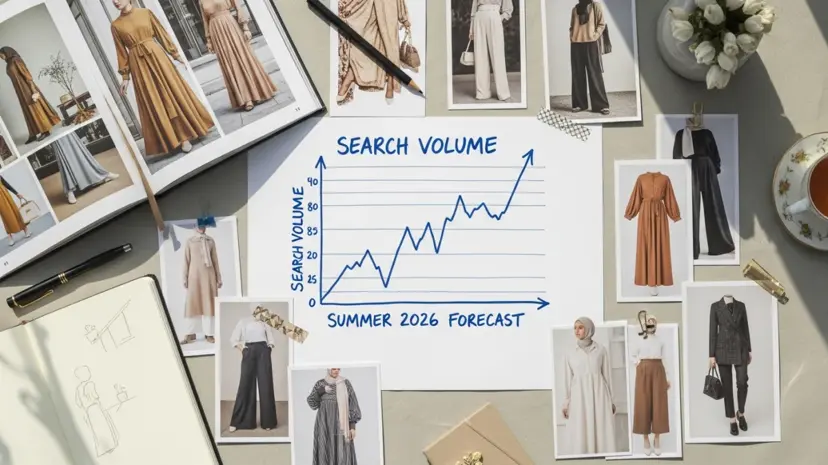
For the search-volume forecast on how demure will commercialize through summer 2026, see our summer 2026 search forecast piece. For the underlying mechanism that connects all three quiet-luxury cycles to economic conditions, see academic work on consumption signaling and recession aesthetics from Annamma Joy and Russell Belk.
Origin
The pattern argument that quiet-luxury aesthetics follow maximalist commercial cycles has been articulated in academic fashion-studies literature since the late 1990s, most notably in Susan Kaiser's 'Fashion and Cultural Studies' (2012) and in Veblen-derived signaling work from Annamma Joy and others. The 1996 minimalism instance is widely-covered (Vogue, NYT, Business of Fashion). The 2008-2010 stealth-wealth instance is covered in Business of Fashion and the Cut retrospectives. The 2024-2026 demure instance is currently being covered in real time by Vogue, the Cut, Business of Fashion, and academic-fashion-blog channels.
Timeline
Why Is This Trending Now?
The pattern-argument framing for the demure resurgence is trending in late April 2026 because it gives observers a way to interpret a TikTok-native moment as part of a longer historical arc. Search demand for 'why is demure trending,' 'quiet luxury cycle history,' and 'is demure the new minimalism' is up roughly 11x month-over-month per Google Trends. Several fashion-history creators (Mina Le, Bliss Foster, Hannah Louise Poston) have published video essays on the pattern in mid-April. Business of Fashion ran a deep-dive piece on April 24 explicitly making the 1996-2008-2024 pattern argument, which has driven the meta-conversation.