What is Demure vs Mob Wife vs Tomato Girl: Mapping The 2024-2026 Aesthetic Cycle?
Aesthetic cycles on TikTok have been getting shorter and more legible since roughly 2022. Where mainstream fashion used to swing on three-to-five-year arcs (the maximalism-to-minimalism cycles of the 2000s, the indie-sleaze-to-normcore arc of the 2010s), TikTok-era aesthetic micro-trends now swing on roughly nine-to-fifteen-month arcs, with each new aesthetic explicitly inverting one or two specific qualities of the aesthetic that came before it.
Three aesthetics have defined women's fashion-and-lifestyle TikTok between January 2024 and April 2026: mob wife (peaked February 2024), tomato girl (peaked August 2024 and again summer 2025), and demure (peaked August 2024 and resurging spring 2026 in the form covered in our demure aesthetic explainer). The relationships between them are not random. Each one inverts specific qualities of its predecessor in ways that reveal the swing logic of the broader cycle.
This piece is the cycle map — what each aesthetic is, what it inverted, where it overlapped with the others, and what the through-line predicts about the next aesthetic.
Mob wife (peak: February 2024)
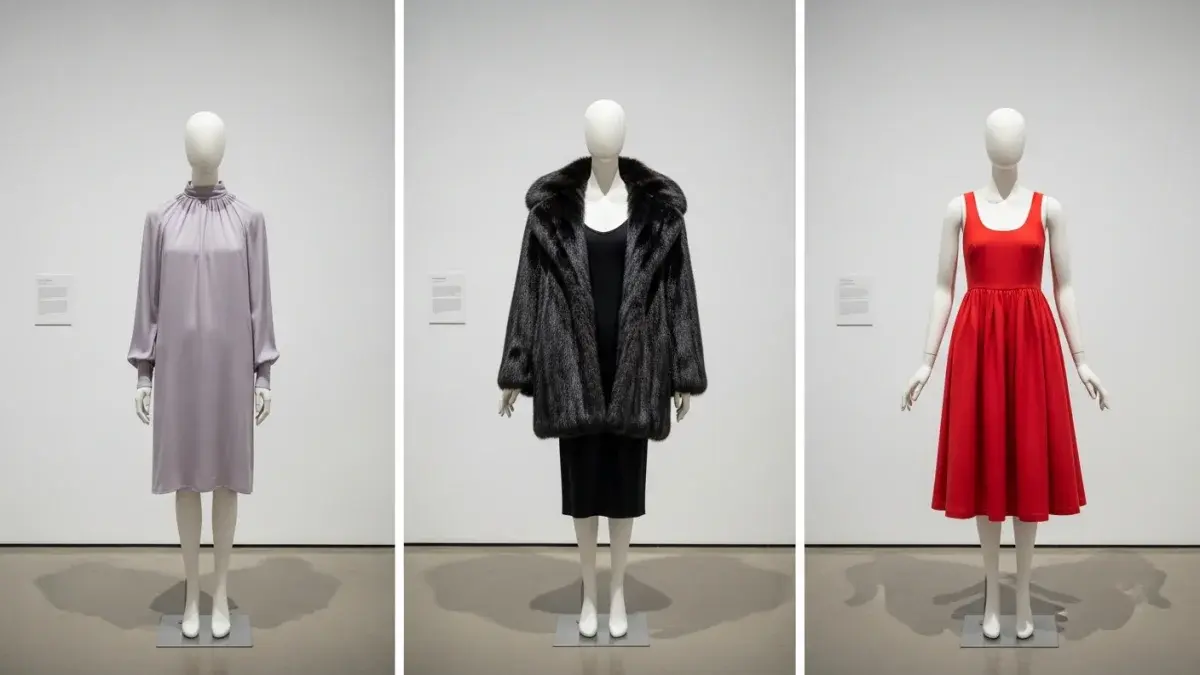
Mob wife emerged in late 2023 and peaked in February 2024 as the dominant winter aesthetic for elder-Gen-Z and younger-millennial women on TikTok. The visual codes were specific and consistent: fur coats (real or faux, oversize, often dark brown or black), heavy gold jewelry (large hoop earrings, multi-strand necklaces, statement rings), red nails, bold liner, dark lipstick, fully-painted-on eyebrows, hair worn long and full or in dramatic up-dos, and an overall make-an-entrance attitude.
The aesthetic referenced specific cinematic sources — Carmela Soprano, Kay Corleone, Ginger McKenna, Karen Hill — but it was not really about those characters. It was about the specific kind of feminine power they performed: visible, expensive-feeling, willing to take up space, not asking for permission. It was a deliberate inversion of 2023's clean girl aesthetic (the slicked-back bun, no-makeup-makeup, micro-jewelry, beige-on-beige minimalism), and inversions don't get cleaner than that. Where clean girl was about looking effortless, mob wife was about looking effortful. Where clean girl was about minimalism as virtue, mob wife was about maximalism as identity.
Mob wife also coincided with a specific cultural moment — January 2024 was the peak of post-pandemic 'we earned this' consumerism and a moment of Sopranos-revival cultural cycling. The aesthetic landed because the moment landed. By April 2024 the aesthetic was already showing fatigue and was visibly tired by Memorial Day.
Tomato girl (peak: August 2024 and again summer 2025)
Tomato girl was the summer-2024 successor to mob wife. The visual codes: linen dresses in white or warm whites, terracotta and tomato red as accent colors, espadrilles, gold jewelry but smaller and more delicate, sun-warmed skin without contour, hair worn loose with sea salt texture, a Mediterranean-vacation vibe even if you were eating lunch in Houston.
The inversion logic was straightforward. Mob wife was urban, winter, indoor, evening, expensive-feeling, edgy. Tomato girl was rural-feeling, summer, outdoor, daytime, accessibly-priced, soft. Where mob wife wanted you to look at her, tomato girl wanted to be looked at by the sun. The two aesthetics did not actually overlap on a single Pinterest board — wearing one would have felt costume-y to fans of the other, and vice versa.
Tomato girl also worked because it was visually photographable in a specific way TikTok rewards — warm color temperature, golden-hour lighting, specific food-and-drink props (Aperol spritz, fresh peaches, focaccia), specific location codes (rooftop terraces, stone-walled gardens, vineyards). Posts in this aesthetic produced consistently high engagement on a posting cadence (one to three times per week) that made the aesthetic sustainable for everyday creator output.
Tomato girl was unusual in that it returned for a second cycle in summer 2025, with slightly modified codes (more Italian-coastal explicitly, slightly less explicitly tomato-themed accent color, more Caftan-influenced silhouettes). The double-cycle was driven partly by the Italian Riviera tourism boom of 2025, partly by Saltburn's lingering cultural footprint, and partly because no equivalent summer aesthetic had emerged to displace it. By August 2025 tomato girl 2.0 was visibly cresting and the search for a replacement aesthetic was active.
Demure (peak: August 2024, resurging spring 2026)
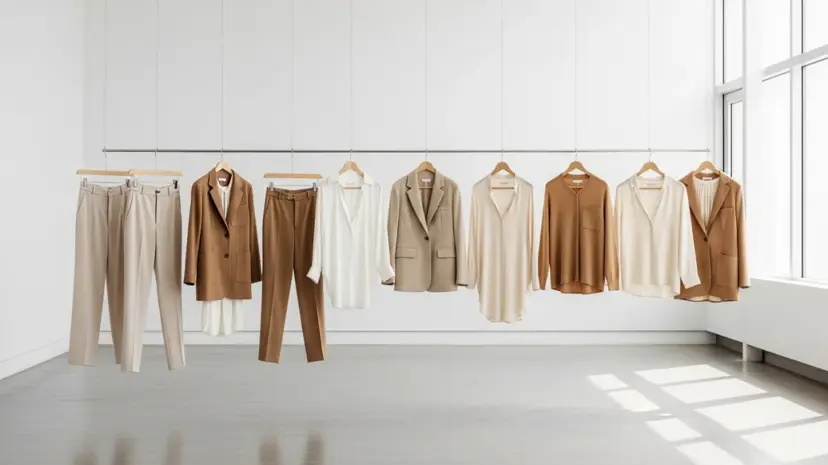
Demure emerged in mid-2024 and had its first peak in August 2024, driven by the viral 'very demure, very mindful' format from creator Jools Lebron. The original 2024 demure moment was as much a meme format as an aesthetic, but the aesthetic codes consolidated quickly — quiet-luxury-adjacent silhouettes (covered separately in our quiet luxury after the maximalist cycle piece), neutral palette (cream, taupe, sage, dove gray, occasional dusty pink), no logos, minimal jewelry, hair worn pulled back or in subtle waves, makeup that is visible but not bold, posture that signaled composure rather than expression.
The 2024 demure cycle was short — peaked in August, was visibly tired by October, and was largely retired by January 2025. The reason it was short, in retrospect, is that the cultural mood was wrong for it — fall 2024 was the peak election cycle, news cycles were chaotic, and an aesthetic premised on quiet composure could not sustain attention against more emotionally-pitched content.
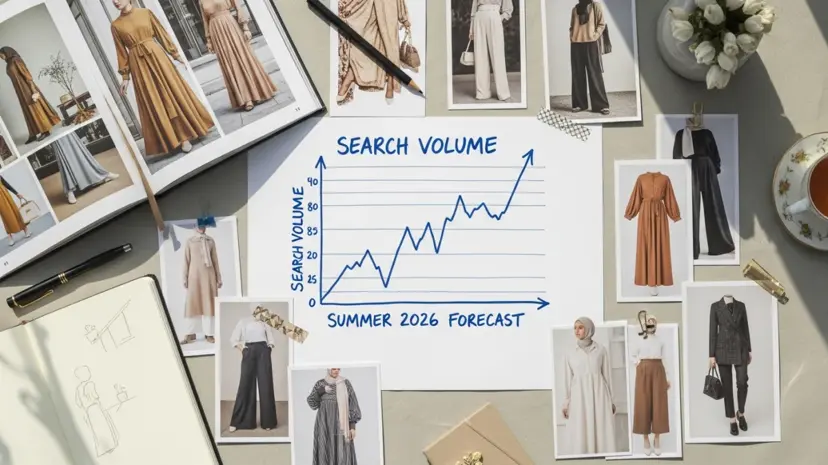
Demure has resurged in spring 2026 in a different form — less meme-driven, more aesthetic-stable, with the silhouettes and palettes more consolidated. The 2026 demure resurgence is the focus of our main demure aesthetic explainer, our demure influencer economics piece, and our summer 2026 search forecast.
The swing logic that connects all three
The mob wife → tomato girl → demure swing follows a specific logic. Each aesthetic inverts the most-saturated quality of its predecessor:
Mob wife was urban, indoor, winter, expensive-coded, expressive, maximalist. Tomato girl inverted urban (became rural), indoor (became outdoor), winter (became summer), and expensive-coded (became accessible-priced). Tomato girl kept maximalism in palette intensity (the warm reds, terracottas) and kept expressive in posture-language but moved both toward natural-feeling rather than performed-feeling.
Tomato girl was rural-feeling, outdoor, summer, accessibly-priced, naturally-expressive, warm-palette. Demure inverted rural (returned to urban or domestic), outdoor (returned to interior), warm-palette (became cool-palette), and naturally-expressive (became composed-rather-than-expressive). Demure kept the accessibly-priced register tomato girl introduced (no real return to mob wife's expensive-feeling maximalism), and kept the post-mob-wife rejection of overt expressiveness.
The through-line: each aesthetic over-corrects against the most-saturated quality of its predecessor while preserving one or two qualities that were genuinely working. The over-correction creates the visible swing. The preservation creates the continuity.
Why the cycles are getting shorter
Three reasons. First, TikTok's algorithm preferentially boosts content that is visually distinct from the dominant aesthetic of the moment, which mathematically forces aesthetics to displace each other faster than they would in a non-algorithmic environment. Second, fast fashion and direct-to-consumer brand response times have collapsed to roughly 4-8 weeks from aesthetic-emergence to mass-market product availability, which means each aesthetic gets fully commercialized faster and reaches saturation faster. Third, creator-economy incentives reward early adoption — the creators who identify the next aesthetic six weeks before peak get most of the audience growth, which produces strong incentives to keep churning aesthetics.
The result is the nine-to-fifteen-month cycle length we have seen 2022-2026. Pre-TikTok aesthetic cycles were three-to-five years; mid-TikTok-era cycles (2018-2021) were eighteen-to-twenty-four months; current-era cycles are nine-to-fifteen months and shrinking.
Where the cycle is going next
Demure 2026 will probably peak in summer 2026 (covered in our summer 2026 forecast) and start showing fatigue by fall. The successor aesthetic will likely invert the most-saturated quality of demure — which is composure / quiet-luxury-adjacency — in favor of something more expressive and visibly emotional, while preserving the accessibly-priced register and probably keeping the urban-domestic setting.
The leading candidates being seeded in early 2026 are 'studio coastal' (a Northeast-vacation-feeling aesthetic with maritime accents and casual layering), 'soft maximalism' (a return to color and pattern but in approachable rather than aggressive register), and a not-yet-named aesthetic associated with second-cycle Lana Del Rey, vintage-coastal Americana, and 1970s soft-color palettes. Whichever one wins, it will land in fall or winter 2026 and define winter-2026-into-spring-2027.
For why the swing pattern from maximalist mob wife to minimalist demure is structural and not coincidental, see our quiet luxury aesthetic pattern argument. For the economics of how the demure aesthetic has produced unusually high creator monetization, see our demure influencer economy piece.
Origin
Mob wife emerged in late 2023 with creator Mikayla Toninato widely credited with the format-naming TikTok in January 2024. Tomato girl emerged in summer 2023 (with creator Aliza Kelly's Italian-vacation aesthetic content) and peaked in August 2024 with widespread retail commercialization. Demure had its first cycle in August 2024 driven by Jools Lebron's 'very demure, very mindful' viral format, faded through fall 2024, and resurged in spring 2026 in a more aesthetic-stable form. The cycle pattern connecting all three is widely covered by Vogue, the Cut, NYT Style, and academic sociology of fashion publications.
Timeline
Why Is This Trending Now?
The aesthetic-cycle map is trending in late April 2026 because the demure resurgence has produced retrospective interest in the broader 2024-2026 cycle pattern. Search demand for 'mob wife vs demure' and 'TikTok aesthetic cycle 2024 2025 2026' is up roughly 9x month-over-month per Google Trends. Several major fashion-discourse creators (Mina Le, Hannah Louise Poston) have published video essays on the cycle pattern in mid-April 2026, which has driven the meta-conversation. The conversation also intersects with broader fashion-industry analysis of whether algorithmic aesthetics are sustainable as fast fashion supply chains struggle to keep up.