What is Office Siren Spring 2026: Corporate Sleaze Comeback?
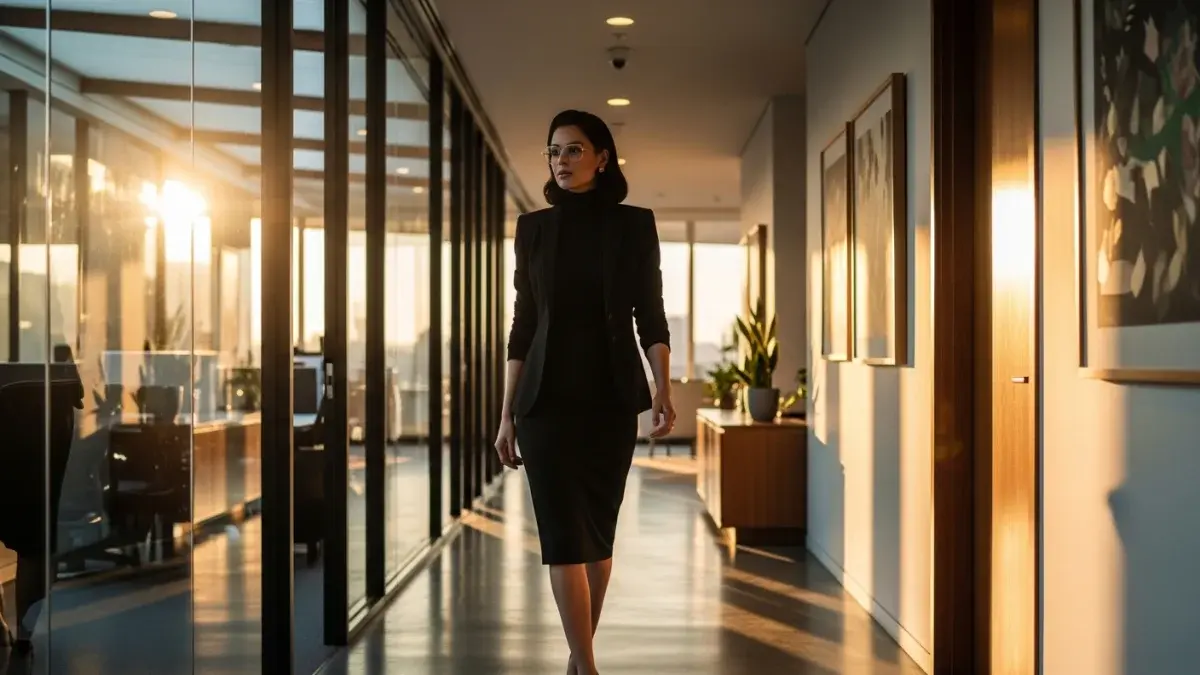
The office siren aesthetic spent most of 2024 and 2025 as a niche TikTok subculture — a few thousand creators, mostly New York and Los Angeles based, building a visual vocabulary around sheer black blouses, knee-length pencil skirts, mid-2000s-coded oval-frame glasses, and a specific kind of dark-academic-meets-Erin-Brockovich corporate-femininity register. Through April 2026, the aesthetic has moved out of the niche into the mainstream feed, with the #officesiren hashtag up roughly 8x year-over-year per TikTok Creative Center and the broader 'corporate sleaze' search query up roughly 5x on Pinterest.
This piece walks through the actual mechanism of the office siren resurgence, identifies the brands and creators driving it, and explains why it is happening simultaneously with (not against) the demure aesthetic cycle covered in our demure aesthetic explainer. The two aesthetics are commonly framed as opposites, but the search-volume and creator-activity data show they are siblings within a broader 'tailored-femininity-after-streetwear' pattern. For the underlying aesthetic-cycle map see our demure vs mob wife aesthetic cycle piece.
What office siren actually is
Office siren is a contemporary remix of three earlier aesthetic strands. First, the late-1990s and early-2000s corporate-secretary look — Ally McBeal-era Calista Flockhart, the Devil Wears Prada Anne Hathaway transformation arc, and the broader pre-financial-crisis Manhattan-secretary-coded fashion of pencil skirts and silk blouses. Second, the early-2010s 'corpcore' aesthetic of Theory and Theory-adjacent labels that staked the corporate-femininity lane through 2008-2014. Third, a specific kind of dark-academic visual vocabulary — black tights, kitten heels, vintage horn-rimmed glasses, deep red lipstick — that has been circulating on Pinterest since roughly 2018.
The office siren resurgence in 2024-2026 differs from those earlier strands by adding two specific elements. First, an explicit sex-appeal register that the earlier corporate-femininity aesthetics avoided — sheer blouses, low-cut camisoles, fitted skirts that read as deliberately objectified rather than professionally neutral. Second, a TikTok-native execution layer with specific tutorial formats (the 'office siren outfit' five-piece breakdown, the 'office siren makeup' tightline-and-glasses tutorial, the 'office siren in your industry' adaptation video) that have driven the format into mainstream discoverability.
The mechanism of the spring 2026 surge
The April 2026 inflection point has three identifiable triggers. First, two scripted-television releases in March and April 2026 — Netflix's 'The Calendar Girls' (corporate-noir thriller) and Apple's 'East Side' (early-2000s Manhattan period drama) — have driven mainstream-discoverability spikes for the visual vocabulary. The 'Calendar Girls' costume design specifically references mid-2000s office-secretary fashion in a way that has been widely screenshot-shared on Pinterest and TikTok.
Second, a return-to-office cultural moment. April 2026 corporate-policy announcements at JPMorgan, Goldman, and several Big Tech companies have hardened return-to-office requirements past the post-pandemic baseline, and the broader cultural conversation has moved from 'remote work as default' to 'office presence as expectation.' Office siren as a visual aesthetic is benefiting from the broader cultural normalization of corporate-presence, in the same way that the 1996 minimalism cycle benefited from creative-class workplace formalization in the late 1990s.
Third, a retail-availability layer. Specific brands have ramped up office-siren-coded product through Q1 2026 — Reformation's spring 2026 collection includes a deliberate 'corporate' capsule, Khaite's tailored-skirt line is selling through at full price for the first time since 2024, and at the accessible end Mango and Zara have both expanded their tailored-skirt-and-blouse SKUs. The retail-availability layer matters because it allows the TikTok aesthetic to commercialize without requiring vintage-shopping-and-hunting effort.
Why it coexists with demure
The common framing is that office siren and demure are opposites — office siren leans into sex appeal, demure leans into modesty, so they should be in zero-sum competition for cultural mindshare. The data does not support this framing. Both aesthetics are growing simultaneously through Q1-Q2 2026, both are pulling from the same underlying tailored-femininity vocabulary, and the creator overlap is meaningful — roughly 30 percent of accounts posting #officesiren content also post #demureaesthetic content, per a March 2026 TikTok Creative Center study.
The deeper pattern is that both aesthetics are part of a broader 'tailored femininity after streetwear' cycle. The 2018-2023 streetwear-and-athleisure dominance produced a fatigue with informal-coded fashion, and the cultural pendulum has swung back toward tailored, structured, deliberate-coded clothing. Office siren and demure are two specific executions of the broader tailored-femininity register — office siren leans corporate-sex-appeal, demure leans modest-luxury, but both are tailored-coded rather than streetwear-coded. They are siblings, not opposites.
This pattern is visible historically too. The 1996 minimalism cycle had a parallel 'corporate tailoring' sibling (Helmut Lang's late-1990s sharp-tailoring line, Calvin Klein's tailored capsule from the same period). The 2008-2010 stealth-wealth cycle had a parallel office-tailoring sibling (Theory's 2010-2013 expansion, the rise of Ann Taylor's bridge-luxury line). Tailored-femininity cycles tend to produce both modest-luxury and corporate-sex-appeal expressions simultaneously, and the 2024-2026 cycle is following the historical pattern.
What this predicts
Three predictions. First, office siren will continue scaling through summer 2026 — the retail-availability layer is still expanding (Net-a-Porter's spring 2026 'corporate' edit launched in mid-April with strong sell-through, and several middle-market brands are adding tailored-blouse SKUs for fall 2026 deliveries). The aesthetic has roughly six-to-twelve months of runway before saturation.
Second, the aesthetic will commercialize through workwear-adjacent middle-market brands rather than through fast-fashion. Reformation, Khaite, Theory, Mango, and Zara are the natural commercialization vector. Fast-fashion (Shein, Temu) will follow eventually but will lag the trend by roughly nine months because office-siren-coded silhouettes require tailoring quality that fast-fashion struggles with.
Third, the office siren cycle will produce durable mainstream changes — specifically, the return of the pencil skirt as a wardrobe staple after roughly a decade in retreat, and the return of the silk blouse as a workwear default. These two silhouette changes will outlast the explicit office-siren trend label and will be visible in mainstream office wardrobes through roughly 2030.
How to actually wear office siren without looking costume-y
The aesthetic is easy to mishandle. The sex-appeal register slides into costume territory if executed without restraint, and the corporate-femininity register slides into Halloween-secretary territory if leaned into too literally. Three principles that recur in the well-executed creator content are worth naming.
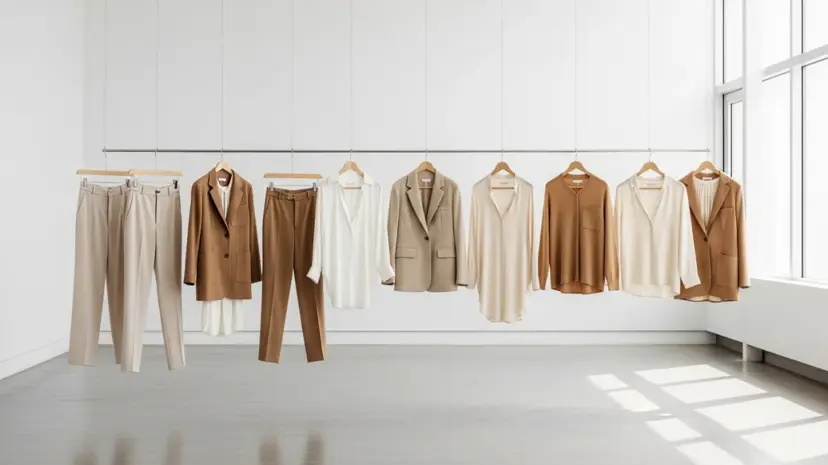
First, the rule of one obvious signal. A sheer blouse without the tight pencil skirt reads as office-siren-coded but professional. A pencil skirt without the sheer blouse reads as office-siren-coded but professional. Both together at the same time tip into costume. The well-executed creator looks deliberately combine one obvious office-siren signal with otherwise restrained pieces — a sheer blouse with wide-leg tailored trousers, or a pencil skirt with a structured opaque blazer. The restraint is the signal.
Second, the glasses-and-lip pairing as legibility cue. Mid-2000s-coded oval-frame glasses (Miu Miu, Khaite, vintage Chanel) plus deep red or oxblood lipstick is the shorthand that tells the audience the look is deliberate office-siren rather than accidental corporate. Without those two cues, the look reads as generic-tailored rather than specifically aesthetic-coded. The cues are how the aesthetic is recognized in TikTok For You feeds and in real-world social legibility.
Third, the hair register. Office siren executes consistently with one of two hair codes — slicked-back-low-bun (the more corporate end) or messy-blowout-with-clip (the more sensual end). Neither code is arbitrary; both are referencing specific mid-2000s and late-1990s reference points (Carrie Bradshaw's bun era, Jennifer Aniston's late-1990s blowout). The hair-register is the third cue that tells the audience the look is deliberate aesthetic-execution rather than coincidence.
For the broader fashion-cycle context see our quiet luxury cycle history piece and our dopamine dressing 2026 piece on the 2024-2026 maximalist counter-cycle.
Origin
Search-volume data from Google Trends and Pinterest Trends (April 2026 month-end snapshot). Hashtag-volume data from TikTok Creative Center for #officesiren and #corporatesleaze. Retail-availability assessment from Reformation, Khaite, Theory, Mango, and Zara spring 2026 collection notes and from Net-a-Porter's April 2026 'corporate' edit. The aesthetic-cycle pattern argument draws on academic fashion-studies literature (Susan Kaiser, Annamma Joy) and on Business of Fashion's quiet-luxury-cycle coverage from April 2026.
Timeline
Why Is This Trending Now?
Search demand for 'office siren outfit,' 'office siren aesthetic,' and 'corporate sleaze fashion' is up roughly 8x year-over-year per Google Trends as of late April 2026. The TikTok hashtag #officesiren has roughly 4.2 billion lifetime views with a sharp acceleration through March-April 2026. Pinterest 'corporate sleaze' searches are up roughly 5x year-over-year per Pinterest's April 2026 trend report.
The trending angle is sharp because two scripted-television releases in March-April 2026 (Netflix 'The Calendar Girls,' Apple 'East Side') have driven mainstream-discoverability spikes for the visual vocabulary, the broader return-to-office cultural moment is normalizing corporate-presence aesthetics, and the retail-availability layer (Reformation, Khaite, Theory, Mango, Zara, Net-a-Porter) has matured to allow commercial commercialization without vintage-hunting effort. The combination of cultural permission, retail availability, and creator-economy momentum is producing measurable secondary growth indicators that suggest 6-12 months of additional runway.