What is Nvidia Just Put Its Chip Inside a Windows Laptop for the First Time — Meet RTX Spark and the Surface Laptop Ultra?
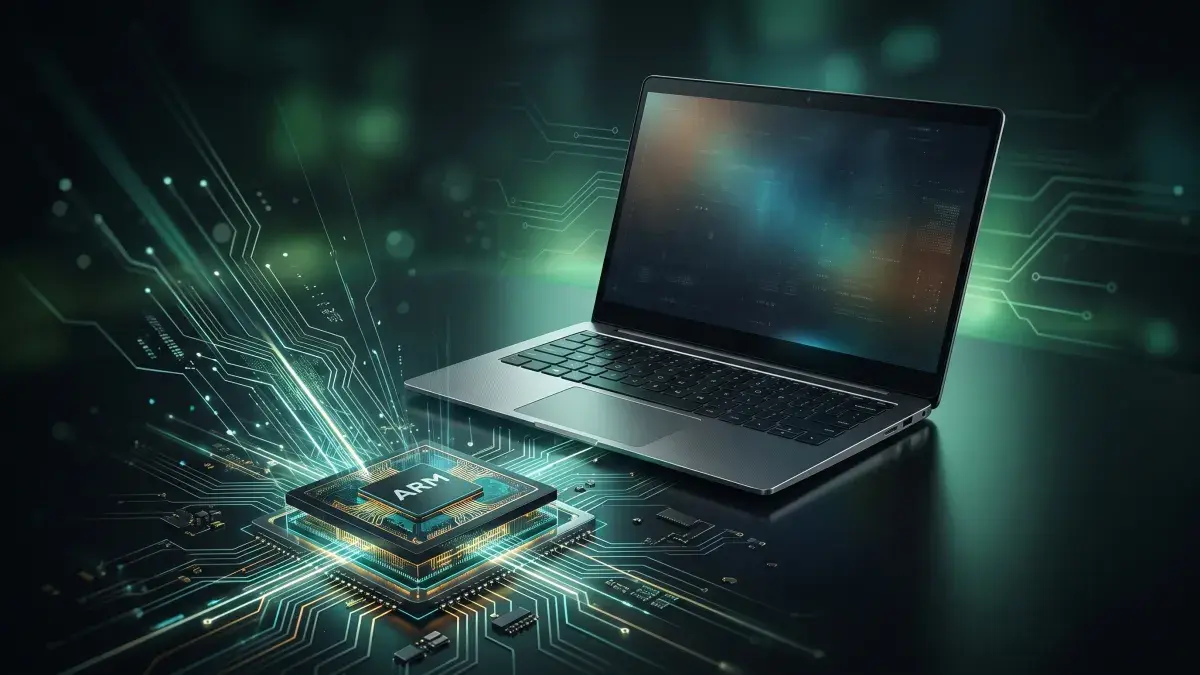
On Monday, June 1, 2026, at Computex in Taipei, Nvidia did something it had spent twenty years avoiding: it put a real Nvidia processor inside an ordinary Windows laptop. The chip is called RTX Spark, it is built on the Arm instruction set rather than x86, and Nvidia is pitching it not as a gaming GPU bolted onto a PC but as a single "superchip" that fuses a 20-core Grace CPU and a Blackwell graphics core into one package — up to 128GB of unified memory and roughly one petaflop of AI compute, sitting on your lap. The launch partner is Microsoft, whose new flagship Surface Laptop Ultra is the first machine to ship with it this fall.
If you have followed the PC industry for any length of time, the framing will sound familiar, because Nvidia and Microsoft used almost exactly the words from the last three Windows-on-Arm relaunches: this is the one that finally works. What makes the June 1 announcement different from the Qualcomm-powered "Copilot+ PC" push of 2024 is not the marketing. It is the spec sheet, the memory architecture, and the fact that the most valuable company on earth is now selling the brains of the laptop instead of just the discrete graphics card inside it.
What Nvidia actually announced
RTX Spark is what Nvidia calls a superchip — two chiplets fused into one package on a 3nm process. One chiplet is a 20-core Grace CPU using Arm cores; the other is a GPU built on Nvidia's Blackwell architecture with up to 6,144 CUDA cores and fifth-generation Tensor Cores that support FP4 precision. The two share a single pool of unified LPDDR5X memory — between 16GB and 128GB depending on configuration — running at roughly 300 GB/s. Nvidia rates the top configuration at up to one petaflop of FP4 AI compute, the kind of number that until recently belonged to data-center accelerators, not consumer laptops.
The name is not an accident. Nvidia already sells a desktop AI box called DGX Spark — a 128GB unified-memory machine aimed at developers who want to run large models locally, priced from about $3,499. RTX Spark takes that same unified-memory idea and shrinks it into a laptop-class part. The graphics performance, several reviewers noted, lands somewhere around an RTX 5070: not a flagship gaming GPU, but far beyond the integrated graphics most thin-and-light laptops ship with, and paired with a memory pool no gaming laptop offers. The pitch is that the chip is designed first for on-device AI agents — the kind that read your screen, click buttons, and run for hours — rather than for frame rates.
That framing connects directly to the broader shift we have been tracking in the Claude 4 and the AI agent era story, where models stopped answering single questions and started doing multi-hour tasks. Agents that operate your computer need two things in abundance: memory to hold context and local compute to avoid round-tripping every keystroke to a cloud GPU. RTX Spark is Nvidia's bet that the next generation of those agents will run partly or wholly on the device, and that whoever owns the on-device silicon owns the platform.
The Surface Laptop Ultra: Microsoft's halo device
Microsoft is the launch partner, and the Surface Laptop Ultra is its showcase. It is a 15-inch flagship with a mini-LED display, configurable up to 128GB of unified memory, and — Microsoft was careful to say — a chip "optimized for Windows 11" with developer and creator workloads in mind. This is the most powerful Surface laptop Microsoft has ever shipped, and the company is positioning it the way Apple positions the high-end MacBook Pro: a halo device meant to prove the platform's ceiling, not a volume seller.
The comparison to Apple is not subtle, and Microsoft did not try to make it subtle. Apple's MacBook Neo, the M-series machine that anchors the premium thin-and-light category, has spent two years as the default recommendation for anyone who wanted long battery life, silent operation, and enough unified memory to run local models. The Surface Laptop Ultra is Microsoft's answer, and on paper it matches Apple's unified-memory architecture for the first time. Whether it matches the battery life and the software polish is the question reviewers will spend the summer answering.
RTX Spark will not be exclusive to Microsoft for long. Nvidia confirmed that the chip will also appear this fall in the Dell XPS 16, the Asus ProArt P14 and P15, and HP's OmniBook X line — the same premium creator-and-developer tier where Apple has been strongest. That breadth matters: a single halo laptop is a demo, but a chip shipping across Dell, Asus, and HP at once is a platform play. It is the difference between Nvidia testing the water and Nvidia trying to own a category, and it lands the same week Dell separately unveiled a cheaper $699 XPS 13 aimed squarely at Apple's mid-tier — a sign the whole Windows side is repricing itself against the MacBook.
Why Windows on Arm matters this time
Windows on Arm has a long graveyard. Microsoft tried it with the Surface RT in 2012, again with the Snapdragon-powered Surface Pro X in 2019, and again with the Qualcomm-based Copilot+ PCs in 2024. Each time the story was the same: great battery life, real performance, and a software-compatibility wall that sent users back to x86. Apps that were not recompiled for Arm ran through emulation, and emulation was slow enough to be noticeable.
The argument for why this round is different rests on three things. First, raw power: a 20-core Grace CPU and an RTX-5070-class GPU is not a low-power compromise chip — it is fast enough that even emulated x86 apps should clear the bar most users care about. Second, memory: 128GB of unified memory is enough to run sizeable local AI models, which is precisely the workload that makes a fast local chip worth buying rather than just renting cloud compute. Third, timing: the entire industry has spent two years rebuilding its most important apps for Arm because of the Qualcomm push, so the software catalog RTX Spark inherits is far deeper than the one Surface Pro X launched into.
There is also a memory-cost subplot worth knowing. Just hours before the Spark reveal, AMD made headlines by re-releasing its years-old Ryzen 7 5800X3D, an unusual move the company framed around the rising cost of RAM — its pitch, essentially, was that its old tech is good enough that you should keep using it. Unified-memory designs like RTX Spark and Apple's M-series sidestep some of that volatility by soldering a single shared memory pool, but they also make memory a fixed, non-upgradeable purchase decision at checkout. Buyers used to adding RAM later will have to size up front.
How this fits the wider AI hardware war
RTX Spark does not arrive in a vacuum. It lands in the middle of the most aggressive stretch of AI-industry consolidation and capital-raising in the sector's history. In the same window, we covered Anthropic closing a $30B round at a $900B-plus valuation and the remarkable run of four AI labs making four acquisitions in five days. The money is chasing the same thesis Nvidia is now hardwiring into laptops: that AI agents are about to become the primary way people use computers, and that whoever controls the layer the agents run on captures the value.
The software side of that thesis has been racing ahead of the hardware. We have watched agents go from novelty to benchmark-beaters in GPT-5.4 beating the human baseline on OSWorld computer tasks, and Google embedding an agent directly into the browser in Gemini's computer-use push into Chrome enterprise. Those agents currently run mostly in the cloud. RTX Spark is the hardware argument that some of them should run locally instead — for privacy, for latency, and for the simple fact that a model reading your screen all day is cheaper to run on silicon you already paid for than on a metered cloud GPU. That is the same economic logic driving the AI agents reshaping knowledge work in 2026.
It also sets up a collision course with Apple. Apple's WWDC keynote is days away, and the pre-event leaks we summarized in the Apple WWDC 2026 on-device AI rumor roundup point to Apple finally leaning hard into local model execution on its own unified-memory silicon. For the first time in the AI era, Apple and the Windows camp are converging on the same hardware idea — a single chip, shared memory, AI-first — at nearly the same moment. Computex week was Nvidia and Microsoft getting their version out the door first.
Should you actually care if you are buying a laptop?
For most people buying a laptop this fall, the honest answer is: not yet, and not at this price. The Surface Laptop Ultra is a halo device, which in laptop terms means expensive — the 128GB configurations will land well into MacBook Pro territory, and the value proposition only makes sense if you specifically want to run large AI models locally or do GPU-heavy creative work on the go. For email, web, and ordinary productivity, a $699 XPS 13 or a base MacBook does everything you need and costs a quarter as much.
The reason RTX Spark matters anyway is what it signals about the next two years. When a chip that runs a one-petaflop AI model locally becomes available in a mainstream Windows laptop, the software written for it follows, and the capability eventually trickles down to the machines normal people buy. The same pattern played out with the AI features we documented going mainstream in the AI tools actually worth paying for in 2026 — first they were premium and cloud-only, then they were everywhere and on-device. RTX Spark is the on-device chapter of that story starting to open.
If you are weighing whether the AI-laptop upgrade cycle is worth the spend right now, the unglamorous move is to treat it like any other big-ticket purchase: wait for the reviews, wait for the second generation if you can, and run the numbers on whether local AI compute actually changes your workflow or just sounds good in a keynote. The same cost-benefit discipline we apply to subscriptions and household tech in the paycheck and household-budget tools at pay.thicket.sh applies here: a $3,000 laptop you bought for a feature you never use is the most expensive kind of early adoption there is.
What is not in doubt, after June 1, is the direction. Nvidia spent two decades selling the graphics card inside the PC. As of this week, it is selling the PC's brain — and Microsoft, Dell, Asus, and HP have all signed up to put it inside their flagships. Whether RTX Spark is the chip that finally makes Windows on Arm stick, or just the most powerful entry yet in a long line of nearly-theres, is the story the rest of 2026 will tell.
Origin
RTX Spark and the Surface Laptop Ultra were announced on Monday, June 1, 2026, during Computex 2026 in Taipei, in a joint Nvidia-Microsoft reveal headlined "NVIDIA and Microsoft Reinvent Windows PCs for the Age of Personal AI." The official details came from the Nvidia Newsroom and the Microsoft Windows Blog and were corroborated within the hour by The Verge, Engadget, PCMag, Tom's Hardware, TechPowerUp, CNET, Notebookcheck, and Windows Central.
The angle that pushed the story past PC-enthusiast audiences was the framing: for the first time, an actual Nvidia processor — not a discrete graphics card, but the central chip — sits inside an ordinary Windows laptop, on the Arm instruction set, with a unified-memory architecture that directly mirrors Apple's M-series. That reframed a spec announcement as a platform fight between Nvidia-plus-Microsoft and Apple over the future of the AI PC.
Timeline
Why Is This Trending Now?
The RTX Spark and Surface Laptop Ultra reveal on June 1, 2026 is the single biggest hardware story of Computex week, and it is generating ChatGPT-surface and Google queries from many angles at once: 'what is Nvidia RTX Spark,' 'RTX Spark specs,' 'is RTX Spark Arm,' 'Surface Laptop Ultra price,' 'RTX Spark vs Apple M-series,' 'RTX Spark vs RTX 5070,' 'Windows on Arm 2026,' and 'which laptops have RTX Spark.' The story sits at the intersection of three high-volume search clusters — Nvidia, Microsoft Surface, and on-device AI — and is being framed by nearly every major tech outlet as Nvidia's most serious move yet into the PC market. It also lands days before Apple's WWDC, setting up a direct platform narrative that keeps the story alive past launch day.
Recency window: published the same day as the announcement, 0 days from the hook.
Frequently Asked Questions
Sources
- NVIDIA Newsroom - NVIDIA and Microsoft Reinvent Windows PCs for the Age of Personal AI
- Windows Blog (Microsoft) - Introducing a powerful new chapter for Windows PCs with NVIDIA RTX Spark
- The Verge - This is the Microsoft Surface Laptop Ultra with Nvidia RTX Spark
- Engadget - The Surface Laptop Ultra is the most powerful Surface yet, with Nvidia's RTX Spark
- PCMag - Nvidia's 'RTX Spark' Chip To Try and Reinvent The PC
- Tom's Hardware - Nvidia unveils DGX Spark roadmap for laptops and desktop PCs at Computex 2026
- TechPowerUp - NVIDIA Announces RTX Spark, a Supercomputer-grade Processor for Windows PCs
- CNET - Nvidia RTX Spark May Light a Fire for Windows on Arm
- Notebookcheck - Nvidia N1X officially confirmed to arrive as the RTX Spark
- TechSpot - Nvidia RTX Spark CPU is now official: 'superchip' will reinvent the PC