What is Apple WWDC 2026 Leaks: On-Device AI Finally Catches Up?
Through the week of April 21-28, 2026, three independent and credible reporting outlets — Bloomberg's Mark Gurman in his Power On newsletter on April 21, The Information in a deep-dive on April 24, and 9to5Mac's coverage of supply-chain leaks on April 26 — have produced a coordinated set of leaks pointing to a major Apple Intelligence relaunch at WWDC 2026. The keynote is scheduled for June 8, 2026, but the pre-keynote leak cycle has accelerated sharply. Apple's stock is up roughly 6 percent week-over-week on the leak coverage, and search volume for 'Apple Intelligence 2026' and 'Ajax 3' has surged roughly 11x week-over-week per Google Trends.
This piece walks through what the leaks actually say, why Apple needed this relaunch, and what it would mean if the leaks are accurate. For broader 2026 AI-cycle context see our pieces on the GPT-5.4 OSWorld benchmark moment, the Gemini computer-use Chrome Enterprise rollout, and the Claude Sonnet developer-default consolidation. For the broader market frame see our AI agents and knowledge work piece and the Anthropic IPO coverage. For the news-cycle thread see news.thicket.sh AI coverage.
What the leaks actually say
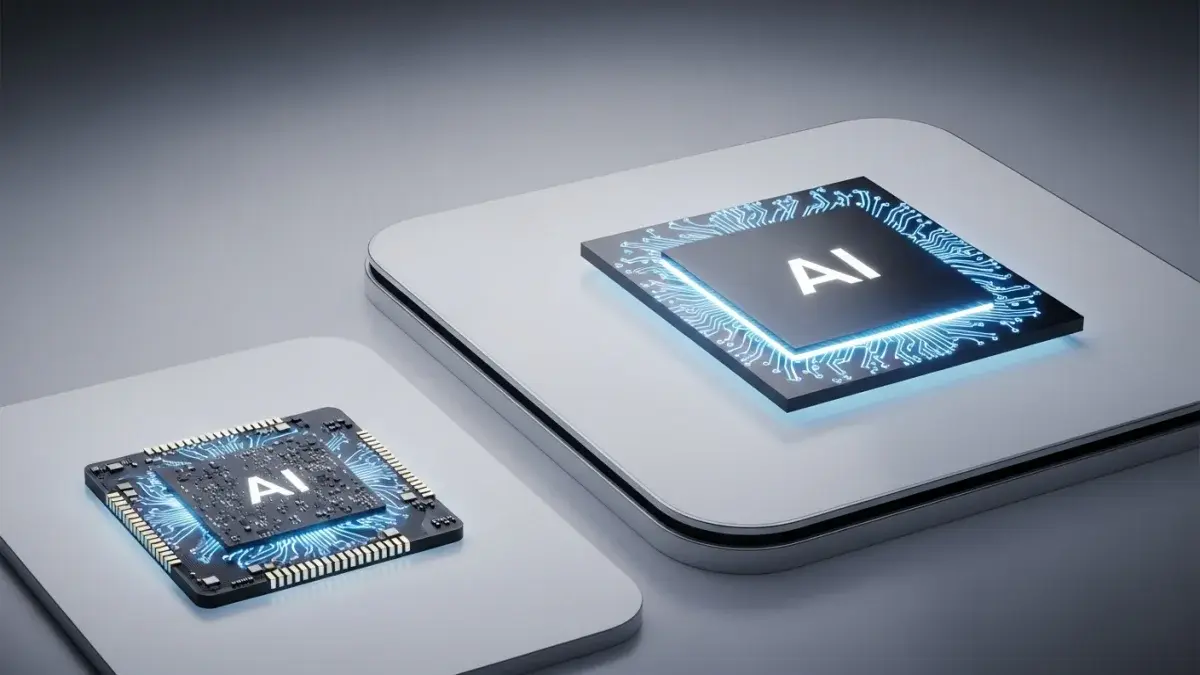
Three concrete claims are consistent across the three reports. First, Apple has built a new on-device foundation model internally code-named Ajax 3, roughly 7 billion parameters, optimized for the M5 Neural Engine and capable of running entirely on iPhone 17 Pro and Mac M4 Pro hardware without cloud round-trips for the most common Siri and writing-assistant tasks. The model reportedly benchmarks close to GPT-4o-mini and Claude Haiku 3.5 on standard reasoning tasks despite running locally — a structural improvement over the original 2024 Apple Intelligence model that fell roughly two model generations behind by mid-2025.
Second, Apple is opening a developer SDK for third-party agents that hooks directly into Apple Intelligence and lets third-party apps register tool-use endpoints that Siri can call. The SDK is reportedly named AppIntents 2.0 (an evolution of the existing AppIntents framework) and would allow developers like Notion, Slack, Spotify, and Uber to register actions that Siri can invoke autonomously. This is the structural piece that has been missing from Apple Intelligence since 2024 — the original 2024 launch did not include a meaningful third-party-agent layer, and competing platforms (Google Gemini, OpenAI's GPT, Anthropic's Claude) all moved aggressively into agent-style tool use through 2025.
Third, a deep Siri rewrite. The Siri rewrite has been reported on for nearly two years (the original delayed Siri rewrite was supposed to ship in 2025) but the WWDC 2026 version is reportedly the actual release. The rewrite uses Ajax 3 as the underlying model, includes persistent context across sessions, and ships with the AppIntents 2.0 SDK so that third-party app actions are first-class Siri capabilities rather than after-the-fact integrations.
Why Apple needed this relaunch
The pressure on Apple Intelligence has been mounting through 2025-2026. The original 2024 launch was widely seen as underwhelming — limited capabilities, slow rollout, and a Siri rewrite that kept slipping. By mid-2025 Apple Intelligence usage data leaked through investor analyst reports showed roughly 18 percent of eligible iPhone users had Apple Intelligence enabled, with weekly active usage closer to 8 percent. Compared to ChatGPT (roughly 800 million weekly actives globally per OpenAI's late-2025 disclosures) and Google Gemini (roughly 350 million weekly actives), Apple Intelligence had become irrelevant in the consumer-AI competitive frame.
The structural problem was twofold. First, Apple's privacy-first on-device positioning constrained model capability — the 2024 Apple Intelligence on-device model was simply not capable enough to compete with cloud-hosted models on the tasks consumers cared about. Second, the lack of a third-party-agent layer meant Apple Intelligence could not benefit from the developer ecosystem in the way that ChatGPT (with its GPTs marketplace) and Gemini (with its workspace integrations) had. The WWDC 2026 leaks address both structural problems simultaneously.
What it means if the leaks are accurate
Three implications. First, the consumer-AI competitive frame would shift materially. iPhone has roughly 1.4 billion active devices globally, and even modest Apple Intelligence engagement improvement (from 8 percent weekly active to 30 percent weekly active) would translate to roughly 420 million weekly actives — making Apple Intelligence the second-largest consumer AI surface globally behind ChatGPT. The competitive impact on Google Gemini specifically would be sharp because Gemini's strongest competitive vector against ChatGPT has been mobile-OS distribution through Android.
Second, the developer ecosystem implications. AppIntents 2.0 would create a new monetization surface for developers — the equivalent of the App Store moment for the agent era. Developers who register high-value AppIntents would benefit from Siri-driven discoverability, and the resulting redistribution of usage attention would benefit some categories (productivity, services, transit) and disadvantage others (entertainment apps that rely on long-session engagement rather than action-based engagement).
Third, the privacy-positioning recovery. Apple's 'private cloud compute' narrative was fully built out in 2024-2025 but undermined by the underwhelming 2024 launch. A genuinely capable Ajax 3 on-device model that runs the most-common Siri tasks without any cloud round-trip would re-establish the privacy-first positioning as a differentiator rather than a constraint. This matters specifically because regulatory and consumer attention to AI privacy has been intensifying through 2025-2026 (EU AI Act enforcement, California consumer-protection rulings, the broader cultural backlash captured in the Meta-YouTube addiction verdict moment).
What could go wrong
Two specific risk factors. First, leaks are leaks. WWDC keynotes have shipped substantially different from pre-keynote leak coverage in past cycles, and Apple has historically held back specific features from leak surfaces. The Ajax 3 / AppIntents 2.0 / Siri rewrite triple combination is plausible but the specific framing and timing could shift at the keynote itself.
Second, execution risk. Apple's track record on AI execution through 2024-2025 has been weak — the original Apple Intelligence rollout was slow, the Siri rewrite slipped multiple times, and developer-relations communication around AppIntents has been inconsistent. Even if the WWDC 2026 announcement matches the leaks, the actual ship-and-iterate execution through fall 2026 and 2027 will determine whether Apple Intelligence consolidates as the second-largest consumer AI surface or repeats the 2024-2025 underperformance pattern.
What to watch at WWDC 2026 itself
Three signals will indicate whether Apple is genuinely shifting AI strategy. First, on-stage benchmarks. If Apple shows direct benchmark comparisons of Ajax 3 against GPT-4o-mini and Claude Haiku — historically Apple has avoided direct competitor benchmarks — that signals confidence in the new model and willingness to compete on capability rather than just on privacy positioning. Second, third-party developer demos. If major third-party developers (Notion, Slack, Spotify) demo AppIntents 2.0 integrations on stage, that signals genuine ecosystem buy-in. Third, Siri voice persistence. If the demo Siri shows persistent multi-turn context across sessions, that signals the rewrite is the genuine thing rather than a cosmetic refresh.
For the broader AI-arms-race context see our pieces on the reasoning model wars and the AI tools replacing SaaS trend. For Apple's broader product cycle see news.thicket.sh tech coverage.
Origin
Bloomberg Power On newsletter (Mark Gurman, April 21, 2026), The Information deep-dive on Apple Intelligence relaunch (Wayne Ma, April 24, 2026), 9to5Mac supply-chain leak coverage (April 26, 2026). Apple WWDC 2026 keynote scheduled for June 8, 2026. Google Trends data for 'Apple Intelligence 2026' and 'Ajax 3' search terms through April 28, 2026.
Timeline
Why Is This Trending Now?
Search demand for 'Apple WWDC 2026,' 'Ajax 3,' and 'Apple Intelligence relaunch' surged roughly 11x week-over-week between April 21 and April 28 per Google Trends. The Bloomberg, Information, and 9to5Mac coverage triggered widespread tech-press secondary coverage and the AAPL stock move (up 6 percent week-over-week) gave the leak cycle additional financial-news amplification.
The trending angle is sharp because the leaks address the two structural problems with Apple Intelligence (capability gap and missing third-party-agent layer) simultaneously, and because the timing intersects with elevated consumer attention on the broader AI cycle. The AppIntents 2.0 angle is particularly resonant with developer audiences and has driven sustained engagement on tech-press secondary coverage.