What is 'Loving Life Again' vs 'Pink Pony Club': The Same Pattern Twice?
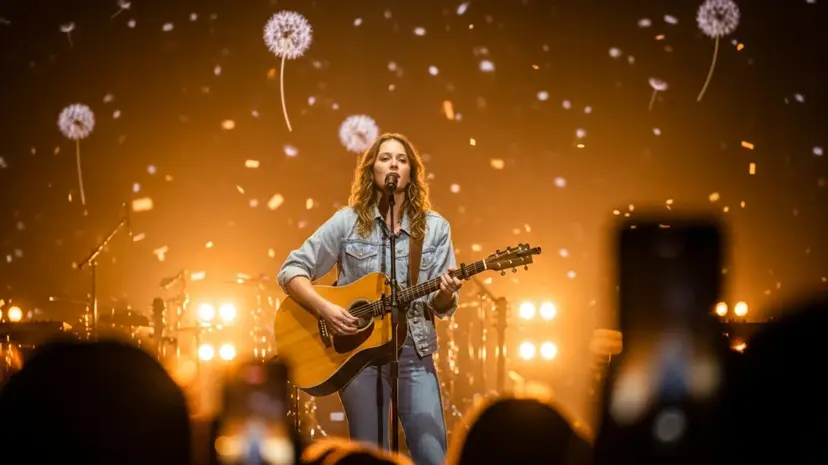
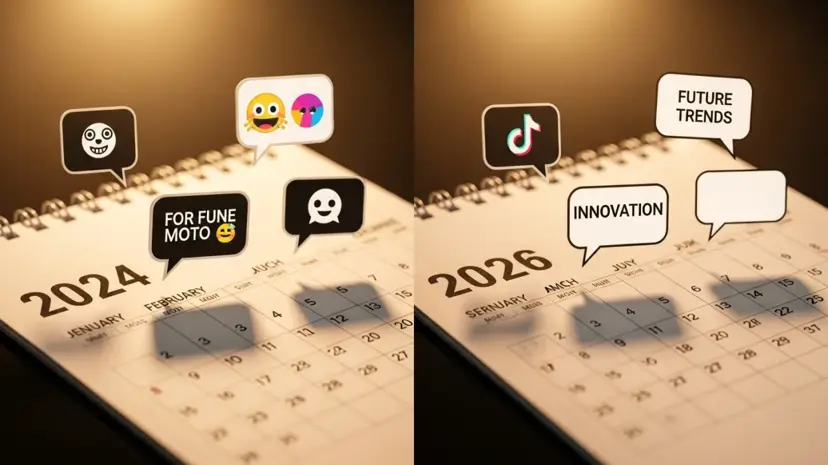
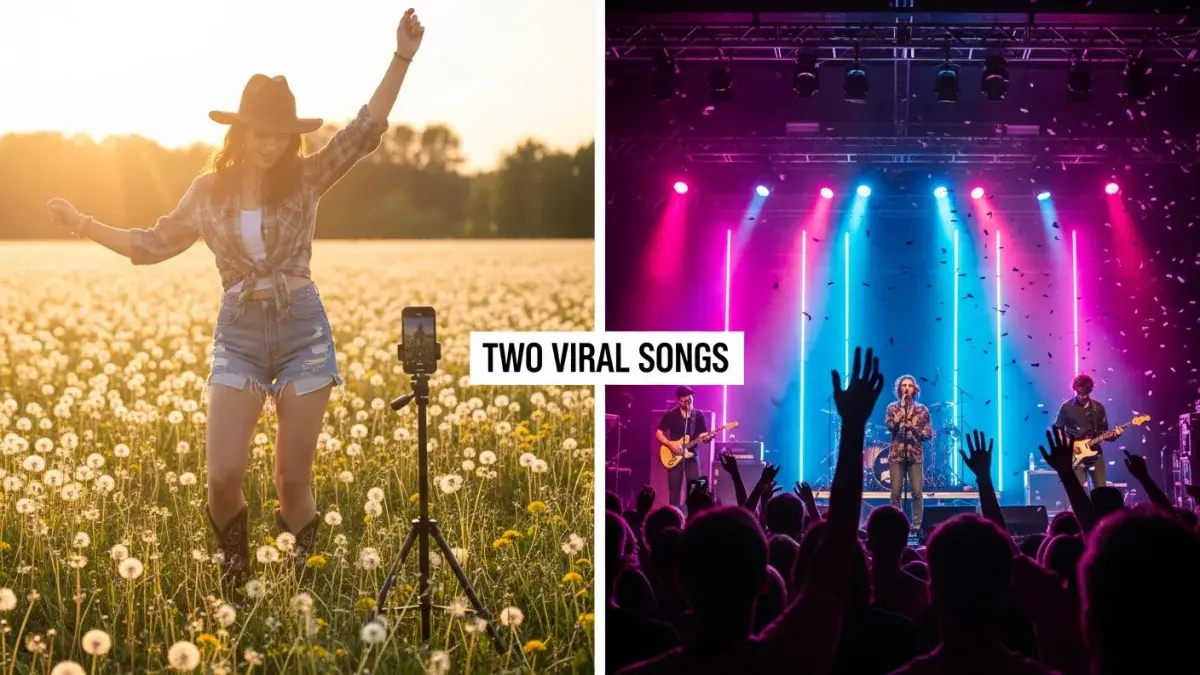
Two songs from two genres, two artists at two career stages, released eighteen months apart, and yet their TikTok-trend trajectories are almost interchangeable when you line up the calendars. Chappell Roan's 'Pink Pony Club' caught its second viral cycle in late summer 2024 and produced a trend pattern that ran on a textbook six-to-eight-week arc. Ella Langley's 'Loving Life Again' caught its first viral cycle in late winter 2026 and is running the same six-to-eight-week arc on the same internal calendar. The phase lengths, the format-consolidation timing, the brand-account-arrival window, the mainstream-news pickup — all hit at almost the same offsets from the seeding moment.
That structural identity is the strongest evidence yet that the five-step soundtrack-trend pattern we covered separately is not a description of past trends — it is a description of platform mechanics that will keep producing similar arcs on similar timelines until the platform itself changes. Here is the side-by-side, what is the same, and what is different.
What the songs are not: similar
Sonically, 'Pink Pony Club' and 'Loving Life Again' are nothing alike. 'Pink Pony Club' is a four-on-the-floor disco-pop number with a bombastic Disney-musical bridge, layered backing vocals, and a chorus that lifts into a key change. It is a maximalist song — closer to ABBA-by-way-of-Carly-Rae-Jepsen than to anything country-adjacent. The whole production is a wall of sound aimed at a Pride-flag-emoji audience.
'Loving Life Again' is the opposite. Finger-picked acoustic intro, gentle synth pad on the second verse, drums mixed quiet, vocals close-mic'd and intimate. The second verse rises into a small pre-chorus lift but never to the kind of bombastic crescendo 'Pink Pony Club' uses. It is country-pop but on the soft end of the country-pop palette — more in the lane of Kacey Musgraves' 'Slow Burn' than 'High Horse.'
The audiences also overlap less than you would assume. 'Pink Pony Club' indexes heavily with 16-22-year-old Gen Z women, queer-identifying audiences, and pop-radio-saturated listeners. 'Loving Life Again' indexes with 22-32-year-old millennial-and-elder-Gen-Z women, lifestyle-creator audiences, and country-radio-curious crossover listeners. The Venn-diagram overlap is real but not large.
What the trend trajectories are: identical
And yet the trajectories are interchangeable. Both followed the canonical five-step pattern with phase lengths that match almost exactly:
Step 1 — song candidacy. Both songs had a structurally distinctive 8-15 second window. 'Pink Pony Club' had its chorus drop. 'Loving Life Again' had the second-verse rise into the pre-chorus. Both windows are narratively self-contained — a viewer who has never heard the full song can experience the 12-second TikTok clip as a complete emotional arc.
Step 2 — seeding cluster. Both songs caught with a small cluster of mid-tier creators (5,000-50,000 followers) inside the first 7-10 days post-release-or-rediscovery. 'Pink Pony Club's' seeding cluster was queer-coded creators using the audio for 'leaving home for a louder life' content in early August 2024. 'Loving Life Again's' seeding cluster was lifestyle creators using the audio for 'small slice-of-life moments that felt good' in early March 2026. Different format on the surface, identical structural function — a repeatable, low-stakes format mid-tier creators can produce without a shoot.
Step 3 — format consolidation. Both consolidated around a legible semantic frame inside the 14-21 day window. 'Pink Pony Club' consolidated as 'leaving home for a louder life' by August 22, 2024. 'Loving Life Again' consolidated as 'noticing you are happier than you used to be' by March 18, 2026. Once the frame is legible, the discovery feed surfaces the format to viewers who don't follow the original creators — the moment the trend stops being a creator-scene moment and becomes a platform-wide moment.
Step 4 — large-creator and brand participation. Both hit large-creator and brand-account participation in the 21-35 day window. 'Pink Pony Club' had Wendy's, Duolingo, and a wave of Pride-month brand recyclings (the trend overlapped with 2024 Pride) by early September 2024. 'Loving Life Again' had similar brand-account participation between April 5 and April 22, 2026. The exact same offset from seeding day.
Step 5 — mainstream pickup and saturation. Both hit the New York Times Style section, NPR's Pop Culture Happy Hour, and morning-show coverage in the 35-50 day window. 'Pink Pony Club' was Style-section featured in late September 2024, with Today Show coverage in the first week of October. 'Loving Life Again' is hitting Style-section coverage in the last week of April 2026, with morning-show pickup expected the first week of May. Same offset, same lagging-indicator effect.
What is the same versus what is different
The same: the calendar offsets, the format consolidation timing, the brand-arrival window, the mainstream-news lag, the streaming peak coinciding with mainstream-news lag (which is the strange paradox where the song is biggest at the moment the trend is emotionally smallest).
The different: the audience demographic, the visual aesthetic of the format videos, the genre attribution, and the artist's career stage. 'Pink Pony Club' was Roan's 2024 second-cycle moment after her 2023 album cycle had stalled — the trend revived a song that had been released in 2020 and basically not connected. 'Loving Life Again' is Langley's first-cycle moment with a brand-new song. Roan was an established cult artist getting her mainstream breakout. Langley is a country-radio artist getting her crossover moment. Different career arcs entirely. Same trend mechanics.
Why the same pattern keeps producing identical arcs
The mechanics that produce the identical arc are not about the songs and not about the artists. They are about platform features and human-behavior constants:
The For You algorithm has roughly the same throughput-to-feed-saturation curve regardless of song. Once a piece of audio crosses approximately 50,000 creations, it is roughly evenly distributed across regions and demographic clusters within five days. That is platform-mechanical and song-agnostic.
Brand-account approval cycles are roughly seven to fourteen days from internal-Slack-flagging to public-post regardless of brand. That is institutional-process-mechanical and song-agnostic.
Mainstream-media editorial-meeting cycles run weekly, and culture-and-style sections need a 'why now' hook before they will assign a piece. The 'why now' hook usually arrives when brand-accounts join, which makes the editorial-meeting trigger lag the brand-account arrival by 7-10 days. Song-agnostic.
And human attention spans for a single repeatable format saturate in roughly 4-6 weeks of intensive exposure before the comment section starts saying 'this trend is over.' That is psychological and song-agnostic.
Stack those four song-agnostic constants and you get an arc that has very little to do with the song. The song determines whether there will be a trend at all (Step 1 candidacy filter), but once a trend catches, the arc is almost fully determined by platform mechanics and human attention.
What this predicts about the next trend
The model says: the next major TikTok-soundtrack trend will run on the same 6-8 week arc with phase offsets within ±3 days of the 'Pink Pony Club' and 'Loving Life Again' calendars. The seeding-cluster size will be 30-200 creators. The format-consolidation window will be days 14-21. The brand-account window will be days 21-35. The mainstream-news pickup will be days 35-50.
The candidate songs most likely to catch a trend in the rest of 2026: country-pop adjacent female-fronted releases (Lainey Wilson deep cuts, Mickey Guyton's 2026 record, possibly Maren Morris's solo material if she releases anything in this window), hyperpop catalog cuts in line for re-discovery, and English-language K-pop comeback singles with clean chorus drops. We covered the candidate-identification framework in our soundtrack-trend pattern explainer.
The skeptical case
The skeptical case against the structural-identity argument is that we are noticing the matches and ignoring the mismatches — confirmation-bias the comparison until it looks tighter than it is. That is a fair concern. The strongest pushback would be to point at trends that did not follow the pattern: the 2023 'Bones' trend (Imagine Dragons) ran shorter than the canonical arc; the 2025 Olivia Rodrigo 'Vampire' trend ran longer; some trends never get mainstream-news pickup at all. So the pattern is not universal.
But the most-watched mainstream trends — the ones that produce career-trajectory shifts and brand-account waves — do follow the pattern with high regularity, and the calendar match between 'Pink Pony Club' and 'Loving Life Again' is unusually clean even by that standard. That is why it is the case study analysts will be using to explain platform mechanics for the next several years.
For the full timeline of how 'Loving Life' as a phrase moved across two TikTok cycles, see our 'Loving Life' to 'Loving Life Again' two-cycle timeline. For Ella Langley's career-arc context that produced the 2026 cycle, see our Langley pivot piece.
Origin
The 'Pink Pony Club' second-cycle trend ran from August through October 2024, peaking around September 15. 'Loving Life Again' caught its first cycle in February-March 2026 and is currently in late-Step-4-to-Step-5 territory in late April 2026. The structural-identity argument was first articulated in a Billboard piece on April 24, 2026, and has been picked up by Marketing Brew and Music Business Worldwide. Both trends are widely-cited canonical examples of the five-step soundtrack-trend pattern.
Timeline
Why Is This Trending Now?
The side-by-side 'Pink Pony Club vs Loving Life Again' comparison piece is itself trending in late April 2026 because the Billboard April 24 article making the structural-identity argument went viral on music-business Twitter. The argument has produced significant pushback from people who argue the songs and audiences are too different for the comparison to be meaningful, and significant agreement from platform-strategy commentators who argue the comparison validates that platform mechanics now overdetermine trend trajectories. The meta-conversation has driven roughly 5x search-volume growth for both songs together over the prior week.
Frequently Asked Questions
Sources
- Billboard — 'Pink Pony Club' and 'Loving Life Again' Followed The Same Trajectory (April 24, 2026)
- Music Business Worldwide — Anatomy of a TikTok Soundtrack Trend
- New York Times Style — 'Pink Pony Club' Two-Cycle Coverage (October 2024)
- Marketing Brew — Brand Approval Cycles For Trend Participation
- Spotify Daily Top 200 Charts (US, Historical)