What is All Systems Glow: WWDC 2026 Is Tim Cook's Last Keynote — and Siri's Make-or-Break Moment?
On Monday, June 8, 2026, Apple opens its Worldwide Developers Conference with a keynote that carries more weight than the usual software-update reel. This is the year Apple finally has to show, not tell, what its long-delayed Siri overhaul actually looks like — and it is also, by Apple's own announcement, Tim Cook's last WWDC keynote as chief executive before he hands the company to John Ternus on September 1. Two send-offs in one show: a 15-year CEO walking toward the exit, and a voice assistant that has spent two years stuck in "coming later" limbo finally getting rebuilt on a rival's AI. If you have searched "WWDC 2026," "iOS 27 new Siri," "is Apple using Gemini," or "when is the Apple keynote" in the past few days, that collision is why the event is everywhere at once.
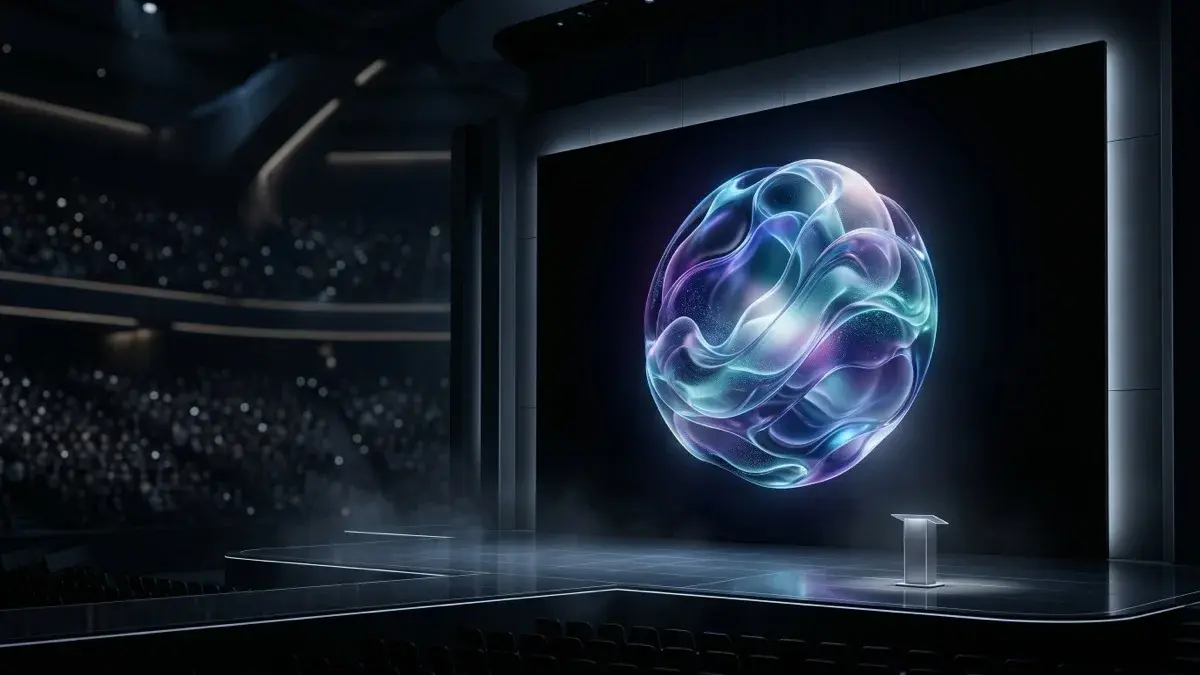
The hook tightened on June 1, when Apple marketing chief Greg Joswiak tweeted the conference tagline — "All systems glow for a great #WWDC26 next week! Tune in June 8 at 10 am PT." It is a pun on "all systems go," and it is not subtle: the glowing, dark-mode aesthetic teases the redesigned Siri that's expected to anchor the whole presentation. Here is who is involved, what's actually changing, why the Google angle matters, and why this particular keynote is being treated as a referendum on Apple's AI strategy.
The setup: a keynote with two endings
WWDC runs June 8 through 12 as a primarily online event, with Cook's keynote at 10 a.m. Pacific (1 p.m. Eastern) followed by the Platforms State of the Union at 1 p.m. Pacific. The format is the now-familiar hybrid: a pre-recorded, tightly edited keynote streamed on Apple.com, the Developer app, Apple TV, and YouTube, with a smaller in-person gathering at Apple Park.
What makes this one different is the backdrop. On April 20, 2026, Apple announced that Cook will become executive chairman and that John Ternus, the 50-year-old senior vice president of hardware engineering, will take over as CEO effective September 1. Ternus joined Apple in 2001 and has run hardware engineering since 2021, shaping the Apple silicon transition that underpins the company's current on-device AI ambitions. Cook stays on through the summer to manage the handoff, which means the June 8 keynote is the last big stage Apple gives him as CEO. That subtext — a farewell wrapped inside a product launch — is a large part of why the event is trending beyond the usual tech-press bubble. For a sense of how fast the broader AI landscape has been reshuffling around Apple, the recent run of lab acquisitions and talent raids across the AI industry shows just how much pressure Apple is under to ship something real.
The main event: Siri, rebuilt and powered by Google
For two years, the gap between what Apple promised and what Siri could do has been the company's most visible AI embarrassment. The personalized, context-aware Siri demoed back in 2024 kept slipping, and the assistant fell conspicuously behind the conversational chatbots people now use daily. WWDC 2026 is where Apple is expected to close that gap.
According to Bloomberg's Mark Gurman, whose reporting has driven most of the pre-keynote leaks, iOS 27's headline feature is a rebuilt Siri that finally behaves like a full chatbot — capable of web search, summarization, image generation, multi-step commands, and on-screen awareness of what you're looking at. Gurman has published recreated screenshots showing the new assistant in two forms: a standalone Siri app, and a "Search or Ask" pop-up tied to the iPhone's Dynamic Island that you summon by swiping down from the top center of the screen anywhere in the system. Both reportedly use a dark scheme with glowing elements — exactly the look the "All systems glow" tagline is winking at.
The twist is what's under the hood. On January 12, 2026, Apple and Google confirmed a multi-year partnership in which Apple licenses a custom Google Gemini model — reportedly a roughly 1.2-trillion-parameter version — to power the rebuilt Siri and other Apple Intelligence features. Gurman pegs the deal at around $1 billion a year. For a company that has long marketed AI as a privacy differentiator, leaning on Google's model is a genuine strategy shift, and Apple has been at pains to frame it carefully: queries that touch the Gemini model are said to run through Apple's Private Cloud Compute framework, with hardware-isolated enclaves and no user data retained or shared with Google. Whether that messaging lands on stage is one of the keynote's open questions. The broader move — renting frontier intelligence instead of building it alone — echoes a pattern across the industry that we traced in our look at the shift toward agentic AI assistants and the explosion of AI companion apps competing for the same daily-habit slot Siri once owned by default.
Liquid Glass, take two
The other through-line is design. Last year's iOS 26 introduced "Liquid Glass," a translucent, layered interface language that drew as much criticism as praise — readability complaints about transparency and contrast dogged it for months. iOS 27 and macOS 27 are expected to refine rather than replace it: Gurman has reported systemwide changes including new animations, redesigned tab bars, and — crucially — adjustable transparency and contrast, with rumored intensity sliders that let users dial back the glassiness that annoyed them. A June 4 MacRumors leak on macOS 27 described a "slight redesign" specifically aimed at improving transparency and shadow readability.
That same macOS 27 report sketched out a long list of smaller AI touches expected across Apple's first-party apps: Extend and Reframe tools in Photos, more lifelike output in Image Playground, AI-generated wallpapers, natural-language shortcut creation, expanded Writing Tools with grammar checking, and Safari automatically organizing tabs into groups. Gurman has characterized the overall release as a "Snow Leopard-style update" — a reference to the 2009 macOS version famous for fixing bugs and improving performance rather than piling on features. After a rocky two years of overpromised AI, "make the existing stuff actually work" may be the most reassuring pitch Apple can make.
The restraint is deliberate, and it tells you something about where Apple thinks it sits. Most of its rivals spent the past two years racing to add features faster than anyone could test them; Apple's pitch this year is essentially the opposite bet — that a smoother, more reliable, less buggy system is the thing that actually keeps a billion-plus users loyal. The risk is that "polish plus a borrowed chatbot" reads as treading water at exactly the moment competitors are sprinting. The reward, if it lands, is that Apple stops being the company whose AI demos never ship and becomes the company whose AI just quietly works on the device already in your pocket. That is a narrower claim than "we have the smartest model," but for Apple's audience it may be the more durable one.
The hardware and platform footnotes
WWDC is a software show, so don't expect new iPhones. But the version-number jump is notable: Apple is expected to unveil iOS 27, iPadOS 27, macOS 27, watchOS 27, tvOS 27, and visionOS 27, all of which Apple aligned to a single year-based numbering scheme last cycle. The macOS 27 leak also pointed to two forward-looking details worth flagging: hidden touch-based optimizations widely read as groundwork for a rumored future MacBook Pro with an OLED touchscreen, and the end of the road for Intel Macs — macOS 27 is expected to require Apple silicon (M1 or later), with Rosetta 2 translation support winding down after this release.
For developers, the more consequential story may be how open Apple makes its AI. Reports suggest Apple could let users choose among different AI models through an extension-style system, and could expose its on-device foundation models to third-party apps — a move that would turn Apple Intelligence from a closed feature set into something developers can actually build on. If that materializes, it's the kind of platform shift that outlasts any single keynote. We dug into the early version of this expectation in our piece on Apple's on-device AI leaks, and it connects to a wider theme we've been tracking — the way AI features are quietly absorbing functions that used to be separate apps and subscriptions.
There's a sharper edge to that for developers too. If Apple ships free, on-device models that any app can call, it undercuts a wave of startups currently paying per-token for cloud AI to power the same features. A note-taking app that can summarize on the device for nothing competes very differently from one renting a model by the API call. That dynamic is why this WWDC matters beyond Apple's own apps: the terms Apple sets — what's free, what's metered, what runs locally versus in the cloud — quietly rewrite the economics for everyone building on the platform. It is the least flashy part of the keynote and possibly the most important, because it shapes which apps can exist at all over the next year.
Why it's trending now
Three forces are stacking on top of each other in the same 72-hour window. First, the hard date: a major Apple keynote on June 8 reliably concentrates search interest, and the "All systems glow" tease on June 1 plus the June 4 macOS leak kept fresh details dripping out all week. Second, the stakes: this is the keynote where Apple either proves it has caught up on AI or confirms that it's still buying its way there with Google's model — a "did Apple fix Siri?" question with a clean before/after test built in. Third, the human angle: Tim Cook's last keynote as CEO turns a developer conference into a cultural moment, the kind of story that travels well past people who care about tab-bar redesigns.
There's also a quieter reason it resonates. The entire generative-AI wave — from chatbots to mainstream AI video generators — has unfolded largely without Apple at the center, and a billion-plus iPhone users have watched the most valuable consumer-tech company on earth look uncharacteristically behind. WWDC 2026 is Apple's attempt to change that narrative on its own stage, on its way out the door with one CEO and in through it with another.
What to actually watch on June 8
Cut through the noise and a few things will tell you whether Apple delivered. Does the new Siri get a live, unscripted-feeling demo, or another "coming this fall" caption? Does Apple name the Google partnership on stage and explain the privacy architecture, or quietly route around it? Do the Liquid Glass transparency controls show up as a real, shipping fix? And does Apple open its models to developers in a way that gives the platform a second act? The answers will set the tone for the iPhone refresh in September — Ternus's first major launch as CEO — and for whether 2026 is the year Apple's AI story stops being about what's late and starts being about what's live.
Whatever lands on stage, the framing is irresistible: a glowing new assistant, a glowing new design, and a glowing send-off for the man who ran Apple for a decade and a half. All systems glow, indeed. While you wait for the keynote, you can settle the only debate that really matters before the stream starts — which Apple era you actually belong to — with a quick tech-nostalgia quiz over at quiz.thicket.sh.
Origin
Apple's Worldwide Developers Conference 2026 (WWDC26) runs June 8-12, 2026, as a primarily online event, opening with a keynote at 10 a.m. Pacific on Monday, June 8. Date, format, and the 'All systems glow' tagline (tweeted by Greg Joswiak on June 1, 2026) were confirmed via Apple Newsroom and MacRumors. The keynote is Tim Cook's last as CEO: on April 20, 2026, Apple announced Cook would become executive chairman and John Ternus would become CEO effective September 1, 2026 (Apple Newsroom, CNBC). The headline software story is a rebuilt, chatbot-style Siri in iOS 27, reportedly powered by a custom Google Gemini model under a multi-year deal (~$1B/year) announced January 12, 2026 (Apple/Google joint statement, CNBC, TechCrunch, Bloomberg's Mark Gurman). Design and feature leaks — Siri in the Dynamic Island, Liquid Glass transparency controls, macOS 27 changes — come from Mark Gurman's Bloomberg reporting and a June 4, 2026 MacRumors macOS 27 feature roundup.
Timeline
Why Is This Trending Now?
Apple's WWDC 2026 keynote is Monday, June 8, 2026 — three days from June 5 — and pre-keynote interest is spiking across 'WWDC 2026,' 'iOS 27 new Siri,' 'is Apple using Gemini,' 'Tim Cook last keynote,' and 'when is the Apple keynote.' Three fresh forces stack into the same window: (1) Apple's 'All systems glow' tagline, tweeted June 1, 2026, teasing the glowing redesigned Siri; (2) a June 4, 2026 MacRumors macOS 27 leak adding new feature details; and (3) the human hook that this is Tim Cook's final keynote as CEO before John Ternus takes over September 1, 2026. The make-or-break question — whether Apple's long-delayed, now-Gemini-powered Siri finally ships as a real chatbot — gives the event a clean before/after test that drives both fan anticipation and industry scrutiny. Recency window: tagline June 1 and macOS leak June 4 (1-4 days from the hook), with the keynote June 8, three days out.
Frequently Asked Questions
Sources
- Apple Newsroom - Apple's Worldwide Developers Conference returns the week of June 8
- Apple Newsroom - Tim Cook to become Apple Executive Chairman, John Ternus to become Apple CEO
- MacRumors - Apple Teases Next Week's WWDC 2026 Event: 'All Systems Glow'
- MacRumors - 5+ New Features Coming in macOS 27
- MacRumors - Google Gemini Partnership With Apple Will Go Beyond Siri Revamp
- CNBC - Apple taps John Ternus as CEO to replace Tim Cook, who will become chairman
- CNBC - Apple picks Google's Gemini to run AI-powered Siri coming this year
- TechCrunch - Google's Gemini to power Apple's AI features like Siri
- 9to5Mac - iOS 27's new design leak sounds a lot like what I've been wanting most
- Macworld - WWDC 2026: When is WWDC, keynote start time and what Apple may announce
- TechRadar - 5 things to expect at WWDC 2026, from Siri 2.0 to Tim Cook's Apple farewell