What is Olivia Rodrigo's 'honeybee' Is Powering TikTok's Most Tender Carousel Trend: Here's How It Works?
Of all the formats fighting for attention on TikTok in June 2026, one of them is winning by doing the opposite of everything else: it's quiet, slow, and sincere. The 'honeybee' carousel — built on a track from Olivia Rodrigo's new June 2026 album — has turned a tender album cut into a participatory love letter, and a parody offshoot has turned that same template into one of the funniest sounds on the app.
Here's where the trend came from, the exact structure creators are using, and why a slow photo carousel is stopping the scroll in a feed built for speed.
What is the 'honeybee' carousel trend?
At its core, the trend is a TikTok photo carousel set to the verse lyric "baby boy, honeybee, god I love the way you look at me." The structure is almost always the same three beats. Slides one and two are photos of someone the creator adores, with the lyric overlaid, building anticipation. Slide three is the payoff: a photo of that person looking directly into the camera with complete, unguarded love.
That final slide is the whole trend. The first two photos set you up; the third one lands because it captures a private, eye-contact moment that feels like it wasn't meant for an audience. In a feed engineered for motion and cuts, a still photo of someone looking at you tenderly is a genuine pattern interrupt — and that's exactly why it works.
Where the song comes from
'honeybee' is a track from Rodrigo's June 2026 album you seem pretty sad for a girl so in love. Thematically it sits at the bruised center of the record: it's a love song that's really about fear — the terror of one day losing the person you can't imagine living without. That tension is why the sound fits the carousel so well. The lyric sounds adoring, but the emotion underneath is fragile, and creators are leaning into both halves at once.
The album landed in the same packed pop month as Ariana Grande's 'Hate That I Made U Love Me' dance trend, giving TikTok two simultaneous pop moments to remix. But where the Grande sound spawned a dance, 'honeybee' spawned something stiller — a sign that not every viral format has to be a challenge or a transition.
The chicken-tender parody
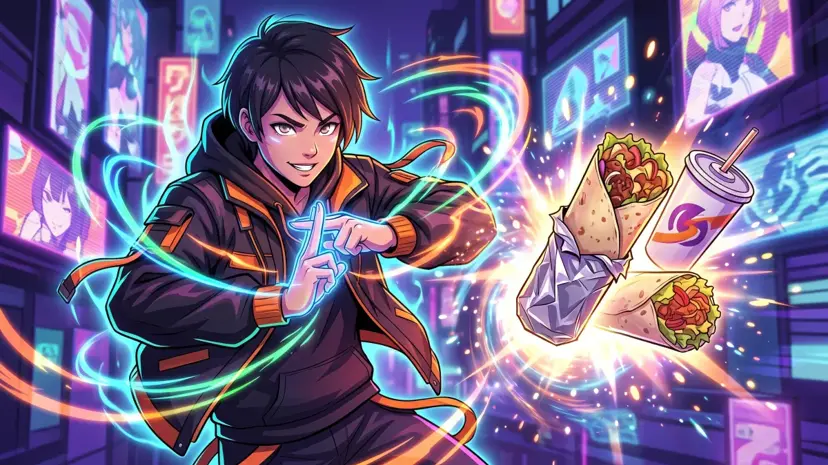
As with every sincere TikTok format, the parody arrived almost immediately — and in this case it's nearly as big as the original. The parody version keeps the exact carousel structure but swaps the love interest for a hyperfixation food: Raising Cane's chicken tenders, an iced coffee, a specific snack. Slides one and two tease 'the one,' and slide three reveals a box of fast food looking back at you.
It hits the same emotional notes as the original — anticipation, reveal, devotion — just aimed at something absurd. That's the tell of a healthy trend: a template clean enough that you can play it straight or play it for laughs, and both versions read instantly. It slots neatly alongside the month's other transition-and-reveal formats like the Food Jutsu anime trend, which rewards the same instinct for a clean, well-timed payoff.
How to make a 'honeybee' carousel
The barrier to entry is almost zero, which is a big part of why it spread. Pick three photos: two that establish the subject and one knockout shot of them (or it) looking into the lens. Add the 'honeybee' sound, overlay the lyric on the first two slides, and let the third land without text. The whole thing works best when the final image feels caught rather than posed.
If you want the parody route, the formula is identical — just make the third slide a food you're irrationally devoted to. Either way, the trend rewards restraint: the fewer slides and the cleaner the reveal, the harder it hits.
How a quiet trend beats the algorithm
It is worth pausing on why a slow photo carousel can out-perform flashier content. TikTok rewards completion and replays, and the honeybee structure is engineered for both: the lyric overlay on the first two slides makes viewers wait for the reveal, and the emotional third slide pulls people back to swipe through again. Creators have noticed that the trend also drives unusually high save and share rates, because the finished carousel doubles as a keepsake — something you send directly to the person it is about. That private, off-feed sharing is exactly the kind of signal the algorithm treats as a strong endorsement, which helps explain how a sincere, low-production format kept climbing in a month dominated by dances and fast cuts.
Why this trend matters
'honeybee' is a useful data point about where TikTok is in mid-2026. Plenty of the month's biggest formats are fast — dances, anime transitions, beat-drop reveals. The 'honeybee' carousel went viral by being the slow one, proving that sincerity still cuts through when it's structured well. It's a reminder that a 'trend' on TikTok isn't a specific dance or sound so much as a repeatable shape that lots of people can fill with their own meaning — whether that meaning is a partner, a parent, or a box of chicken.
Origin
Olivia Rodrigo's 'honeybee,' a track from her June 2026 album 'you seem pretty sad for a girl so in love,' became the basis for a TikTok photo-carousel format using the verse lyric 'baby boy, honeybee, god I love the way you look at me.' Creators built three-slide carousels ending on a tender eye-contact photo, and a parody version swapping the love interest for foods like Raising Cane's chicken tenders spread alongside it through mid-June 2026.
Timeline
Why Is This Trending Now?
It's trending because a tender album cut became a low-effort, high-emotion template at exactly the moment TikTok's feed was saturated with fast dances and transitions. The three-slide structure is simple enough for anyone to copy, the final eye-contact photo is a genuine pattern interrupt in a motion-first feed, and the chicken-tender parody gave the same template a comedic second life — letting the sound spread through both sincere and joke versions at once.