What is The Nihilistic Penguin Meme: How a Depressed Cartoon Bird Took Over Brand Twitter in April 2026?
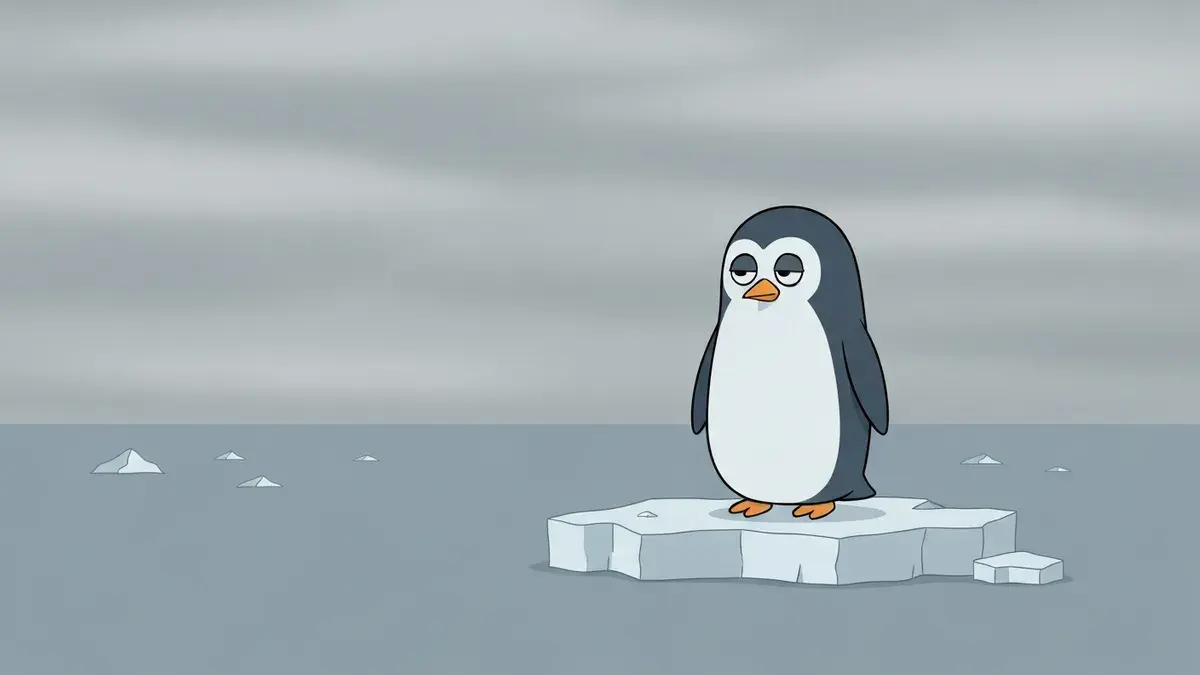
The Nihilistic Penguin is a meme format that emerged in late March 2026 and exploded across social media in April. It features a stylized cartoon penguin — typically rendered in flat design with exaggeratedly tired, heavy-lidded eyes — delivering deadpan existential monologues in captions or voice-over. The jokes are meditations on the meaninglessness of modern life, delivered in the voice of a bird that has accepted the absurdity of existence and is slightly too tired to do anything about it. The format's core appeal is its tonal precision. Nihilistic humor, when it works, hits an audience that feels chronically overwhelmed by modern conditions — economic anxiety, environmental collapse, political dysfunction, algorithmic exhaustion — and offers them a voice that acknowledges all of it without asking them to do anything. The penguin is not trying to solve anything. The penguin is just going to stand on its iceberg and describe the situation. That is the joke, and also why it resonates. By mid-April 2026, the format had been adopted by dozens of major brand social media accounts. BMW posted a Nihilistic Penguin image with the caption 'commuting to a job that exists only to pay for the commute' paired with a car advertisement. Lidl posted one reading 'saved seventeen cents on discount yogurt, still paying rent with vibes' with a grocery promotion. These corporate adoptions followed the classic meme-life-cycle pattern: underground creators invent the format, it goes viral on Twitter and TikTok, brands pile in within two weeks, the format collapses under its own commercial weight shortly after. What makes the Nihilistic Penguin notable among 2026 memes is how quickly the collapse arc has been playing out. Formats that used to take months to die now die in weeks, because brand adoption itself has accelerated — social media teams have playbooks for rapidly integrating trending formats, and the time from meme birth to meme exhaustion is compressing year over year. The Penguin is one of the clearest recent examples: the format was viral for three weeks and may be effectively dead by May. Academic observers of internet culture have pointed to the Nihilistic Penguin as a data point in what sociologist Ruth Laitin calls the 'meme compression cycle.' Each iteration of viral format → brand adoption → format death gets shorter. This has downstream effects on how internet humor develops — the faster formats die, the less time there is for genuine creative variation, and the more the economy of online humor becomes about generating new formats just to feed the adoption pipeline.
Origin
The first verifiable Nihilistic Penguin post was made by Twitter/X user @iceflow_dread in late March 2026, featuring a hand-drawn penguin with oversized tired eyes and the caption 'saved two dollars on oat milk, crying.' The image style — flat vector, muted grays and blues, disproportionately large eyes — quickly became the standardized format as other creators copied it.
The format had a template effect: because the drawing style was simple, creators could easily produce their own penguin variants, and the only creative labor required was writing the caption. This low-friction format is characteristic of memes that spread quickly — the MS Paint Cat, the Distracted Boyfriend, the Wojak family all had similarly low production thresholds. Within two weeks, dozens of template generators had been published, and the format was being used by millions of people.
Timeline
Why Is This Trending Now?
The Penguin hit at a moment of compound anxiety in April 2026 — global markets continued to wobble from the Q1 correction, climate news had been heavy in March, and the political news cycle was, as always, exhausting. Nihilistic humor is counter-cyclical: it performs best in bad moods. When the overall cultural mood is stressed, jokes that acknowledge the stress without demanding response work better than aspirational content.
The second driver was Twitter/X's algorithm, which rewards formats that generate high reply engagement. Nihilistic Penguin posts consistently drew long comment threads of variation posts, because the format invited additions — 'oh, I have one of those penguins for _____.' That reply-density made the format algorithmically privileged, which compounded its reach in ways that earlier low-engagement formats did not achieve.