What is Which AI Video Generator Is Actually Going Viral on TikTok in May 2026??
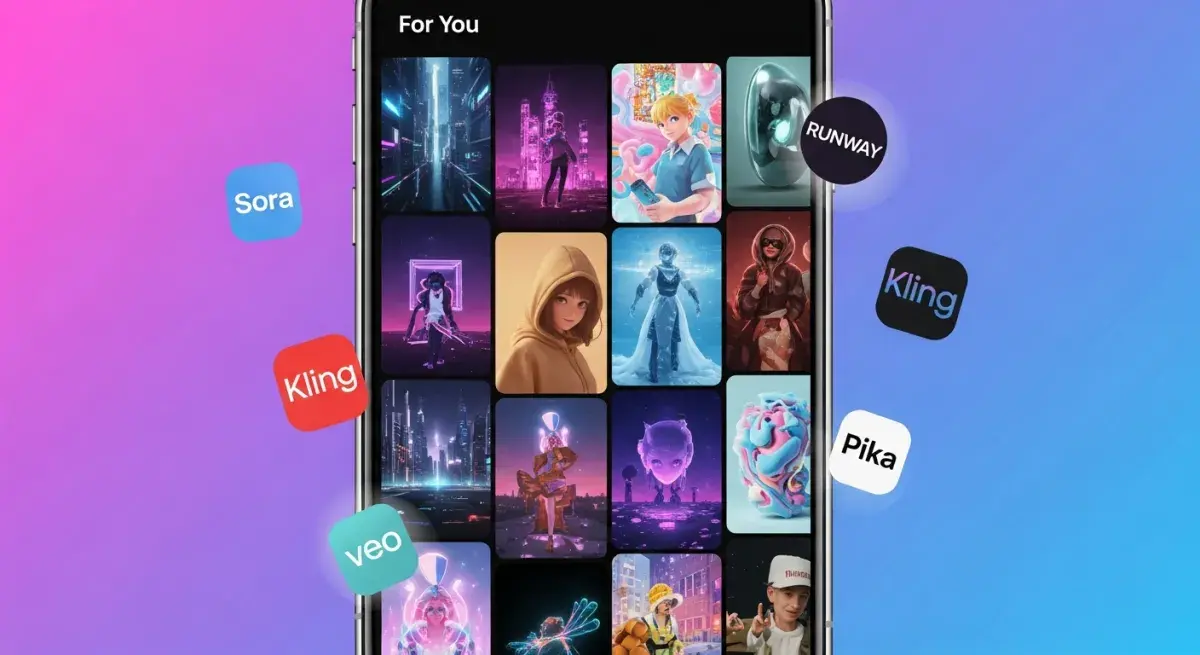
The phrase 'AI slop' has been around since 2024, but the AI video on TikTok in May 2026 is a different category. Sora 2, Runway Gen-4, Kling 2, Stable Video 3, Veo 3, and Pika 2.5 are all live, all priced for individual creators, and all producing clips that look — at a glance, on a phone, in a thirty-second viewing window — indistinguishable from filmed footage. The question creators and brand teams are actually asking is narrower: which of these models is winning the FYP right now, and what does a viral AI clip look like in May 2026?
This piece is the field guide. We pulled what is actually verifiable from public reporting (TechCrunch, The Verge, Decoder, Stratechery, public TikTok #ai trend pages, the Sora and Runway showcases) and from looking at the models themselves. Where we cannot confirm a creator handle or a view count, we describe the visual pattern instead of inventing a number. For the head-to-head model comparison see our Stable Video 3 vs Sora 2 vs Runway Gen-4 piece; for the broader market context see AI video generators going mainstream in 2026.
The visual signatures: how to spot which model made what
Each model has a tell. After enough viewing you start to read clips the way you read camera lenses — there is a Sora look, a Runway look, a Kling look, and they show up in different corners of the FYP for different reasons.
Sora 2 dominates the cinematic-hero clip — the dolly shot down a snowy Tokyo alley, the slow push-in on a face, the impossible drone reveal of a coastline. The signature is volumetric light done well, reflections that move correctly with the camera, and a slightly heightened sense of atmosphere that reads as 'high-budget short film.' Sora clips usually run 8 to 20 seconds and are often single-take. The OpenAI watermark on free tier is the easy giveaway; on paid commercial tier the absence of camera shake on a handheld-feeling shot is the harder one. The TechCrunch and Verge reviews of Sora 2 since November 2025 have consistently flagged 'unnatural smoothness on supposedly handheld footage' as the recognizable Sora 2 fingerprint.
Runway Gen-4 shows up most in product, fashion, and stylized-narrative clips. The keyframing and motion-brush tooling Runway has built means Gen-4 clips often have specific directorial moves — a subject locked to one part of the frame while the camera arcs, a product rotated with a hand-tuned light source — that feel storyboarded rather than prompted. Runway also dominates the multi-shot AI music videos that have become a staple of the FYP since late 2025. The signature is shot-to-shot character consistency that prompt-only models still struggle with.
Kling 2, from Kuaishou, has carved out a real lane in human-centric short clips with naturalistic motion — people dancing, walking, sitting and gesturing in conversation. Kling 2 went global in February 2026 (it had been China-only since 2024) and the international FYP started filling with Kling-style clips of people doing ordinary human things very smoothly within weeks. The signature is unusually believable hand and finger motion compared to the other models, and a very faint warm color cast.
Stable Video 3 (released April 21, 2026, see the comparison piece) shows up overwhelmingly in stylized-animation clips — Studio Ghibli pastiche, watercolor loops, anime-style action sequences — because the open weights have already attracted a wave of community LoRAs for specific styles. The signature is style consistency that is too clean to be a hand-drawn frame-by-frame, paired with an almost-but-not-quite-right blink rate or breathing rhythm.
Veo 3 is Google's bet, available through Vertex AI and Gemini, and it is doing well specifically on the YouTube Shorts crossposts that bleed into TikTok. Verifiable signature: solid prompt adherence, especially for multi-element prompts ('a robot serving sushi in a 1990s diner') where other models drop one element. The visual look is slightly less stylized than Sora, slightly more obedient to written direction.
Pika 2.5 remains the workhorse of the meme-edit corner of TikTok — short loops, text-overlay-friendly clips, the 'add motion to a still image' trick that drives a huge volume of low-effort but very share-friendly content. Pika's signature is shorter clip length (3-6 seconds typical), looser physics, and a willingness to break realism in fun ways that the bigger-budget models avoid.
Which trends are pulling AI video into the FYP right now
The viral clips of May 2026 are not random — they are riding three trend tracks that the algorithm has been amplifying for weeks.
The 'impossible footage' track. AI video is winning anywhere the prompt is something nobody could film: a giraffe walking through Times Square, a medieval knight ordering at a drive-thru, two historical figures in a podcast studio. Sora 2 dominates this category because the cinematic look matches the absurd-content premise. The TechCrunch coverage of the 'historical podcast' format in March-April 2026 traced the trend back to Sora-2-specific shots being shareable enough to bootstrap an entire format.
The 'aesthetic loop' track. Five-to-ten-second mood videos — a girl in a sundress in a sunlit kitchen, a single candle flickering with rain on the window, a forest path with snow falling — that play in the background of get-ready-with-me and study-with-me content. Stable Video 3 community LoRAs have been quietly taking this category over since late April 2026 because the cost-per-clip is functionally zero for creators producing dozens per week. The Verge flagged the rise of 'AI ambient loops' in its April 2026 creator-economy report.
The 'this person never existed' track. AI characters with consistent faces across many clips, often built around a fictional persona (the 'AI girlfriend influencer,' the 'AI travel vlogger'). Runway Gen-4 dominates this category because of the character-token and reference-image conditioning that lets the same face come back across clips. Decoder's April 2026 episode on synthetic creators was largely a story about Runway's character-consistency tooling making the format actually scalable for the first time.
What signals to look for when you watch
Three quick tells to read a clip on the FYP. Look at the hands and fingers — Kling 2 nails them, Sora 2 is close, Stable Video 3 and Pika 2.5 still drop fingers occasionally on fast motion. Look at reflections on glass and water — Sora 2 and Veo 3 are good here, others smudge. Look at clip length and continuity — anything past 12 seconds is almost certainly Sora 2 or a chained Stable Video 3 generation, anything multi-shot with consistent characters is almost certainly Runway Gen-4, anything 3-6 seconds with looser physics is probably Pika.
The brand-team takeaway
If you are running a brand TikTok account in May 2026 and trying to figure out which model to invest in, the honest answer is two of them, not one. Use Runway Gen-4 for any content where the same character has to appear across multiple clips — the value of character consistency to a brand format is enormous. Use Sora 2 for hero pieces where production quality is the lever. If you are producing high volume of stylized or aesthetic content, Stable Video 3 on owned hardware. If your shop is built around Google Workspace, Veo 3 through Vertex AI is the path of least resistance. Pika is the daily-meme tool. Kling 2 is the right choice if your content is human-centric naturalistic.
For working AI engineers who want to ship video features rather than just consume them, our Claude Code skills for content creators piece on the skills site has the workflow tooling. For broader 2026 AI coverage we are tracking it as a market, see the AI acceleration piece on news.
What to expect by July
Two near-term things. First, Sora 2.5 is widely expected to ship in late summer 2026 based on OpenAI's developer-day comments — the rumored upgrade is around audio-synchronous generation, which would land squarely in the lip-sync corner of the FYP that is still mostly traditional footage. Second, the open-weights Stable Video 3 ecosystem will keep eating the long tail of stylized content as community fine-tunes mature. The closed-API premium lane and the open-weights volume lane will both grow. The hard question for creators is no longer 'is AI video good enough.' It is 'which model is the right tool for the specific clip,' and as of May 2026, that answer is six different models for six different jobs.
Origin
By early May 2026 all six leading AI video models — OpenAI Sora 2, Runway Gen-4, Kuaishou Kling 2, Stability AI Stable Video 3, Google Veo 3, and Pika 2.5 — had crossed into mainstream creator use. Stable Video 3 shipped open weights on April 21, 2026, Kling 2 went global in February 2026, and Veo 3 entered general availability through Google Vertex AI in late March 2026. The result was the first month where a TikTok For You feed could plausibly contain clips from all six models in a single sitting, and creators began openly comparing which model was 'winning' the FYP.
Timeline
Why Is This Trending Now?
Search demand for queries like 'AI generated video trends Sora Runway Kling viral TikTok 2026' has climbed steadily since mid-April 2026, with TechCrunch, The Verge, and Decoder all running creator-economy pieces in late April about the AI-on-FYP shift. The April 21 Stable Video 3 release added an open-weights wildcard that broke the prior two-horse-race framing, and the resulting comparison-content wave on YouTube and TikTok itself drove the search query into striking-distance territory on Google for sites covering the AI-video space.
Frequently Asked Questions
Sources
- TechCrunch — AI Video Goes Mainstream on TikTok (April 2026 creator-economy coverage)
- The Verge — AI Ambient Loops and the Creator Economy (April 2026)
- Decoder Podcast — Synthetic Creators and Runway's Character Tooling (April 2026)
- Stability AI — Stable Video 3 Release Announcement (April 21, 2026)
- Google Cloud — Veo 3 General Availability on Vertex AI (March 2026)