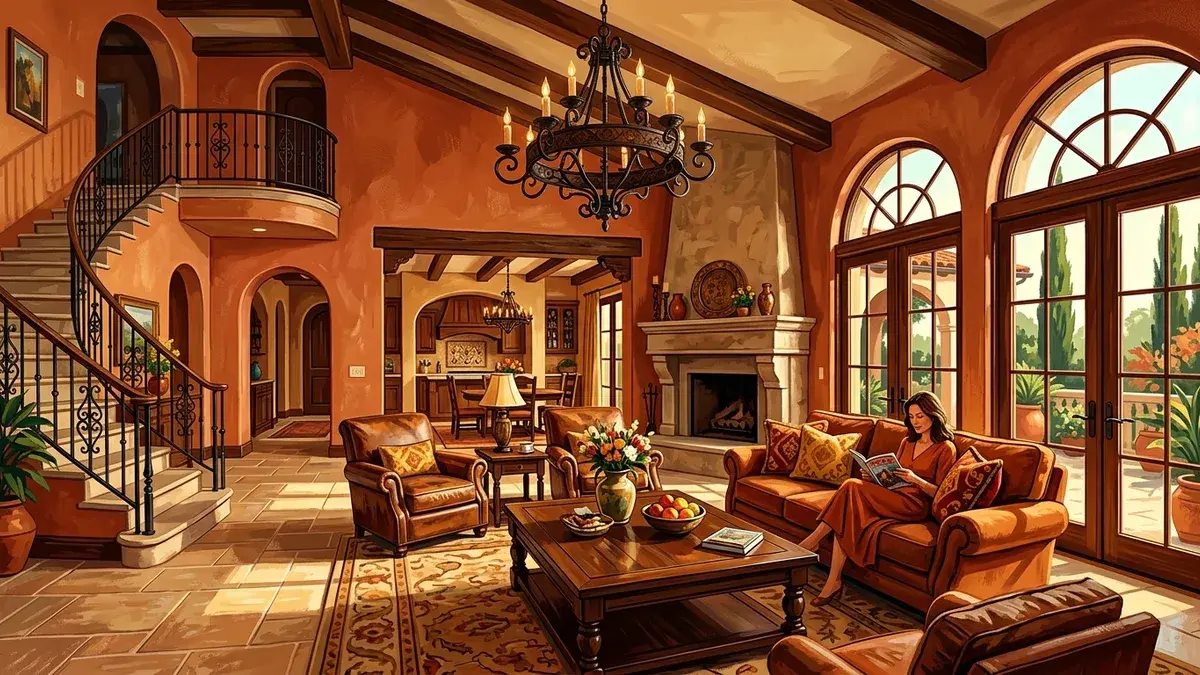
A 23-year-old I know bought a house in suburban Atlanta last month. A real one — 2004 build, four bedrooms, wrought-iron staircase, terracotta-tiled foyer. Every millennial in her life told her to paint it white, gut the kitchen, rip out the wrought iron. She is doing the opposite. She is leaning into every ochre-tinted, Mediterranean-pretending, Gabrielle-Solis-adjacent design choice the house was built to support.
She is not alone, and that is what is interesting about the Tuscan Mom aesthetic going viral in April 2026. This is not a costume trend. This is a design correction that has been building in real buyer preferences for over a year and just now has a name.
Here is what Tuscan Mom actually is, why it blew up on TikTok this month specifically, and why the real estate data suggests this trend has legs that standard viral aesthetics don’t.
What Tuscan Mom Actually Looks Like
The aesthetic is a return to early-2000s suburban luxury — specifically the aspirational McMansion look that peaked between 1998 and 2006. The core visual vocabulary:
- Warm wall colors. Terracotta, ochre, sienna, deep burnt oranges. The exact opposite of gray.
- Wrought-iron light fixtures. Heavy chandeliers, scrolled wall sconces, often with amber or cream shades.
- Arched doorways. The single most-requested design element in Tuscan Mom content. Ideally double-arched with keystone details.
- Wood beam ceilings. Exposed, sometimes decoratively painted, often faux in the original McMansion builds.
- Layered textiles. Tassels, fringe, damask, velvet, silk drapery in warm jewel tones.
- Ornate mirrors and picture frames. Gilded, carved, aged bronze, heavy and deliberately Not Minimalist.
- Mediterranean pottery and Tuscan kitchen accessories. Olive oil cruets, hand-painted ceramics, pasta bowls with decorative rims.
On the fashion side: flared or bootcut jeans (emphatically not skinny), fitted silk blouses or fine knits, oversized sunglasses in amber or brown lenses, layered gold jewelry (often both subtle and maximalist at once), and a specific hair look — long, glossy, layered, blown out with volume and bounce.
The point of the aesthetic is that it reads as “someone’s mom in 2003 who just came back from Italy.” That is literally the reference. Creators are not pretending to be Italian. They are cosplaying as the American suburban housewife who discovered Tuscany on a cruise and bought a lot of decorative pottery.
The Desperate Housewives Connection
Almost every Tuscan Mom creator cites the same reference: Gabrielle Solis’s house from Desperate Housewives. The show, which aired from 2004 to 2012, captured the exact moment the suburban McMansion aesthetic peaked. Gaby’s Wisteria Lane home — terracotta walls, ornate staircase, over-the-top chandeliers, layered rugs, warm-toned everything — is now the visual target that TikTok creators explicitly reference.
This matters because Gen Z did not experience this aesthetic as contemporary. They encountered it through streaming reruns, which hit Netflix and other platforms in rotations throughout 2024-2025 just as the millennial gray backlash was peaking. For them, the McMansion interior is a historical artifact they are rediscovering, not an aesthetic they are rejecting because it felt dated in their childhood. That distance is what makes the revival genuine rather than ironic.
Other cited references include Marissa Cooper’s family home in The O.C. (the Newport Beach Mediterranean), the kitchens in movies like Under the Tuscan Sun, and the Olive Garden aesthetic itself (which has become a genuine nostalgic reference point rather than a punchline for Gen Z).
Why It Blew Up in April 2026 Specifically
The #tuscanmom hashtag had been building on TikTok since late 2025. What turned it into a mainstream conversation was a Fortune article on April 11, 2026 titled “The ‘Tuscan Mom’ aesthetic is taking over TikTok as Gen Z glamorize McMansions and reject millennial gray.” That article did two things:
First, it gave the aesthetic a legitimizing business-publication frame. Yahoo, Fortune, and multiple fashion publications picked it up within 48 hours. The TikTok-only trend crossed into mainstream discourse, which is what separates a niche aesthetic from a genuinely viral one.
Second, it named the rebellion explicitly. The framing — Gen Z rejecting millennial gray — turned an aesthetic preference into a generational statement. Once that framing took hold, every piece of Tuscan Mom content became a tiny political act, and engagement compounded. The fight beats the aesthetic on social virality every time.
Within a week, the male equivalent (“Tuscan Dad” — polo shirts, linen pants, olive oil, vineyards) was being workshopped. By April 13, Los Angeles Today was covering the male version. That secondary virality is a reliable indicator that a trend has real cultural presence rather than just algorithmic heat.
The Real Estate Data Nobody Is Talking About
Here is the part that separates Tuscan Mom from a typical viral aesthetic: the design preferences it represents were already showing up in real estate data before TikTok named them.
A National Association of Realtors report from April 2025 — a full year before the viral moment — documented elevated buyer demand for:
- Arched doorways and windows
- Warm-toned stone countertops (rather than pure white marble)
- Aged wood finishes
- Warm neutral paint colors (ochre, cream, warm gray trending toward taupe)
- Statement light fixtures (away from recessed lighting)
These are Tuscan Mom design elements. The buyers driving this demand were mostly not TikTok-aware in 2025; they were renovating homes based on aesthetic preferences that were shifting independently of social media. The trend was real before it was named.
That is a meaningful distinction. Most viral aesthetics stay on TikTok — they generate content but don’t affect actual buying behavior in a durable way. Tuscan Mom is tracking something that was already moving. The TikTok trend is a cultural recognition of a design shift that was already underway in how people spend money.
The Millennial Gray Backlash This Is Part Of
Tuscan Mom is the most coherent example of a broader aesthetic correction happening across multiple design categories. The 2014–2023 period was dominated by a specific look: all-white kitchens, subway tile backsplashes, farmhouse sliding doors, shiplap, greige paint, pale Scandinavian minimalism, beige sofas on beige rugs in beige rooms. Design publications called this “millennial gray” and it became culturally coded as boring, corporate, and personality-free.
What’s replacing it is not a single aesthetic but a family of warm, colorful, personality-forward looks:
- Tuscan Mom — early-2000s Mediterranean suburban luxury
- Cottagecore green — sage, olive, forest green, William Morris wallpaper
- Maximalist wallpaper and pattern — bold florals, stripes, chinoiserie
- Jewel-toned velvets — emerald, ruby, sapphire upholstery
- Global collected — layered rugs, curated objects, “my grandmother’s taste” revivals
The common thread is a rejection of the idea that a home should look like a short-term rental. The design thesis of the 2014–2023 era — resale-optimized neutrality that won’t offend anyone — is being replaced by the thesis that a home should look like a specific person lives in it.
What Happens Next
Predictions, ordered by confidence:
High confidence: The aesthetic will be coopted by big-box retail within 12 months. Expect terracotta-painted rooms in IKEA catalog shoots by late 2026, Target Studio McGee collections built around arched mirrors and warm neutrals, and CB2 pivoting aggressively toward the warmer palette. This always happens to viral aesthetics and always kills the cool factor.
Medium confidence: Real estate listing language shifts. Expect “arched doorways” and “warm Mediterranean styling” to start appearing in listings as selling points where they would previously have been renovation targets. Agents are already adjusting.
Lower confidence but worth tracking: A secondary revival of actual Y2K aesthetic elements beyond the home. Flared jeans have already returned. The next pieces — juicy-couture-adjacent tracksuits, embellished denim, chunky belts — are candidates for the next wave if the nostalgia loop holds.
The Thing That Makes This Different
Most viral aesthetics die when the next aesthetic takes over. Tuscan Mom probably will not, because it is not primarily about aesthetics — it is about a generational reclamation of personality in domestic space. Gen Z lived through a childhood of adults endlessly painting things gray and reading “clean living” think pieces. They are now entering their house-buying and apartment-decorating years with a pent-up appetite for warmth, pattern, and visible evidence that a human lives in the room.
That’s what Gabrielle Solis’s house always had. It was ostentatious, over-styled, and a little absurd. But it was unmistakably the house of a specific person with specific taste. After a decade of real estate neutrality, that kind of confident specificity reads as aspirational. Three years from now, the overcorrection to millennial gray will have its own name, and Tuscan Mom will be the moment we all point to as the turning point.
If you are tracking aesthetic shifts and generational trend cycles, our March 2026 micro-trends analysis covers the broader signal patterns driving these reversals, and the social & culture feed on TrendWatch tracks new aesthetic candidates as they emerge. If you want to figure out where you fall on the generational aesthetic spectrum (team gray, team Tuscan, or somewhere in between), the aesthetic quizzes at Quizzly will let you self-identify.